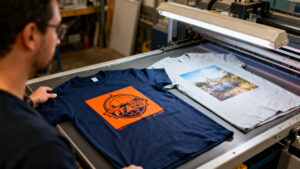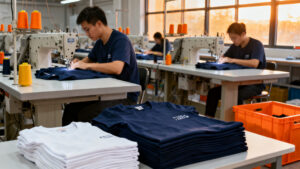
Two t-shirts can carry the same price tag, the same “100% cotton” label and the same shape on a hanger, and still feel completely different in your hand. One is soft, dense and substantial; the other is thin, scratchy and limp after three washes. The gap is not branding. It is a series of small, specifiable decisions made at the mill and on the sewing floor — and every one of them can be written into a tech pack.
A t-shirt feels premium when it combines long-staple combed cotton at roughly 200–260 GSM, a dense fine-gauge single jersey knit, ring-spun yarn, reinforced seams and a soft finishing treatment — fabric weight, fibre length, knit density and construction drive hand feel far more than the brand on the neck label.1
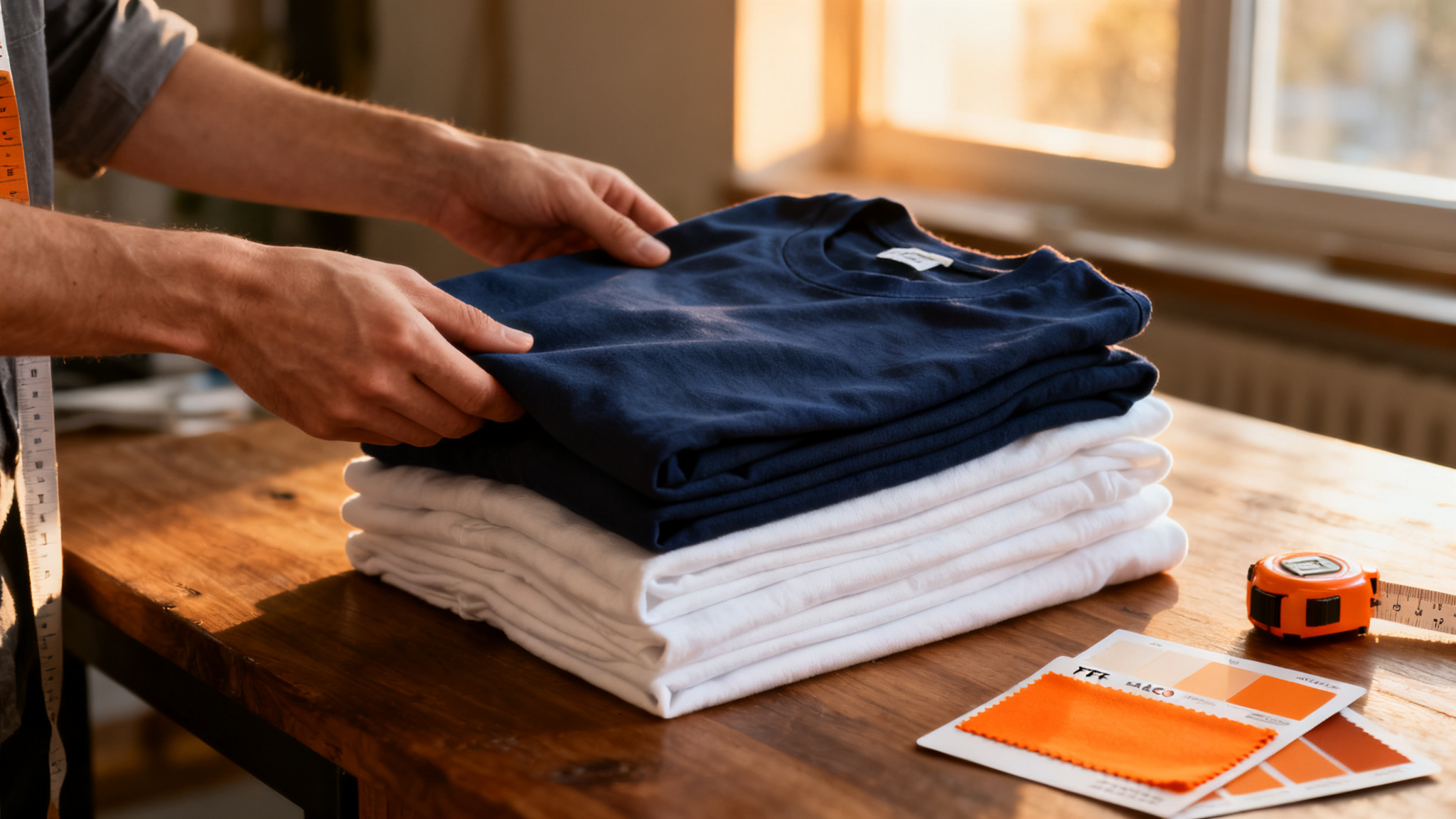
Below is what each of those variables actually does to the cloth, how to specify it precisely, and which upgrades a customer can feel immediately versus which ones only show up on a spec sheet.
Hand feel is the sum of four physical properties, and they are all controllable.
Premium hand feel comes down to fibre length, yarn structure, fabric weight and knit density, plus how the garment is cut, sewn and finished — each variable changes how the cloth drapes, how it touches skin and how it holds up after repeated washing.2
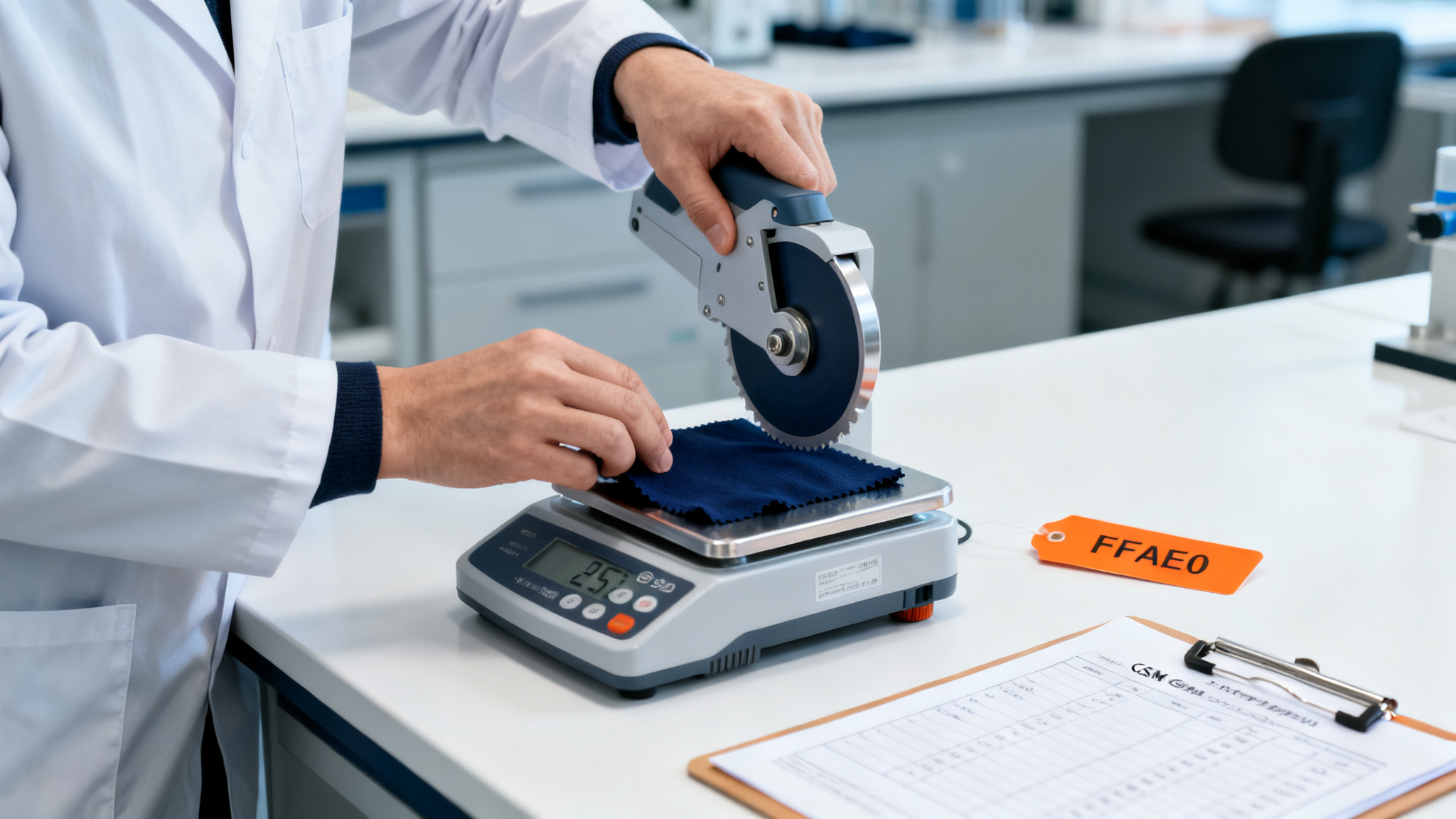
Short cotton fibres are the usual culprit behind a scratchy tee. Staple length determines how tightly fibres can be twisted into yarn, and short fibres work their way out of the yarn over time, creating surface fuzz, pilling and that slightly rough feel against the skin. Fibre length also sets strength: longer fibres mean fewer exposed ends and fewer thin spots in the knit. Weight and density then decide whether the fabric reads as “substantial” or “giveaway promo shirt”. Construction and finishing decide whether it keeps that feel past the first month. Premium is really consistency: the same spec, reproduced on the reorder, wash after wash.
Weight is the fastest, most visible lever a brand can pull.
Most premium t-shirts sit between 200 and 260 GSM; 180 GSM and below reads as lightweight and can go semi-sheer, while 260–300 GSM gives a structured, heavyweight drape that holds its shape.3
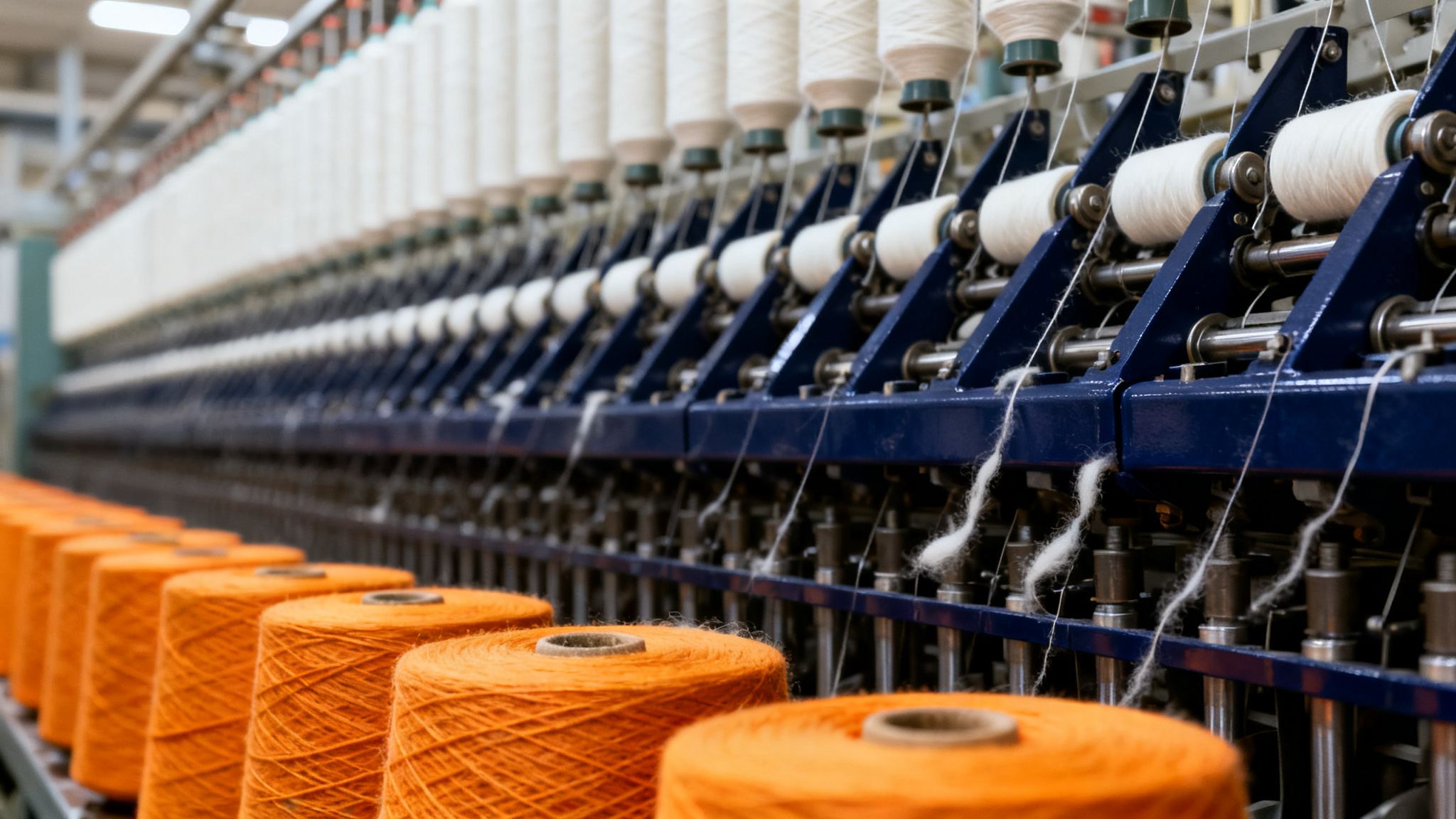
GSM (grams per square metre) is simply the mass of one square metre of fabric, which makes it a reliable proxy for substance. Moving a basic tee from 160 GSM to 220 GSM changes the way it hangs, how opaque it is under studio lighting, and how it feels folded on a shelf — the difference customers register as quality before they ever read a spec. But heavier is not automatically better. A 300 GSM tee knitted from coarse, low-quality yarn can feel stiff and boardy, while a well-knit 230 GSM combed jersey feels dense and smooth. Weight has to be matched to yarn fineness and stitch density; if you want the full breakdown of weights by use case, see our guide to the best GSM for streetwear t-shirts.
Why does yarn quality matter more than the “100% cotton” label?
“100% cotton” is a starting point, not a grade.
Long-staple cotton with fibres of roughly 30–35 mm or more, combed and ring-spun, produces a smoother, stronger, lower-pilling yarn than short-staple cotton — which is why two 100% cotton tees can feel a full grade apart.4
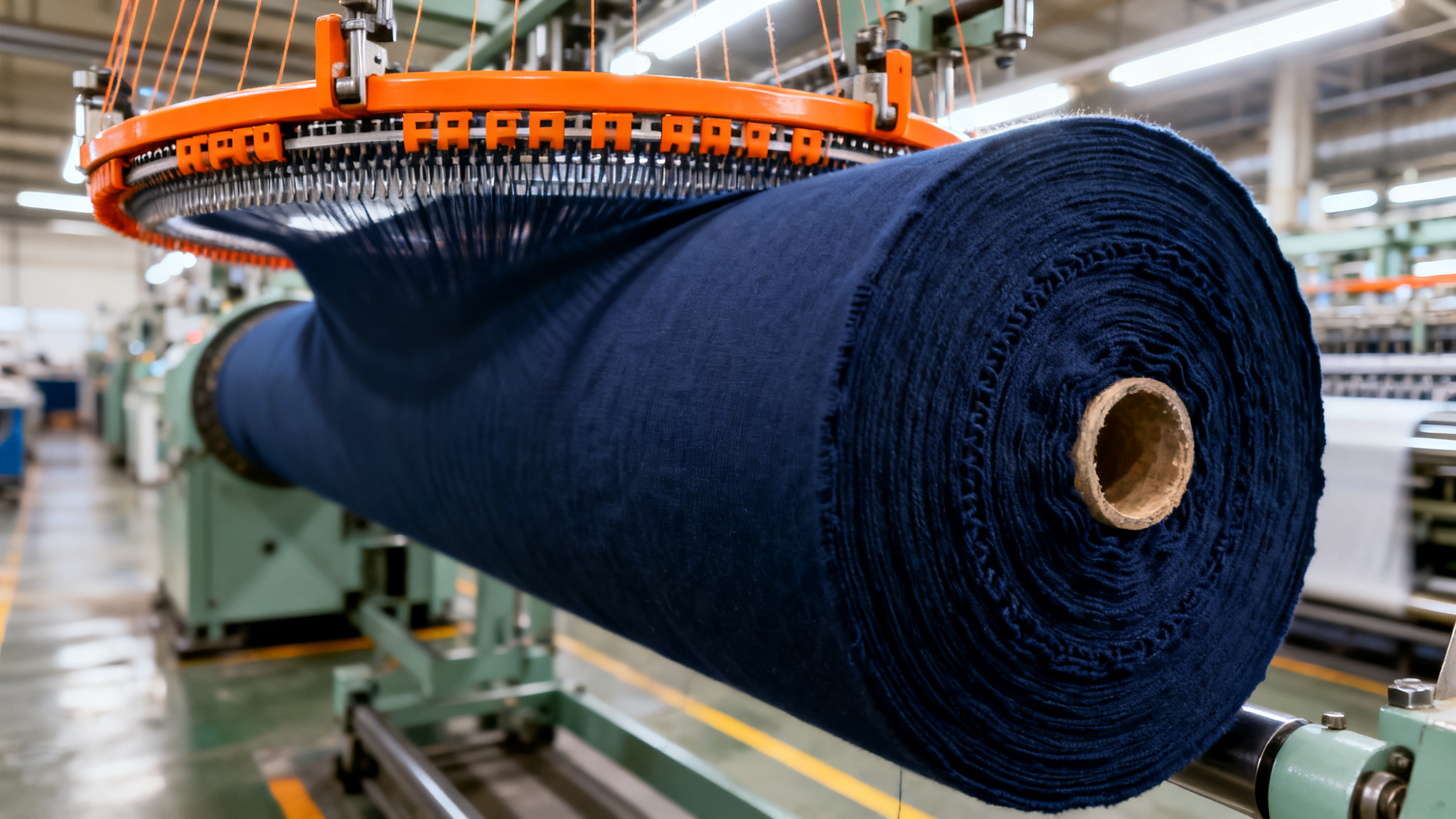
Upland cotton commonly runs around 25–28 mm, while long-staple varieties such as Supima, Giza and Pima reach well beyond that, and extra-long-staple types go further still. Combing is the mechanical step that removes short fibres and impurities before spinning, leaving a cleaner, more uniform yarn; ring spinning then twists the fibres in a way that keeps them aligned and smooth along the yarn body. The practical result is a tee that feels silkier on the skin, shows less surface hair, and resists pilling in the wash. Yarn count matters too: a finer single yarn (higher Ne number) knits into a lighter, softer cloth, while two-ply yarns are denser and more expensive but hold their shape and resist torque. This is the upgrade most buyers cannot see on a label and can always feel in the hand.
How do seams, collar and cut change the feel of a t-shirt?
A great fabric can still be ruined at the sewing machine.
Premium construction means dense, even stitching of around 10–12 stitches per inch, overlocked or flatlocked seams that lie flat, shoulder-to-shoulder taping, a ribbed collar with 2–5% elastane and clean twin-needle hems — details that keep the tee from twisting, gaping or curling.5
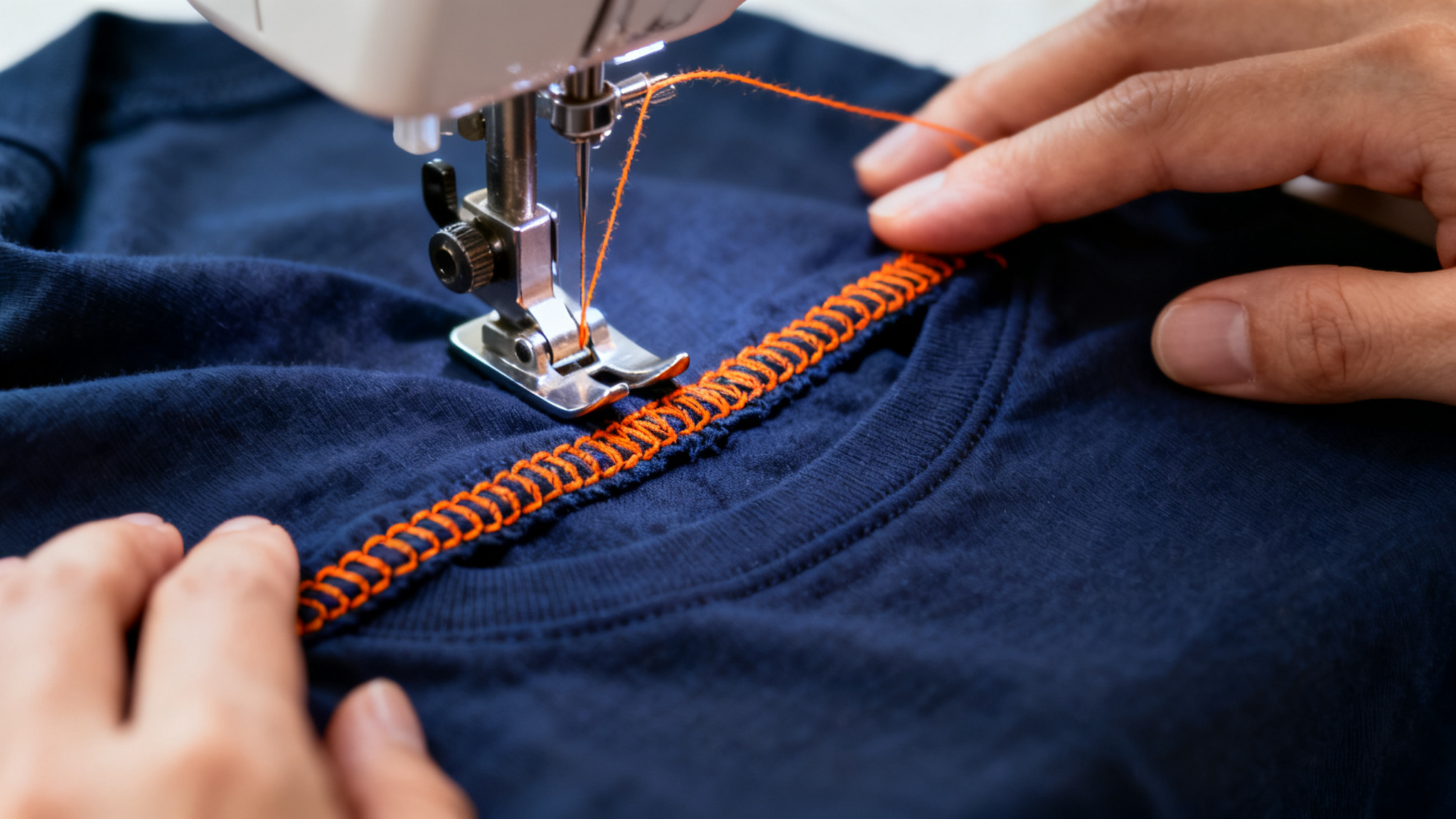
Start at the neckline, because it is where cheap tees fail first. A single-jersey self-fabric collar stretches out and ripples after a few washes; a ribbed collar knitted with a small percentage of elastane springs back and keeps its shape. Stitch density is the quiet signal of quality: sparse stitching puckers and pops under tension, while a tight, consistent seam distributes stress and lies flatter against the body. Shoulder taping stops the shoulder seam from stretching under the weight of the garment, and side-seamed bodies hold their silhouette better than tubular construction, which is faster to produce but less shape-retentive. Hems are the tell in the fitting room — a narrow twin-needle hem stays flat, while a single row of loose stitching curls after the first wash. None of these add much cost individually; skipping all of them is what makes a tee feel disposable.
How does finishing change how a t-shirt feels?
Finishing is where a good tee becomes a soft one — and where shortcuts become obvious.
Mercerising, enzyme or silicone softening, compacting and controlled garment dyeing all change surface hand feel, lustre and shrinkage, while water-based or discharge prints keep the printed area soft instead of adding a thick plastic layer.6
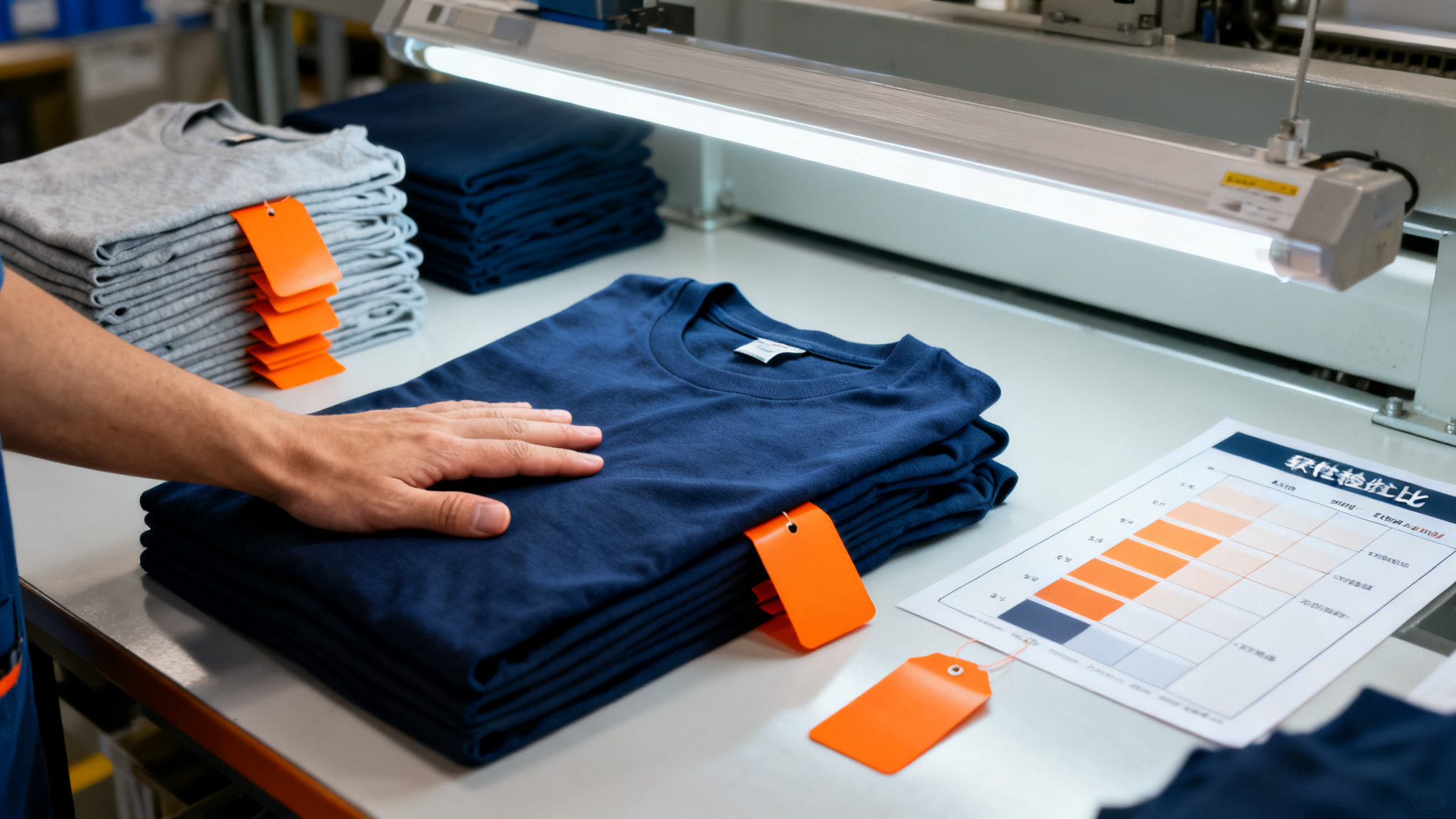
Mercerising swells the cotton fibre, which increases strength, adds a subtle lustre and gives reactive dyes more depth. Enzyme washing removes surface fuzz for a broken-in softness, but over-processing thins the fabric and shortens its life, so the wash recipe matters as much as the fact that a wash happened. Silicone softeners feel wonderful on the rack and can wash out after a handful of cycles, which is why compacting and pre-shrinking are the more honest upgrades: they control shrinkage so the tee still fits after five washes. Print method is part of hand feel too. A heavy plastisol hit sits on top of the cloth like a patch; water-based ink sinks into the fibre and leaves the print area almost indistinguishable from the body. Ask for wash-test photos of the actual production fabric, not a stock swatch, and specify the print technique in the tech pack. If you want a manufacturing partner who quotes these details line by line, Adiwe’s custom t-shirt manufacturing service builds specs around exactly these variables.
Conclusion
Premium is not a price point, it is a specification. Long-staple combed cotton, a 200–260 GSM fine-gauge jersey, ring-spun yarn, dense seams and a controlled finish will make a tee feel expensive even before anyone sees the label — and each of those choices can be written down, sampled and repeated. Decide which two or three upgrades your customer will actually notice, put them in the tech pack with a tolerance, and test them in a wash trial before you commit to bulk. If you want help translating “premium feel” into a production-ready spec, send Adiwe your fabric weight, yarn and construction targets or book a quote — we sample from low MOQs and document every spec so the reorder feels the same as the first drop.
"T-shirt", https://en.wikipedia.org/wiki/T-shirt. Overview of the t-shirt as a garment, including common fabrics, weights, necklines and construction variants. Evidence role: general_support; source type: encyclopedia. Supports: the definition of a premium t-shirt by fabric, weight and construction rather than branding. Scope note: general garment reference; does not prescribe commercial quality grades. ↩
"Cotton", https://en.wikipedia.org/wiki/Cotton. Describes cotton fibre structure, staple length, grading and how fibre properties affect yarn strength and softness. Evidence role: general_support; source type: encyclopedia. Supports: fibre length and quality as the root cause of softness, pilling and durability differences. Scope note: fibre-level reference; fabric hand also depends on knitting and finishing. ↩
"Units of textile measurement", https://en.wikipedia.org/wiki/Units_of_textile_measurement. Defines grams per square metre (GSM) and other textile measures used to specify fabric weight and yarn count. Evidence role: general_support; source type: encyclopedia. Supports: the 200–260 GSM range used to describe premium t-shirt weight. Scope note: measurement reference; the perceived quality of a given GSM varies with yarn and knit density. ↩
"Long-staple cotton", https://en.wikipedia.org/wiki/Long_staple_cotton. Explains long-staple and extra-long-staple cotton varieties, their fibre lengths and why they spin into finer, stronger yarns. Evidence role: general_support; source type: encyclopedia. Supports: the link between long-staple combed cotton and smoother, lower-pilling yarn. Scope note: variety-level reference; combing and spinning method also affect the finished hand. ↩
"Overlock", https://en.wikipedia.org/wiki/Overlock. Describes overlock stitching, its role in finishing and securing seams, and how the stitch is formed on knit garments. Evidence role: general_support; source type: encyclopedia. Supports: seam finishing and stitch integrity as components of durable, flat-lying t-shirt construction. Scope note: stitch-type reference; stitch density and seam type are set by the factory spec. ↩
"Textile finishing", https://en.wikipedia.org/wiki/Textile_finishing. Covers mechanical and chemical finishing processes including mercerising, softening, compacting and shrinkage control. Evidence role: general_support; source type: encyclopedia. Supports: finishing treatments as the driver of surface hand feel, lustre and dimensional stability. Scope note: process overview; specific recipes and durability of softeners vary by mill. ↩
Ready to make this for your brand?
Adiwe manufactures custom T-shirts, hoodies, jackets, pants, shorts and shirts for brands worldwide — from 50 pcs per style and colour, with private labelling, three-stage QC and a physical sample you approve before bulk.
Custom Hoodie ManufacturingCustom T-Shirt Manufacturing