Search for a custom t-shirt manufacturer and you will get the same twenty marketplace listings, the same stock photos of a sewing floor, and the same promise of "low MOQ, best price, high quality". Then the sample arrives: the fabric is thinner than the swatch, the fit is boxy where it should be oversized, and the print is already cracking at the hem. The problem is rarely that good factories do not exist. It is that buyers shortlist on price and a profile picture instead of on evidence.
A custom t-shirt manufacturer is a factory that produces t-shirts to your own specification — your fabric, weight, fit, colour and decoration — rather than selling you a blank catalogue item, and you find a reliable one by shortlisting factories that openly document their capabilities, verifying them with a paid sample and a factory check, and confirming every detail in a tech pack before bulk.1
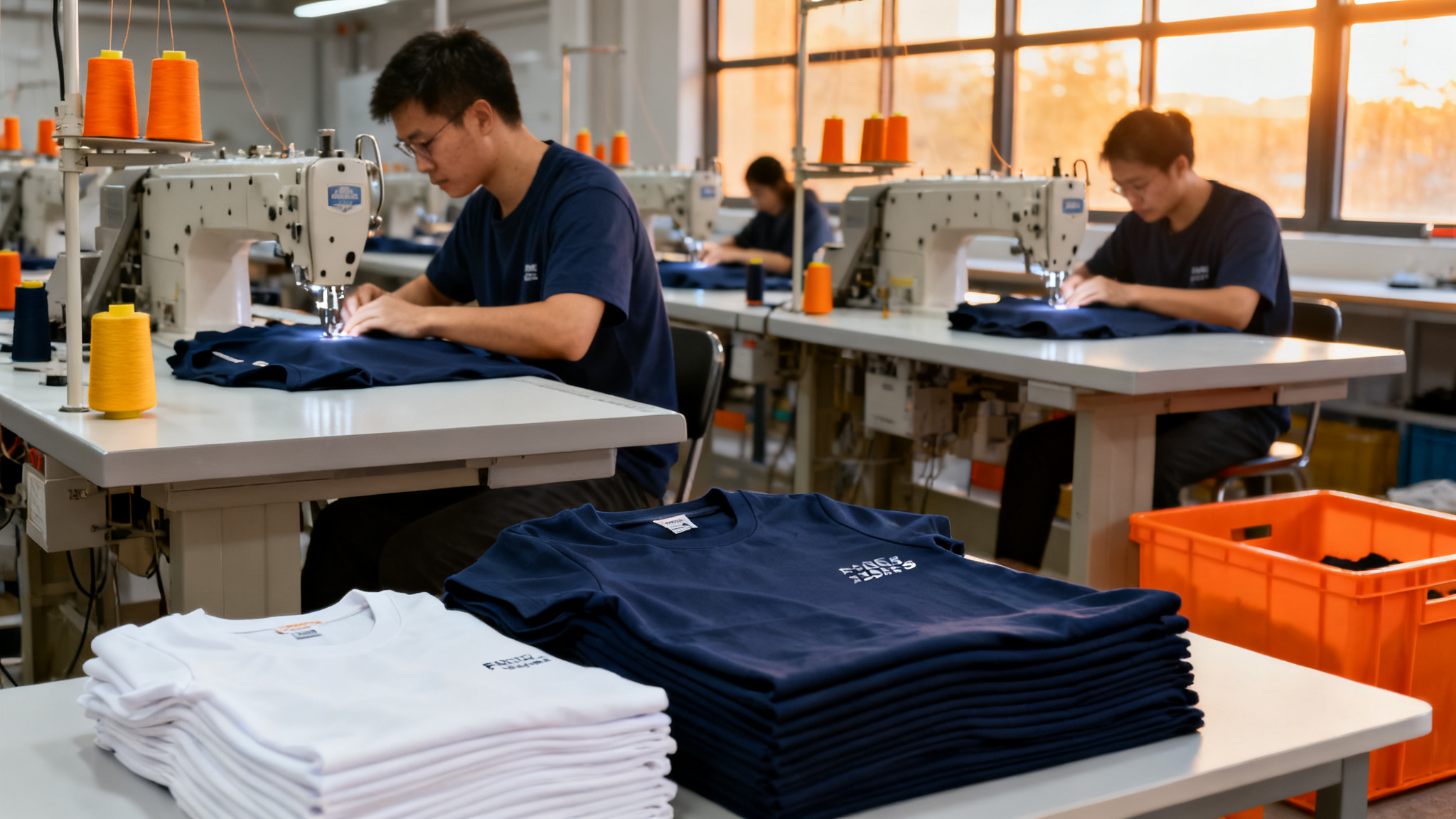
This guide walks through the process in the order it actually happens: understanding what a custom manufacturer does, building a shortlist, verifying claims, understanding cost and MOQ, and finally approving a sample you can hold production to. Every step is designed to be checkable before money moves.
What does a custom t-shirt manufacturer actually do?
The word "custom" gets used for three different businesses, and mixing them up is the most common sourcing mistake.
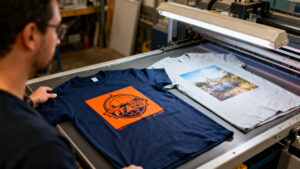
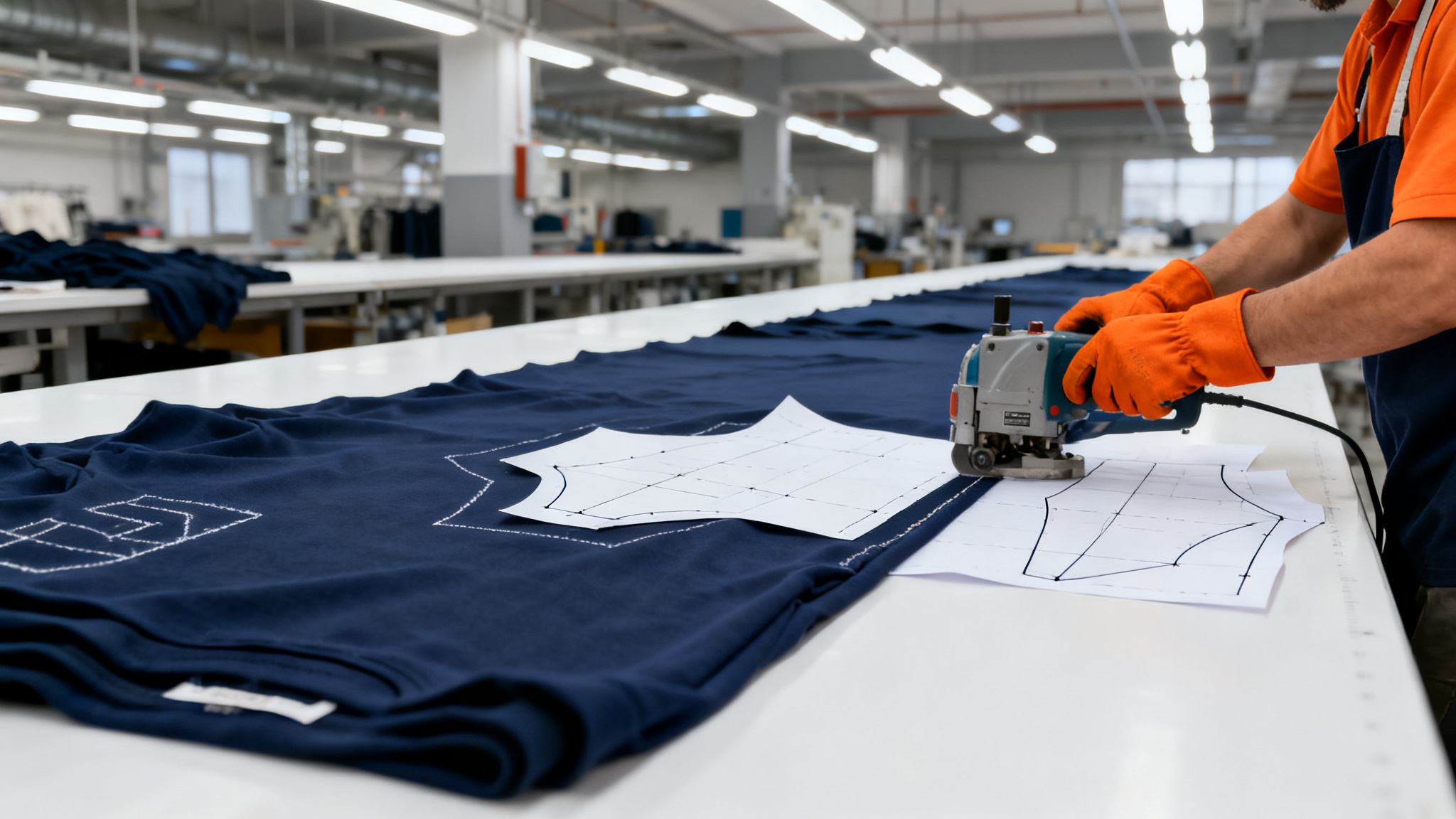
A true custom t-shirt manufacturer owns or directly controls the production chain — fabric sourcing, pattern making, cutting, sewing, decoration and finishing — so it can change the garment itself, while a blank supplier or a print shop can only add decoration to a t-shirt someone else already designed.2
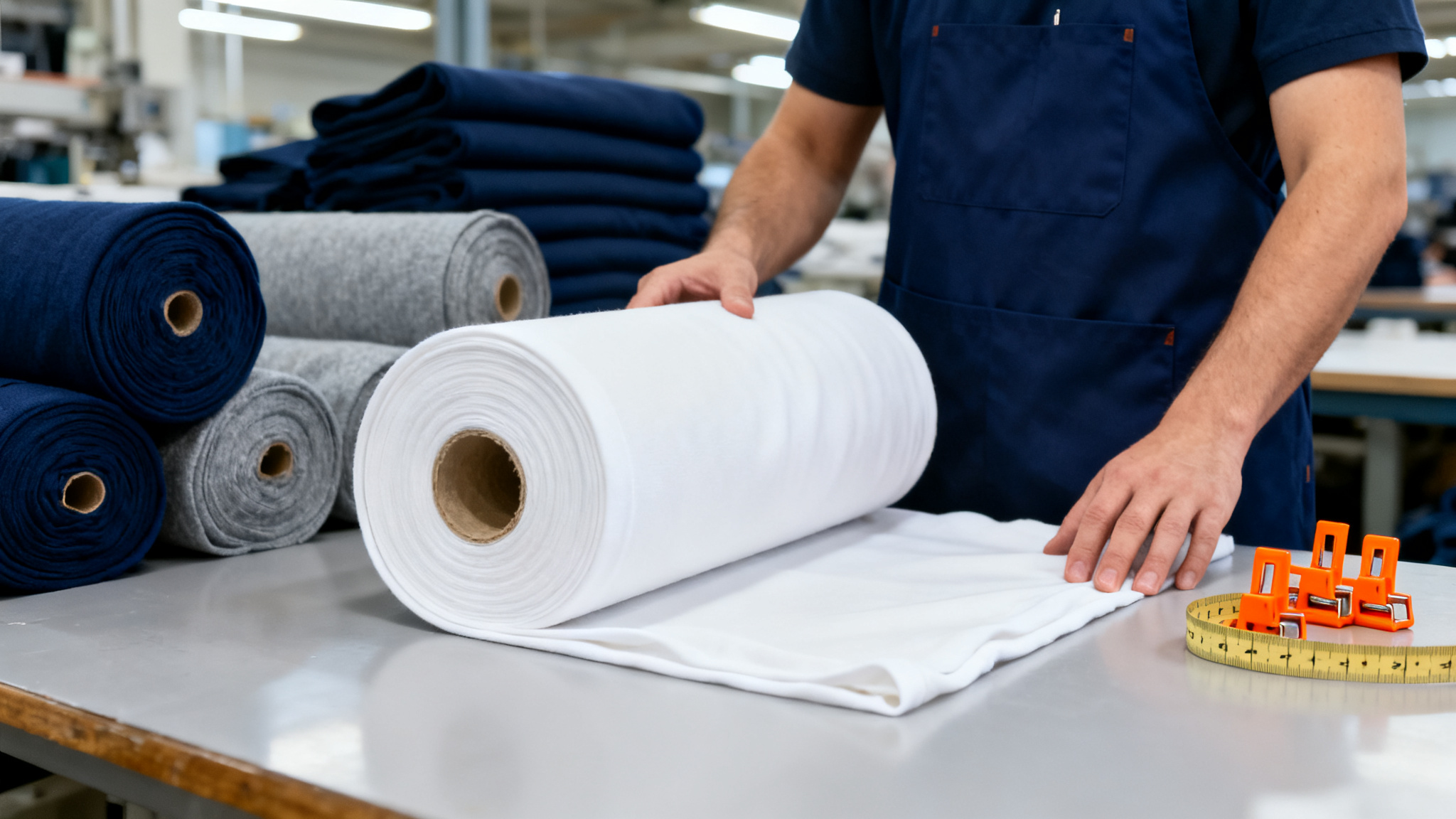
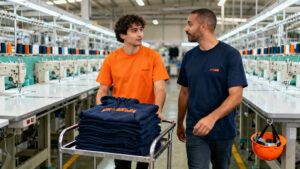
That distinction decides what you can ask for. A print-on-demand shop will happily put your logo on a 150 GSM tubular blank, but it cannot give you a 240 GSM compact jersey with a dropped shoulder, a ribbed collar at 2 cm, and a boxy body block cut to your measurement chart. A cut-and-sew factory can, because it makes the pattern. When you talk to a supplier, ask directly: do you knit or source your own fabric, do you make your own patterns, and which processes are subcontracted? A factory that is honest about subcontracting the dyehouse but owns its cutting and sewing is a normal, healthy setup — one that claims to do everything in-house when it is a five-person trading office is not.
How do you find custom t-shirt manufacturers worth shortlisting?
Volume of options is not the problem. Filtering is.
Build a shortlist from manufacturers whose published capability matches your product — the fabric weight, the fit block, the decoration method and the order size you actually need — and treat directories, marketplaces and trade shows as lead sources rather than as proof of anything.3
Three filters do most of the work. First, product match: a factory that makes 400 GSM hoodies all day may not have the fine-gauge machines or the fabric sources for a 160 GSM summer tee, and vice versa. Second, size match: a plant tooled for 5,000-piece runs will either decline your 300-piece order or quietly put it at the back of the queue. Third, evidence match: look for a factory that shows process photos, measurement charts, fabric specs with real GSM numbers and named decoration methods, rather than a gallery of finished garments with no context. A useful check is to ask for two references in your category and your order size, then actually contact them. Our own custom t-shirt manufacturing page is structured this way on purpose — capability before brochure.
What should you verify before you place a bulk order?
Every claim a supplier makes can be tested cheaply, before a production order exists.
Verify four things before bulk: that the company legally exists and owns production capacity, that fabric weight and composition match the spec, that construction details survive inspection, and that the factory has a documented quality process rather than a verbal promise.4
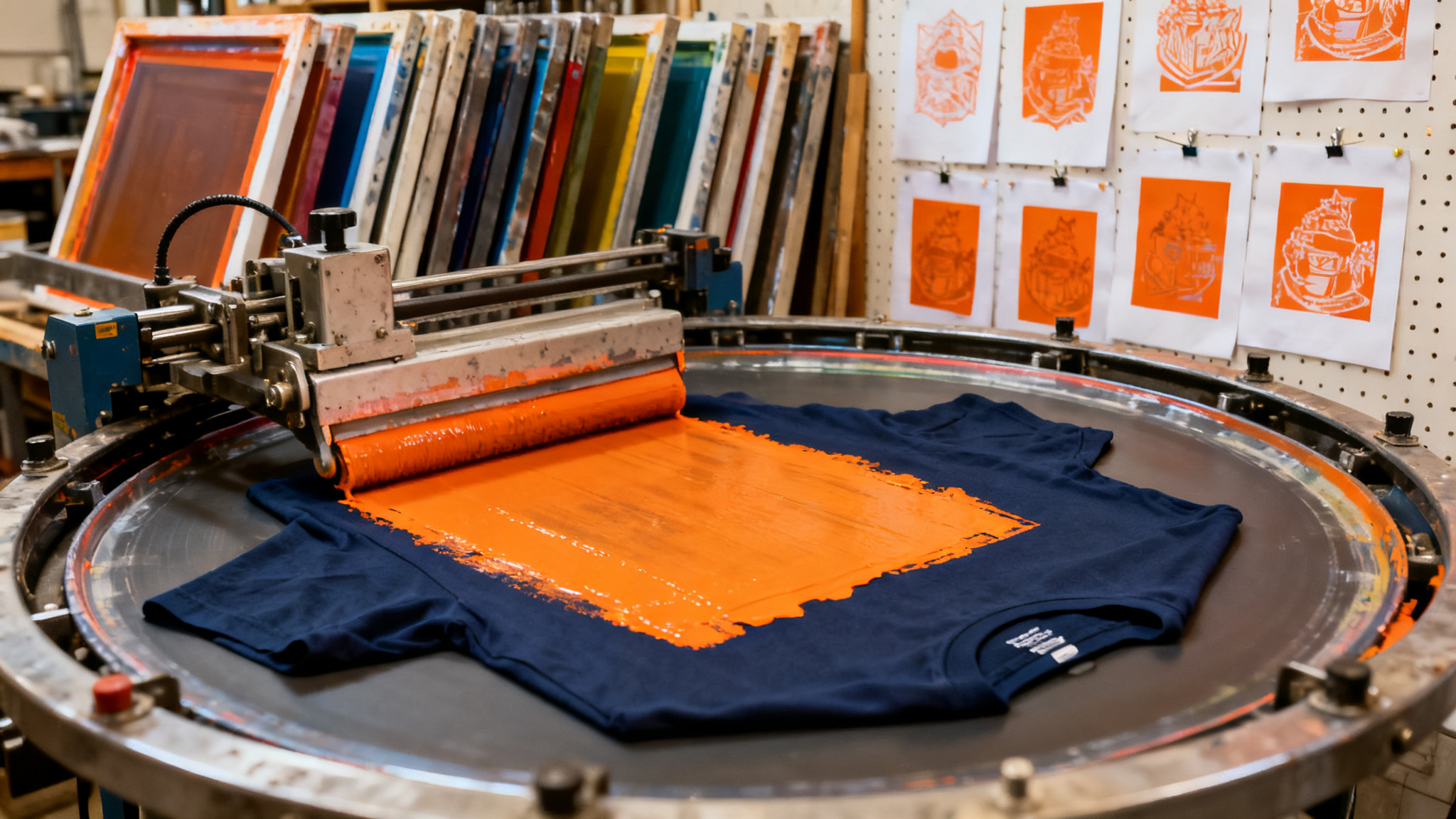
Ask for the business licence and the name on the bank account, and check they match the company you are contracting with — mismatches are the number one warning sign in sourcing disputes. Ask for a fabric test report or at minimum a cut-and-weigh check: a 180 GSM claim is easy to confirm by weighing a known area of fabric, and factories that inflate GSM rely on buyers never doing the arithmetic. Ask for a measurement chart with tolerances, not just a size range, then measure the sample against it yourself. And ask what happens when a defect is found: who inspects, at what stage, against what AQL level, and who pays for the remake. A factory that answers those four questions in writing is a different kind of counterparty from one that answers them with reassurance.
How much do custom t-shirts cost, and what MOQ is realistic?
Price and minimum order quantity are the same conversation, because both are driven by setup.
Custom t-shirt cost per unit falls sharply as quantity rises, because pattern making, screen setup, fabric minimums and machine changeover are fixed costs spread across the run — which is why realistic MOQs for cut-and-sew custom tees typically start in the low hundreds per design and colourway.5
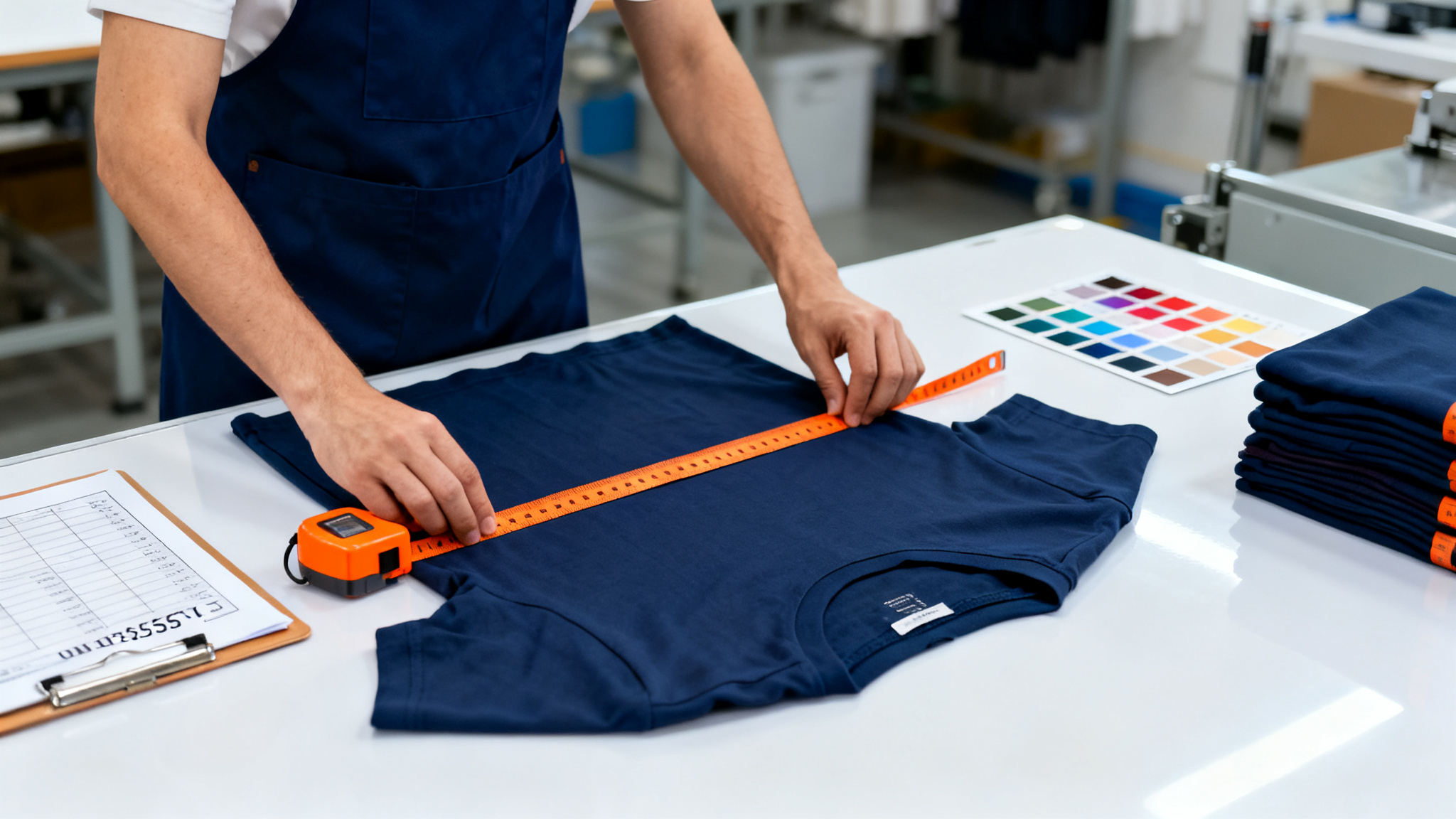
Practically, expect sampling to be a separate paid step, expect per-colour and per-print-location setup charges that do not shrink with volume, and expect the fabric mill's own minimum to set the real floor on a custom dye lot. That is why a 100-piece order in a stock colour and a 100-piece order in a Pantone-matched custom shade can differ by a wide margin even at the same factory. Get the quote broken into fabric, cutting, sewing, decoration, sampling and freight rather than a single landed number, so you can see which line is inflating and where volume will actually help. If your launch quantity is small, say so at the first email: a factory that regularly runs small batches will quote it properly instead of padding it.
How do you approve a sample and control quality in bulk?
The sample is the contract. Everything after it is enforcement.
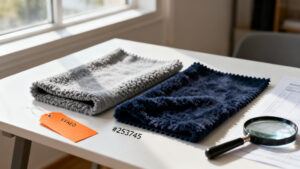
Approve a sample against a written spec — measurements within stated tolerances, the exact fabric, the exact Pantone, the exact print placement — then sign and keep it as the sealed standard that bulk production and final inspection are measured against.6
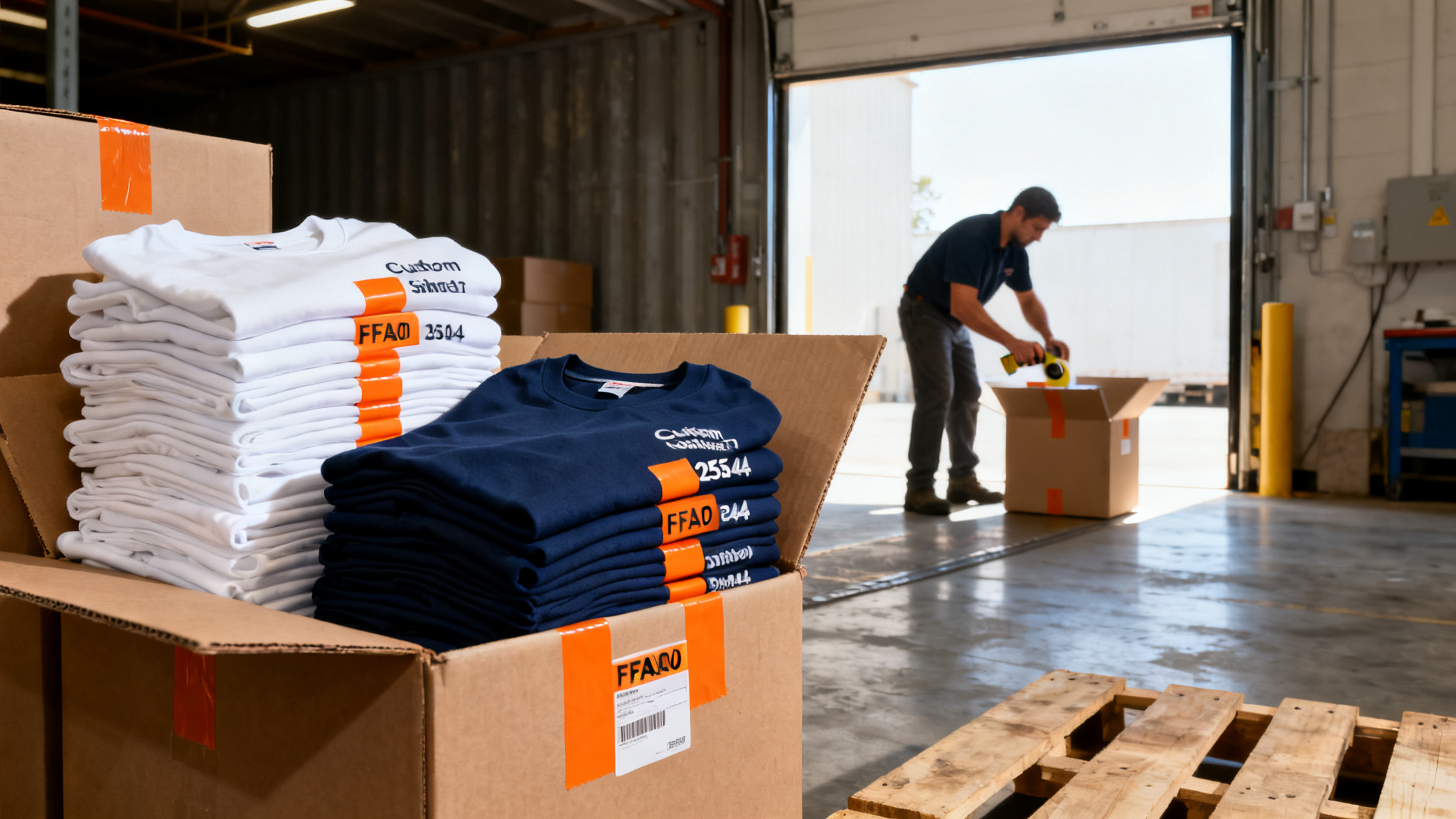
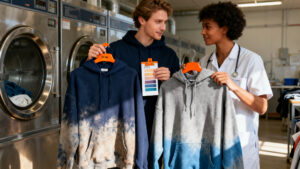
Before you sign off, wash the sample at least twice the way a customer will. Shrinkage, collar roll, print cracking and colour bleed all appear in the laundry, not on the table. Measure it flat before and after and record the numbers, because a 3% shrink on a 70 cm body is two centimetres of fit you have just given away. Photograph the approved sample from every angle with a ruler in frame, note the fabric lot and the Pantone references, and keep one sealed copy at the factory and one with you. Then agree the inspection plan: mid-production check when 20–30% is complete, final inspection before packing, a defined AQL level, and a photo report sent to you before the balance payment. That sequence is what turns a good first sample into a repeatable product.
Conclusion
Finding a custom t-shirt manufacturer is a filtering problem, not a searching problem: confirm the factory actually makes the garment rather than decorating someone else's, shortlist on capability and order size, verify the licence, the fabric weight and the tolerances before bulk, understand which fixed costs set your MOQ, and seal a washed, measured sample as the standard. Do those five things and the second order becomes a reorder instead of a renegotiation. If you are sourcing custom tees now, see our t-shirt manufacturing capabilities or send your tech pack and target quantity for a costed quote.
"T-shirt", https://en.wikipedia.org/wiki/T-shirt. Describes the t-shirt as a garment with a specific body, sleeve and neckline construction, and covers common fabric weights, neckline treatments and decoration methods. Evidence role: general_support; source type: encyclopedia. Supports: the definition of a t-shirt and the construction variables (fabric, weight, fit, neckline, decoration) that a custom manufacturer is asked to control. Scope note: general garment overview; does not describe factory sourcing, MOQ practice or pricing structures. ↩
"Clothing industry", https://en.wikipedia.org/wiki/Clothing_industry. Explains how apparel production is organised across fibre, fabric, cutting, sewing, finishing and decoration, and how contract manufacturing and subcontracting work within that chain. Evidence role: general_support; source type: encyclopedia. Supports: the distinction between a cut-and-sew manufacturer that controls the garment and a supplier that only decorates a finished blank. Scope note: industry-structure overview at a global level; does not assess individual factories or regional lead times. ↩
"Clothing industry", https://en.wikipedia.org/wiki/Clothing_industry. Covers how apparel supply chains are segmented by product type, order size and process specialisation, and why factories cluster around particular garment categories. Evidence role: general_support; source type: encyclopedia. Supports: the argument that manufacturers specialise by product weight, construction and run size, so shortlisting should start from capability match. Scope note: describes the industry broadly; specific vetting questions and reference checks are practitioner practice rather than encyclopedia content. ↩
"Quality control", https://en.wikipedia.org/wiki/Quality_control. Explains quality control as a process of setting specifications, measuring against them and correcting deviations, including statistical sampling approaches and inspection planning. Evidence role: general_support; source type: encyclopedia. Supports: the recommendation to require documented specifications, measurement tolerances, staged inspection and a defined sampling plan instead of verbal quality promises. Scope note: general quality-management theory; AQL levels, inspection stages and defect classifications for apparel are set by the buyer and supplier contract. ↩
"Economies of scale", https://en.wikipedia.org/wiki/Economies_of_scale. Describes how average cost per unit declines as output rises when fixed costs are spread over more units, and distinguishes fixed from variable cost. Evidence role: general_support; source type: encyclopedia. Supports: the explanation of why per-unit t-shirt cost falls with quantity and why sampling, screen setup and fabric minimums create a realistic MOQ floor. Scope note: economic theory; actual MOQ thresholds, setup fees and fabric minimums vary by factory, fabric and decoration method. ↩
"Quality control", https://en.wikipedia.org/wiki/Quality_control. Covers the use of approved reference standards and defined acceptance criteria as the basis for inspection, and the role of inspection at multiple production stages rather than only at the end. Evidence role: general_support; source type: encyclopedia. Supports: the practice of sealing a measured, washed sample as the production standard and inspecting at mid-production and pre-shipment. Scope note: general framework; laundry shrinkage tolerances and print durability limits should be agreed numerically with the supplier. ↩
Ready to make this for your brand?
Adiwe manufactures custom T-shirts, hoodies, jackets, pants, shorts and shirts for brands worldwide — from 50 pcs per style and colour, with private labelling, three-stage QC and a physical sample you approve before bulk.
Custom Hoodie ManufacturingCustom T-Shirt Manufacturing