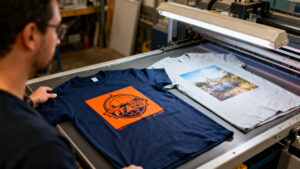
Two hoodies can look identical on a hanger and feel like completely different garments on the body. The difference is almost always on the inside: one has a visible looped back, the other has a soft brushed pile. That single structural choice decides warmth, weight, drape, how the hoodie ages after twenty washes, and how much it costs to make. Here is the honest comparison, without the sales language.
French terry is the better choice for most streetwear hoodies because its unbrushed loops breathe, drape and hold shape through washing, while brushed fleece is warmer and heavier and suits cold-weather or heavyweight silhouettes — so pick French terry for a year-round 300–380 GSM hoodie and fleece for a 400–450 GSM winter piece.1
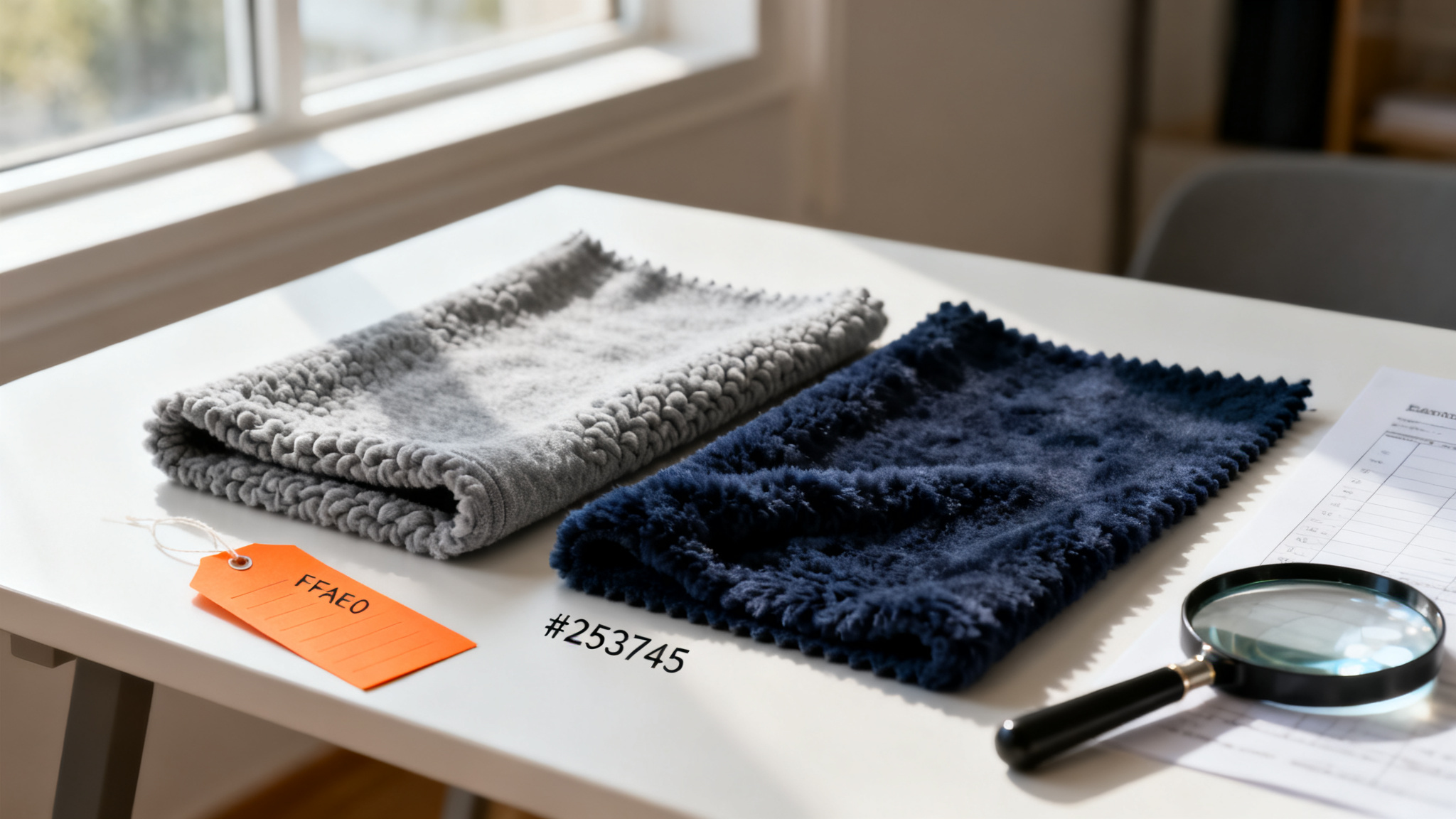
Both fabrics start life on the same knitting machine. The split happens afterwards, in a finishing step most buyers never see. Understanding that step is the fastest way to stop overpaying for the wrong fabric — or under-specifying the right one and getting a hoodie that feels thin in November.
What is the difference between French terry and fleece?
The names get used loosely in the trade, so it helps to be precise.
French terry is a weft-knitted fabric with smooth loops on the technical back and a flat or slightly piled face, while fleece (brushed fleece, sometimes sold as sweatshirt fleece) is the same family of knit fabric that has been napped or brushed on one side to raise a soft pile, which is why fleece feels thicker and fuzzier inside.2
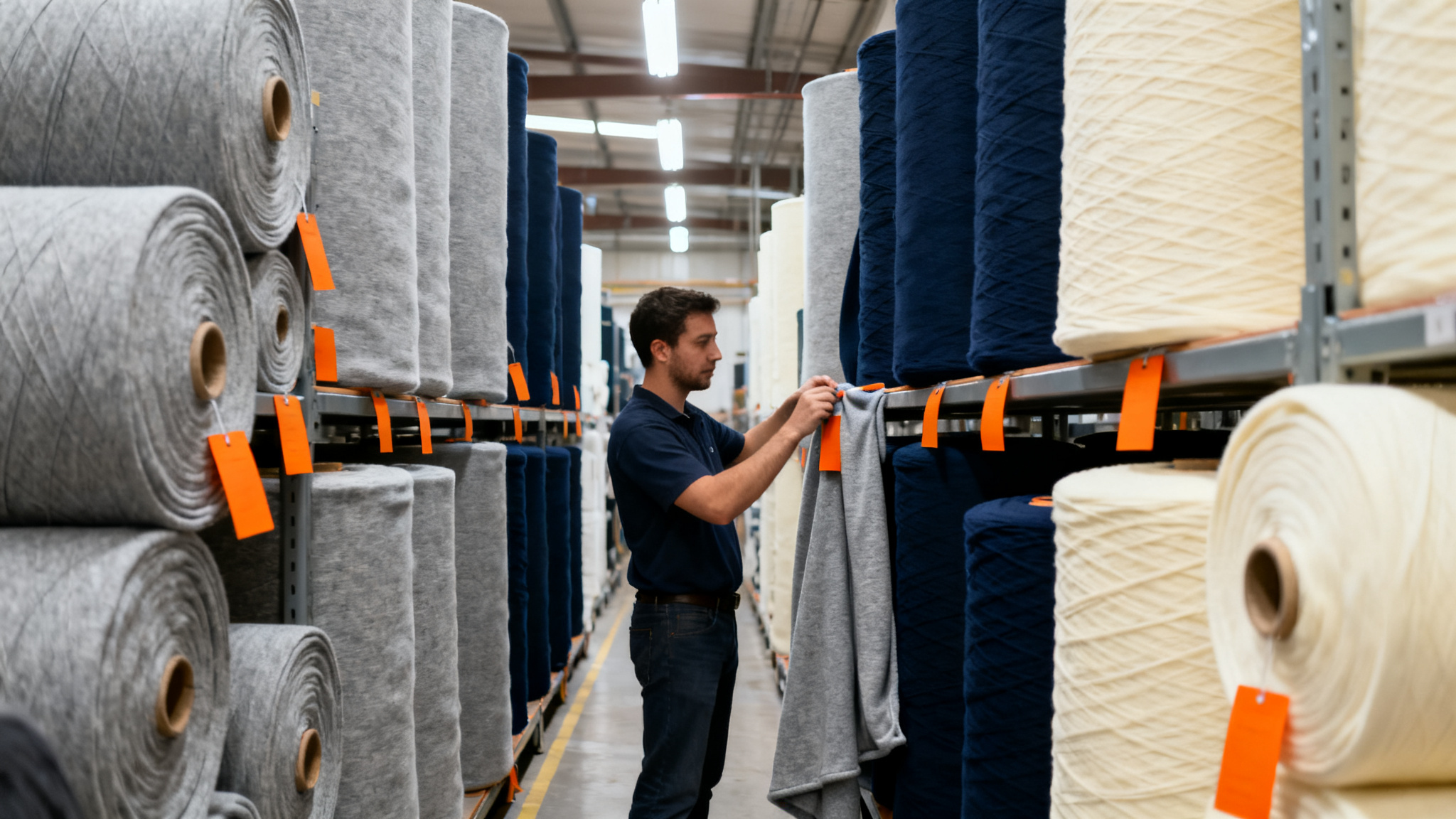
French terry is defined by its loop structure, not its fibre: it can be 100% cotton, cotton-poly, or cotton with a touch of elastane. The loops sit on the inside and are left intact, which is what gives the fabric its faint towel-like texture and its ability to absorb moisture without clinging. Fleece takes a similar knit — often a three-end fleece with a binding yarn — and runs the back through a napping machine with wire-covered rollers that tease the loops open into a raised pile. That is the whole difference, and it explains everything downstream: warmth, weight, pilling, drape and price.
Which is warmer, French terry or fleece?
Warmth is where fleece earns its place, and it is not a small gap.
Brushed fleece is noticeably warmer than French terry at the same GSM because the raised nap traps a layer of still air against the body, and most fleece hoodies are also knitted heavier — typically 400–450 GSM against 280–380 GSM for French terry — so the real warmth difference is the combination of loft and weight, not one factor alone.3
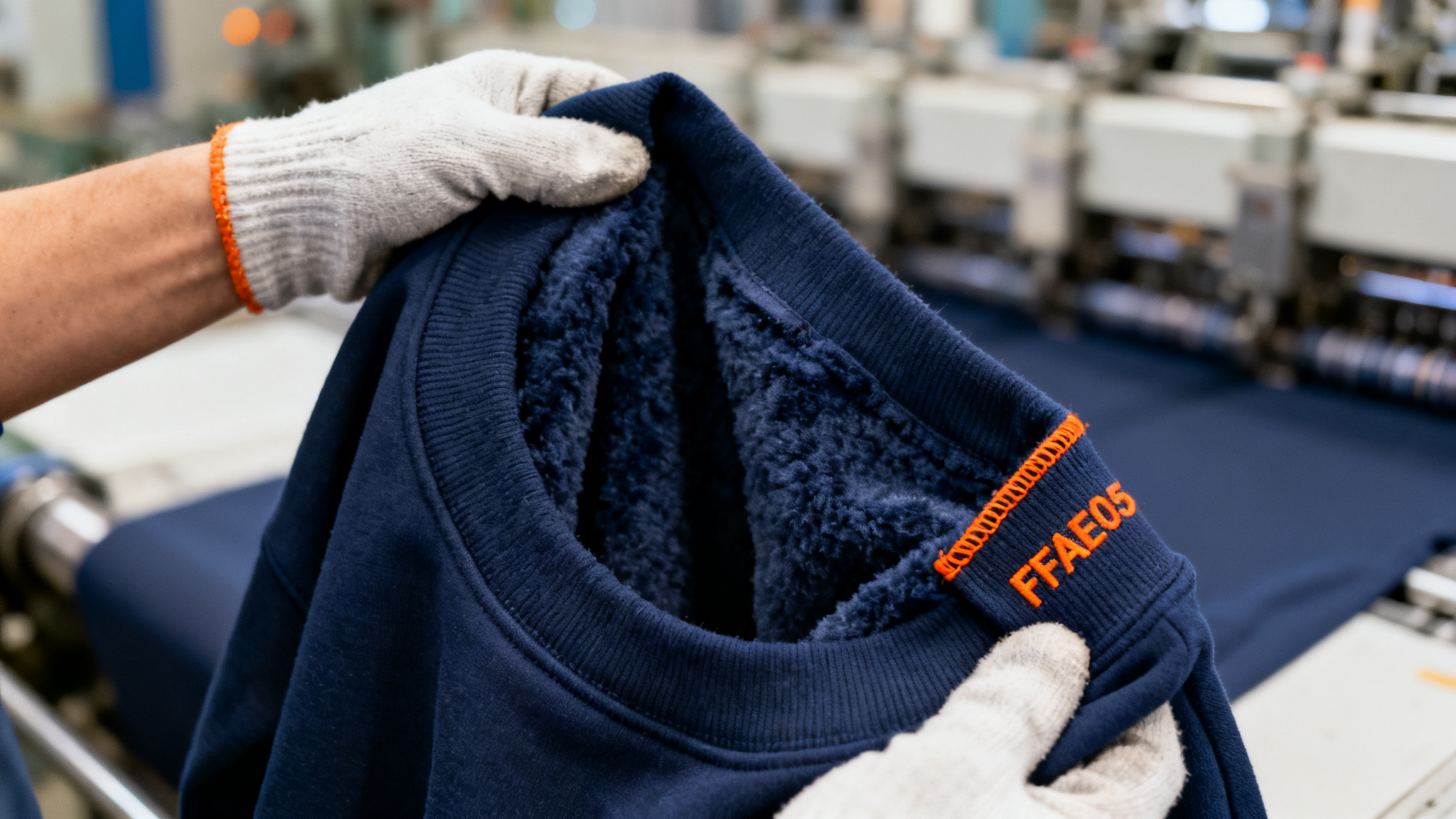
Air is the insulator, and the nap is what holds it. A 420 GSM brushed fleece hoodie will feel warm on a cold morning where a 340 GSM French terry hoodie of the same cut feels merely comfortable. The trade-off arrives indoors: that same trapped air becomes heat retention you cannot vent, which is why fleece hoodies get taken off in heated rooms and French terry ones do not. If your brand sells in a climate with real winters, fleece is not a compromise — it is the correct product. If you sell in a market where a hoodie is a three-season layer, fleece will feel like too much garment for most of the year.
Which fabric is better for a streetwear hoodie?
For most modern streetwear programmes, French terry wins on the details that customers actually judge.
French terry is generally better for streetwear hoodies because it drapes rather than balloons, resists pilling, keeps its shape and colour through repeated washing, and photographs with a cleaner silhouette — while brushed fleece adds bulk that can read as boxy and tends to fuzz, pill and lose loft over time.4
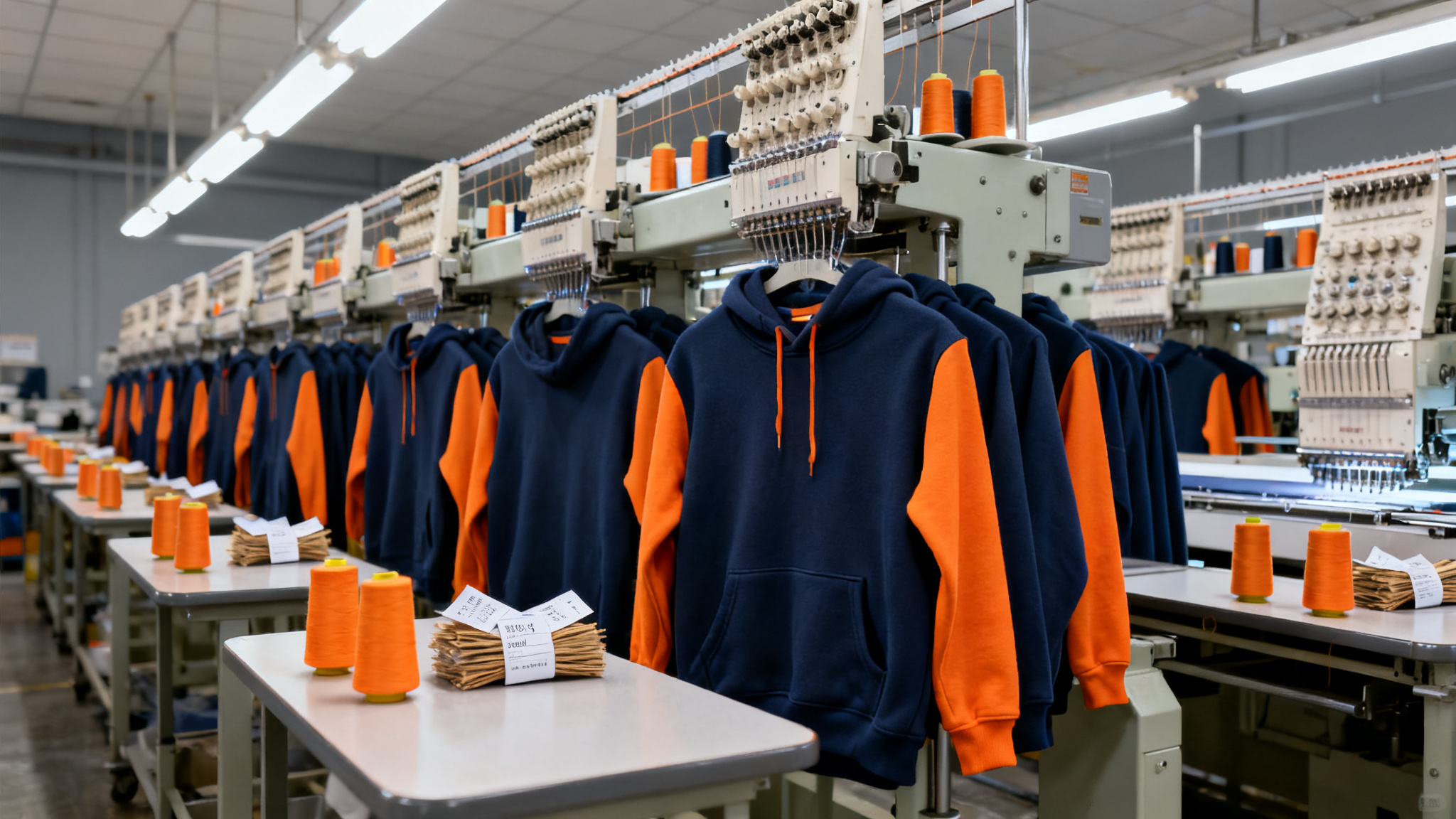
Streetwear is a fit-driven category, and French terry is the more controllable fabric. Because it has no pile, a 380 GSM loopback holds a wide, slightly cropped body and a dropped shoulder without collapsing into a shapeless mass, and the surface takes screen print and puff print with a flatter hand. Fleece, being bulkier and softer, tends to round off a strong silhouette and can make a boxy fit read as sloppy rather than intentional. There is also a durability argument that matters for brands shipping direct to consumer: brushed pile pills at friction points, traps lint, and after roughly 20–30 washes can go thin and patchy in the areas customers touch most, which shows up as returns and reviews rather than as a manufacturing defect you can claim. Fleece still has a legitimate role — heavyweight winter drops, sherpa-lined pieces, and any hoodie sold on warmth as the headline benefit.
How does GSM affect the French terry versus fleece decision?
GSM is not comparable across the two fabrics, and treating it as if it were is the most common specification mistake.
GSM measures fabric mass per square metre, so a 350 GSM French terry and a 350 GSM brushed fleece are the same weight but not the same thickness or warmth; French terry needs roughly 280–400 GSM to feel substantial, whereas fleece at 280 GSM already feels light and fleece hoodies usually land at 400–450 GSM to deliver the expected hand.5
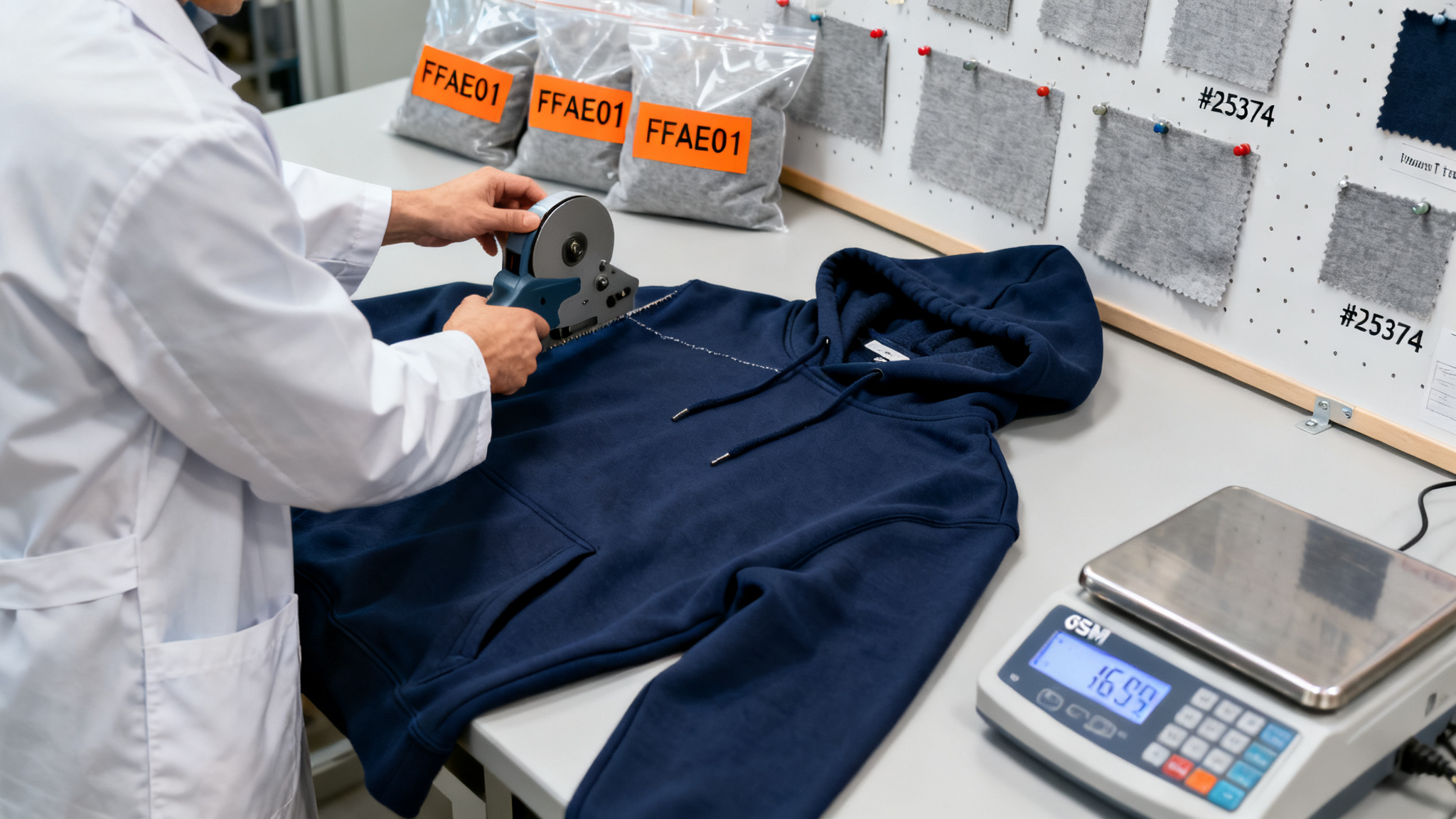
Because GSM is a mass measurement, brushing does not change it much — the fibre is still there, just rearranged into pile — but it changes thickness, loft and the perceived weight of the garment. That is why two hoodies labelled 380 GSM can feel like different products. When you specify, state the fabric type, the GSM and the target garment weight in grams, and ask for a physical swatch at production GSM rather than a stock card. A useful cross-check is finished garment weight: a size-L French terry hoodie at 350 GSM typically lands around 700–850 g, and the same cut in 420 GSM brushed fleece around 900–1,100 g. If the sample weighs materially less than the arithmetic suggests, the fabric is lighter than the spec sheet claims.
Which costs more to manufacture, French terry or fleece?
The price gap is smaller than most founders assume, but it is real and it moves in two directions.
Brushed fleece usually costs 5–12% more per garment than French terry at the same quality level because of the extra napping step, higher yarn consumption at 400–450 GSM and a slightly higher defect rate, but the total landed cost gap can shrink or reverse because French terry hoodies are lighter and therefore cheaper to ship and less likely to be returned.6
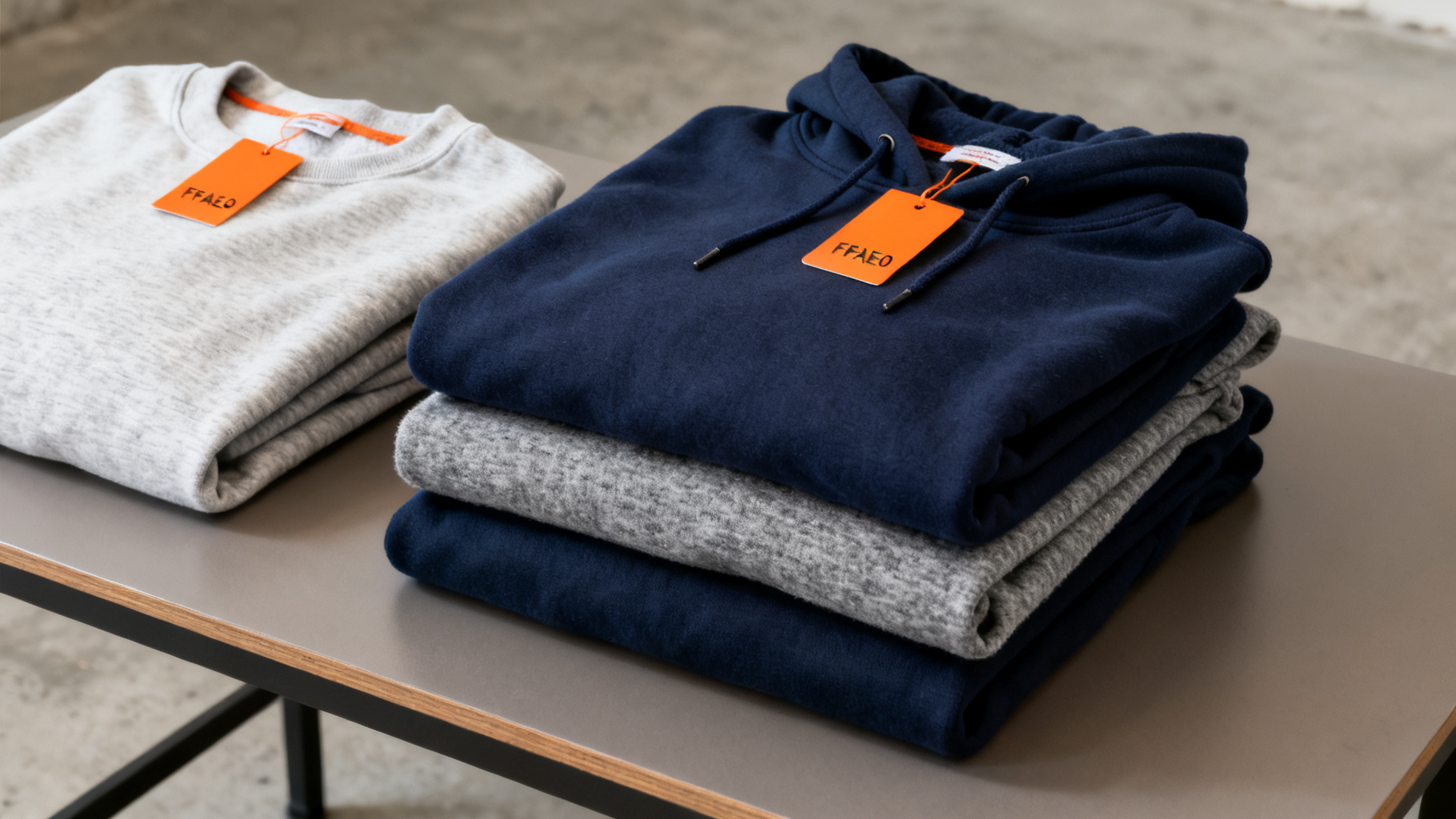
Napping is a separate finishing pass with its own machine time and its own quality risk: uneven brushing, brush marks and shade variation are all common, and a factory that rushes the step produces fleece that looks fine in a photo and feels scratchy in the hand. Heavier fleece also consumes more yarn, which is the largest single cost line in a hoodie. On the other side of the ledger, French terry's lower garment weight reduces freight per unit and lowers the risk of the pilling complaints that generate returns. For a first collection, the practical answer is to build one fabric platform rather than two: choose 340–380 GSM loopback French terry, get the fit and the hand right on that base, and add a heavier fleece piece only once volume makes the second fabric economical. Our guide to hoodie GSM and our breakdown of custom hoodie manufacturing cost cover the numbers in more detail.
Conclusion
Pick French terry at 340–380 GSM for a year-round streetwear hoodie that drapes well, prints cleanly and survives washing, and pick brushed fleece at 400–450 GSM when warmth is the product's headline benefit. Specify fabric type, GSM and garment weight together, and always approve a production swatch rather than a stock card. Adiwe manufactures custom hoodies in both loopback French terry and brushed fleece at low MOQs, with fabric weight, shrinkage and hand feel confirmed at sampling — send us your reference hoodie or tech pack and we will match the fabric to the fit you are trying to build.
"Terrycloth", https://en.wikipedia.org/wiki/Terrycloth. Describes terry cloth as a fabric constructed with protruding loops of thread, including how loop structure gives the fabric its absorbency and surface texture. Evidence role: general_support; source type: encyclopedia. Supports: the definition of French terry by its intact loop structure and the resulting breathability, drape and absorbency compared with a napped fabric. Scope note: the article covers woven terry (towelling) rather than the weft-knitted French terry used in sweatshirts, so it supports the loop-structure principle rather than knit-specific data. ↩
"Knitting", https://en.wikipedia.org/wiki/Knitting. Explains weft knitting, how interlocking loops form a fabric, and how knit structures and finishing treatments such as napping change the properties of the finished material. Evidence role: general_support; source type: encyclopedia. Supports: the explanation that French terry and fleece come from the same knitted base and diverge at the brushing or napping stage. Scope note: general knitting technology; does not describe hoodie fabric specifications or GSM ranges. ↩
"Polar fleece", https://en.wikipedia.org/wiki/Polar_fleece. Describes fleece as a soft, napped, insulating fabric and explains how a raised pile traps air to provide warmth relative to its weight. Evidence role: general_support; source type: encyclopedia. Supports: the claim that a brushed nap increases warmth at equal fabric weight by trapping still air. Scope note: the article focuses on synthetic polar fleece rather than cotton-blend sweatshirt fleece, so it supports the insulation mechanism rather than the specific GSM figures. ↩
"Sweater", https://en.wikipedia.org/wiki/Sweater. Covers knitted upper-body garments, their construction, common fibres and how knit structure affects fit, stretch and durability in wear. Evidence role: general_support; source type: encyclopedia. Supports: the argument that knit structure drives drape, shape retention and long-term appearance in a hooded sweatshirt. Scope note: garment-level overview of sweaters; pilling and wash-durability observations reflect typical production experience rather than data in this source. ↩
"Units of textile measurement", https://en.wikipedia.org/wiki/Units_of_textile_measurement. Reference page defining textile measurement units including grams per square metre (GSM) and how fabric weight per unit area is determined. Evidence role: general_support; source type: encyclopedia. Supports: the point that GSM is a mass-per-area measure and therefore does not capture thickness or loft differences between French terry and brushed fleece. Scope note: definitions and measurement methods only; the GSM bands and garment weights quoted are typical factory ranges, not figures from this source. ↩
"Cost of goods sold", https://en.wikipedia.org/wiki/Cost_of_goods_sold. Defines cost of goods sold and explains which direct costs, including materials, inbound freight and production processing, are carried into the cost of inventory. Evidence role: general_support; source type: encyclopedia. Supports: the framing of the comparison as total landed cost rather than factory unit price, including freight and return costs. Scope note: accounting definition; the 5–12% cost premium and freight effects are typical production estimates, not data published by this source. ↩
Ready to make this for your brand?
Adiwe manufactures custom T-shirts, hoodies, jackets, pants, shorts and shirts for brands worldwide — from 50 pcs per style and colour, with private labelling, three-stage QC and a physical sample you approve before bulk.
Custom Hoodie ManufacturingCustom T-Shirt Manufacturing