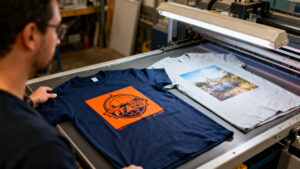
A brand decides it wants the faded, sun-bleached, softly worn hoodie that sells for three figures in a vintage store, and the first sample comes back looking like a garment that has simply been washed too often. The difference between "vintage" and "worn out" is not luck and it is not age. It is a controlled wash recipe, a deliberate colour recipe and a set of construction choices made before the first metre of fabric is cut.
A hoodie is made to look vintage by garment washing the finished piece — usually stone, enzyme or acid wash — to fade the surface colour and soften the hand, combined with controlled distressing at the collar, cuffs, hems and seams, and low-contrast prints that crack on purpose.1

Vintage is a finish, not a fabric. That single idea is what separates a repeatable production run from a pile of experiments, and it is why the best-looking vintage hoodies are specified in a tech pack the same way a Pantone colour or a GSM is specified.
What actually makes a hoodie look vintage?
The look comes from three separate things happening at once, and skipping any one of them flattens the effect.
A convincing vintage hoodie combines faded surface colour, a softened and slightly roughened fabric hand, and physical wear at the edges — the three effects that stone washing and related wash processes produce on cotton garments.2
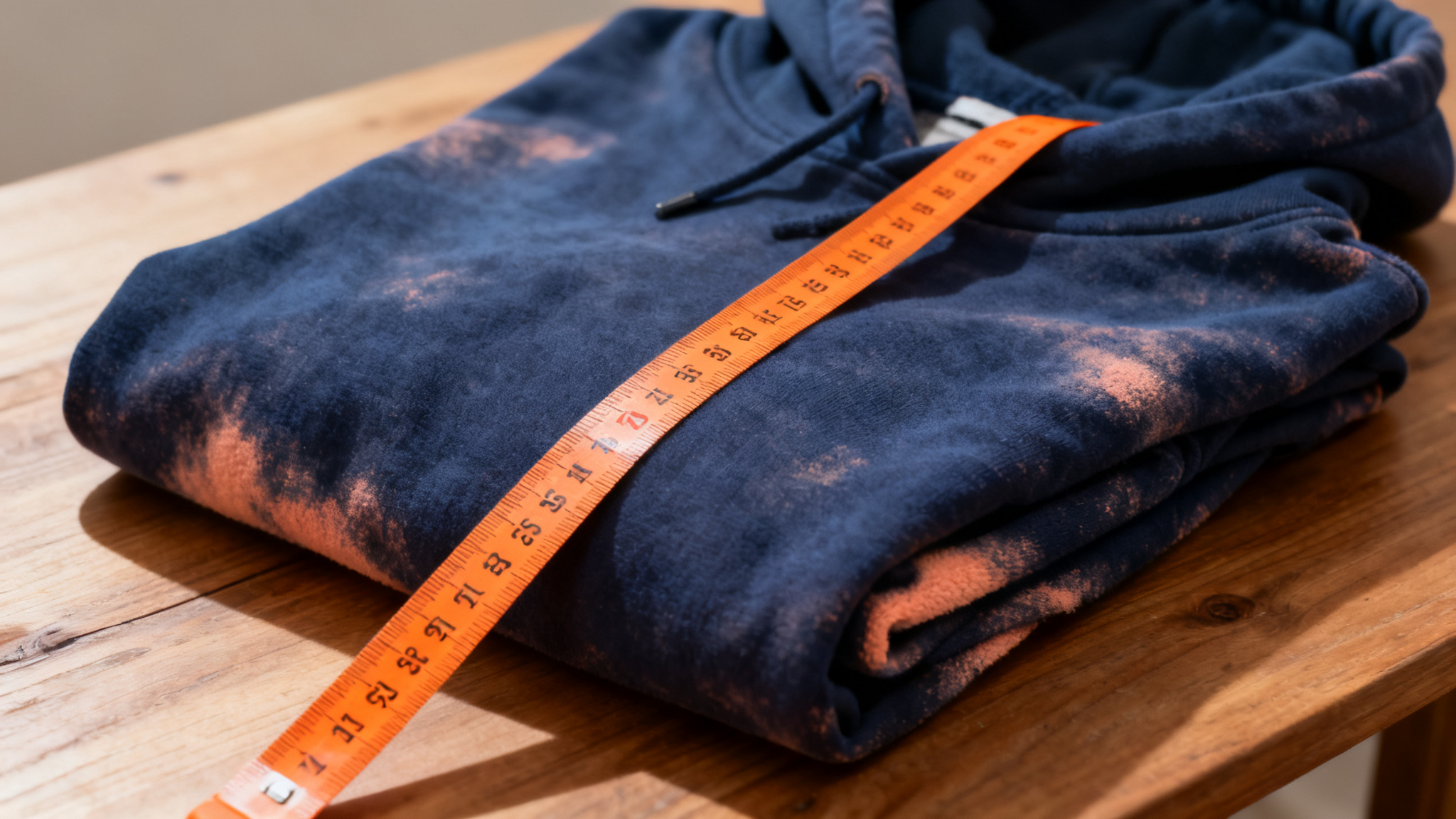
Fading alone reads as a cheap dye job. Softness alone reads as a hoodie that has been washed. Edge wear alone looks damaged. Put together — a colour that has dropped two or three shades, a surface with the peach-skin bloom that abrasion gives cotton, and a collar and cuff that look like they have been pulled over a head a hundred times — and the brain reads the garment as old rather than defective. Decide the target look with physical references: a photo, a thrifted garment, or a wash standard from the laundry, not an adjective in an email.
How do you wash a hoodie to make it look vintage?
There are three main routes, and each one fails in a different way if it is pushed too hard.
Vintage washes are industrial garment washes: stone wash uses abrasive pumice or synthetic stones for mechanical wear, enzyme wash uses cellulase to attack the cotton surface for softness and a light fade, and acid wash uses chlorine-soaked stones for high-contrast marbling.3
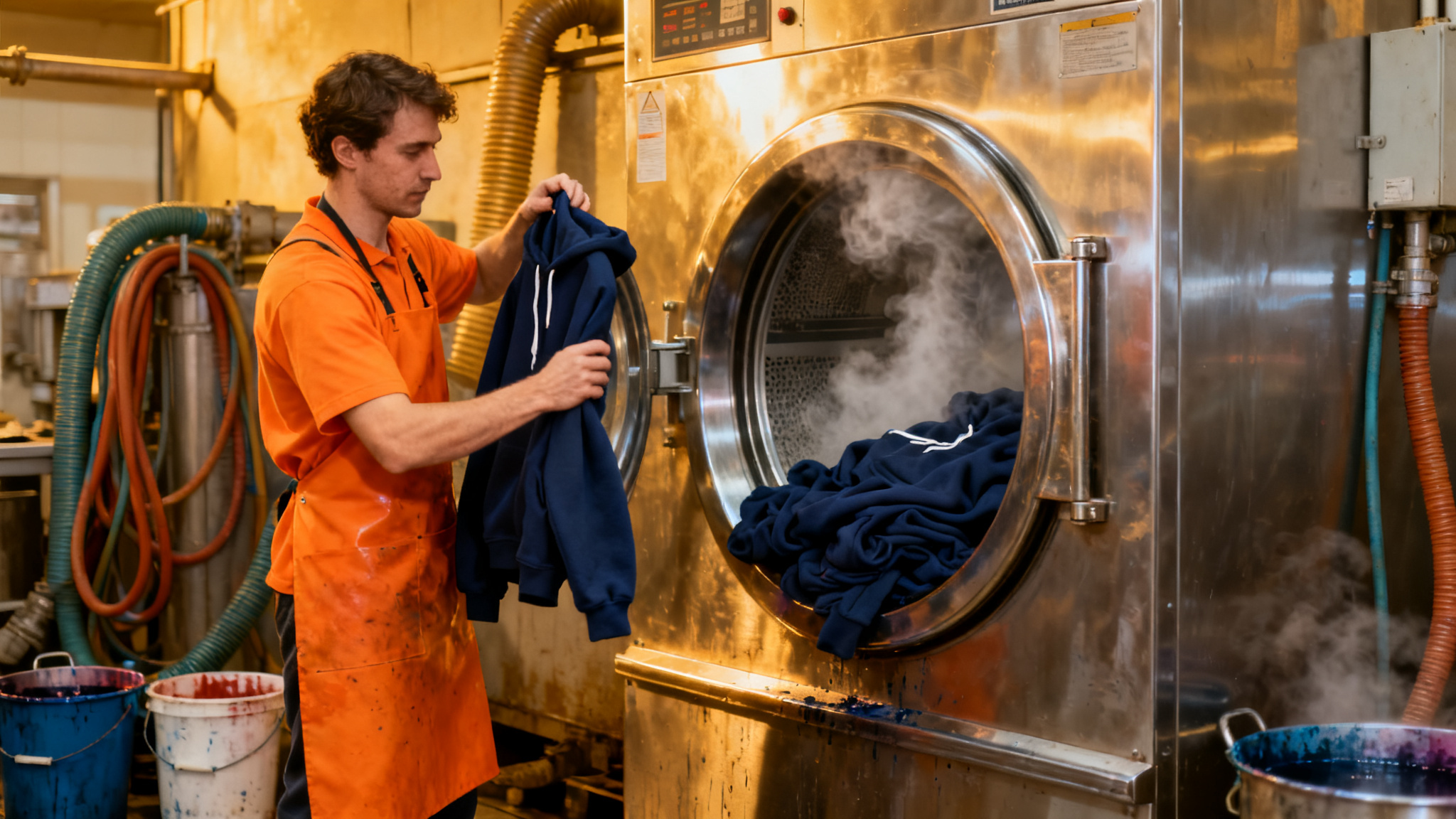
Stone wash gives the most authentic mechanical abrasion but it also weakens seams and can pit the fabric if the load is over-run, so heavyweight fleece at 400 GSM and above handles it far better than a 280 GSM loopback. Enzyme wash is gentler and more consistent, which makes it the usual choice for larger runs where shade repeatability matters. Acid wash is the loudest option and belongs on a deliberate, marble-look product rather than a subtle fade. Ask your factory which route they run in-house and what their reference recipe is in kilos, temperature, time and chemistry — a factory that answers with "we will make it look old" has not answered.
How do you fade the colour of a vintage hoodie?
Colour is the part buyers notice first, and the part that is hardest to repeat.
The most controllable way to fade a hoodie is to garment-dye the finished piece to a darker shade than the target and then let the wash pull colour back, rather than trying to wash out a piece-dyed garment after the fact.4
Piece-dyed fabric is dyed in the roll, so the colour sits evenly through the yarn and resists a controlled fade. Garment dyeing colours the sewn hoodie, which lets the laundry work the surface back and leaves the seams and hems slightly lighter — exactly the unevenness that reads as age. Two practical rules: choose a heavier fabric, because fading removes visual weight; and lock the target shade against a physical swatch approved by both sides, because a "faded navy" can drift from grey-blue to purple between lots. If you need a specific reference, our custom hoodie manufacturing page covers how shades and washes are specified together.
How do you distress a hoodie without ruining it?
Distressing is where vintage hoodies most often cross from desirable into unsellable.
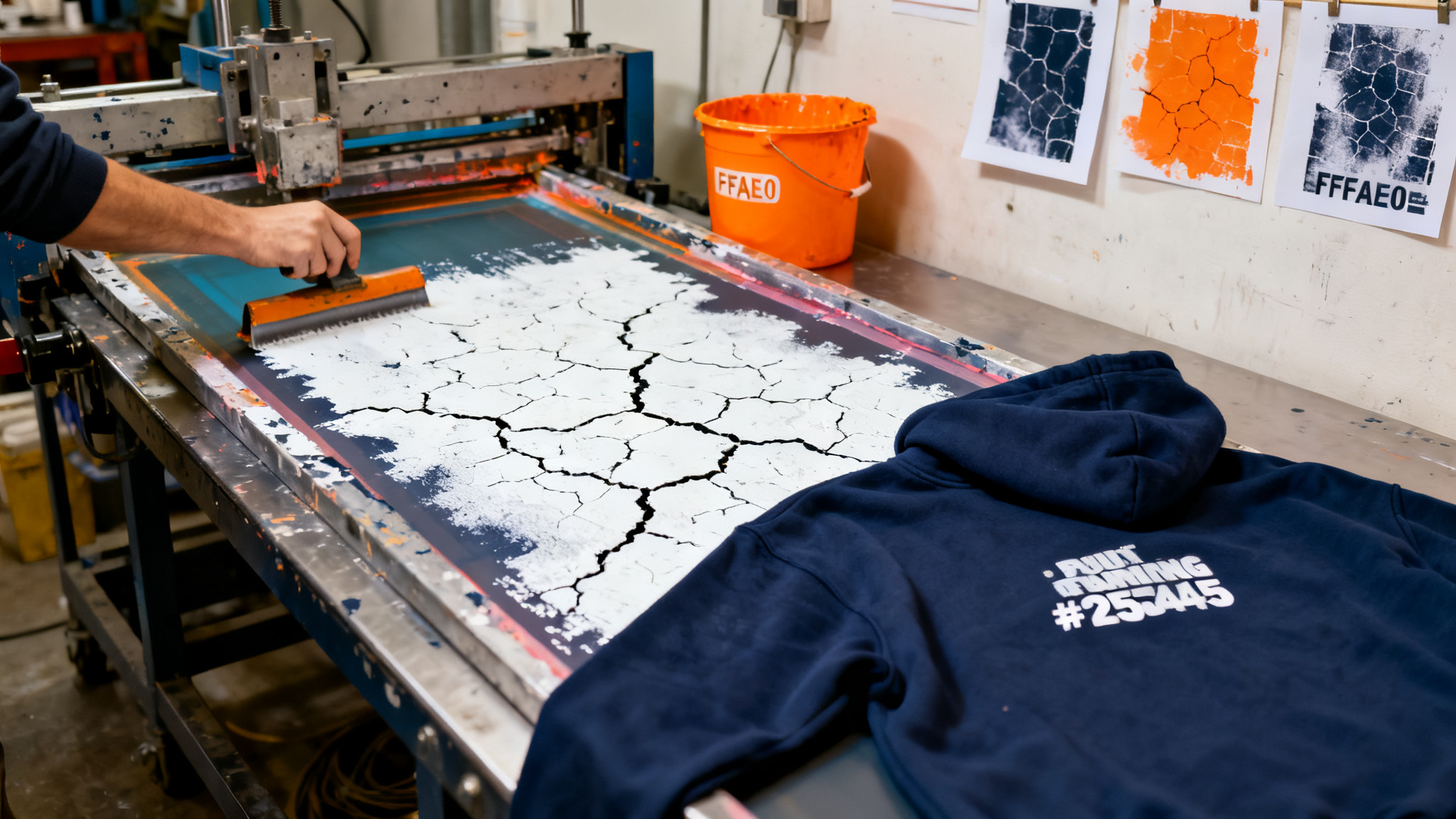
Distress a hoodie surgically: abrade the collar, cuff edges and hem, sand the high points at pocket and shoulder seams, and use a low-opacity or puff print so the graphic cracks along the fabric rather than sitting on top of it.5
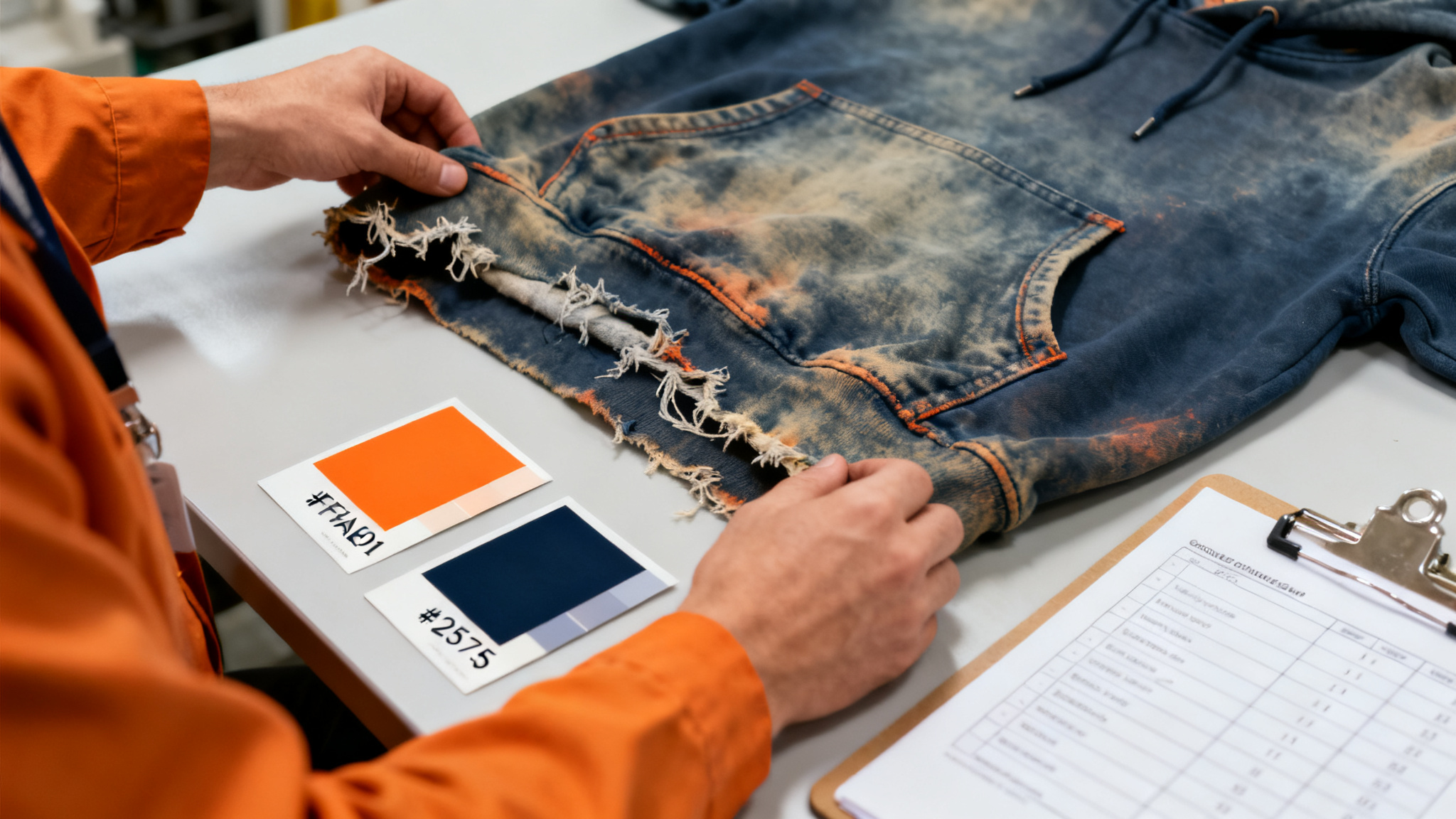
Keep every distressed zone away from a load-bearing seam: a nick at the shoulder seam becomes a hole in the first wash, while abrasion on the body panel is only cosmetic. For prints, thinner ink deposits and a deliberate low-opacity base crack naturally with wear; heavy plastisol looks new no matter what the garment is doing underneath. Document the distressed zones on a marked-up flat sketch, with a pass and fail photo for each area, so the inspection team is judging against an image instead of an opinion.
How do you keep vintage washes consistent across a bulk order?
The first sample is easy. Piece 800 of 800 looking like the first sample is the actual job.
Wash results vary with the cotton itself, so consistency depends on fixing the fabric lot, the dye recipe and the wash recipe together, then approving a sealed bulk standard that every subsequent lot is matched against.6
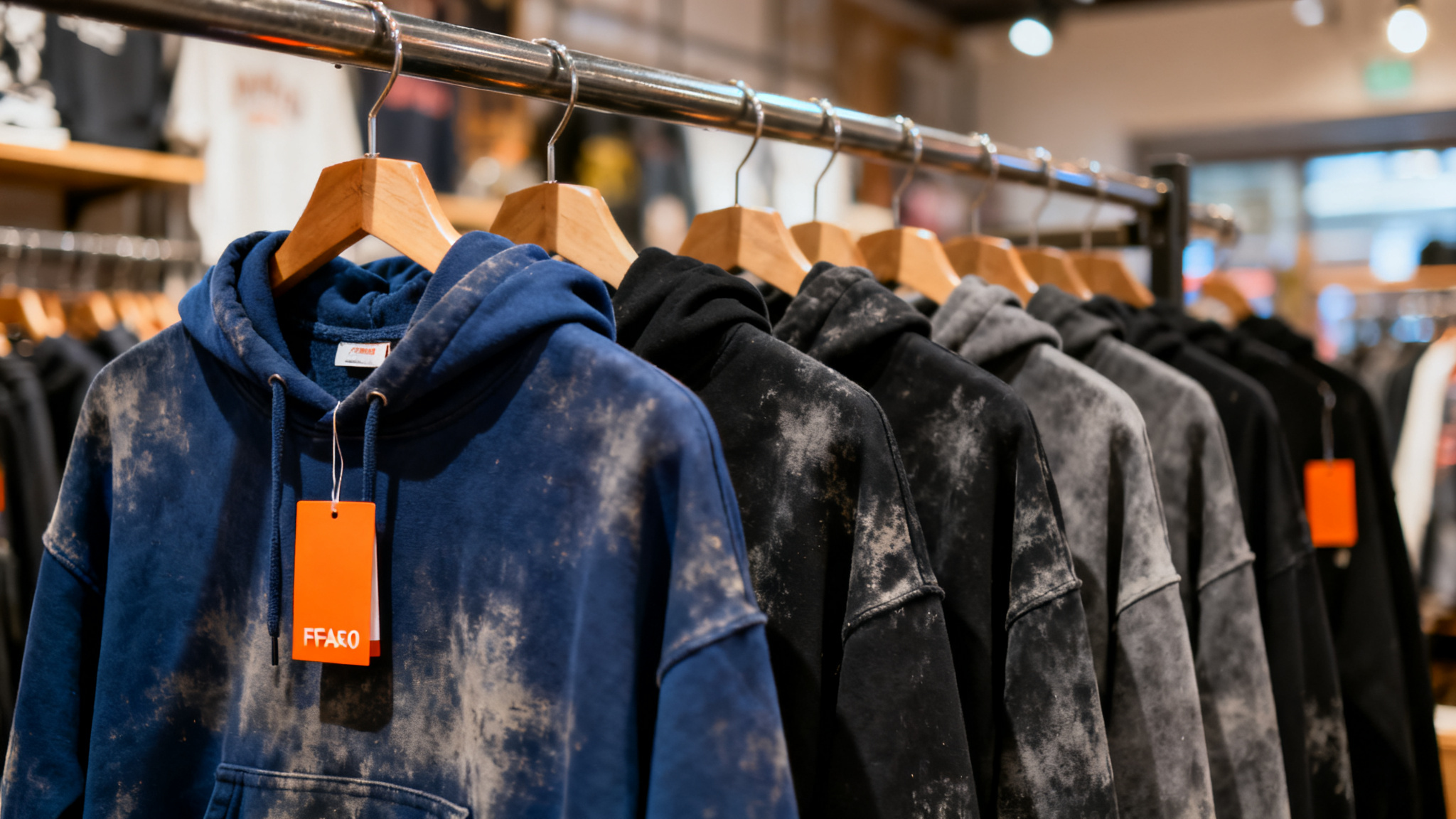
Cotton is a natural fibre, so absorbency and abrasion response shift between lots and between mills; a wash recipe that hits the shade on one fabric lot can land a shade lighter on the next. Protect yourself with three things in writing: the fabric lot or a dye-lot commitment, a sealed and signed bulk wash standard kept by both parties, and an agreed tolerance with a defined inspection light source. Then check shade continuity across sizes, because sleeves and bodies cut from different lays often wash differently. A factory that treats the wash standard as a controlled document, not a photo in a chat thread, is the one that can run your second drop without you re-approving everything.
Conclusion
A vintage hoodie is engineered backwards from the look you want: pick the fabric weight that can take abrasion, choose garment dyeing so the fade can be controlled, run a documented wash recipe, distress only where it is safe, and seal a bulk standard before you cut. Get those five right and the garment reads as archive; get them wrong and it reads as a return. If you are building a vintage-washed hoodie programme, send us your reference garment and target quantity and we will quote the wash route, the fabric weight and the timeline it actually needs.
"Hoodie", https://en.wikipedia.org/wiki/Hoodie. Describes the hoodie as a sweatshirt with a hood and kangaroo pocket, covering its panel construction, trims and cultural place in streetwear. Evidence role: general_support; source type: encyclopedia. Supports: the definition of the garment and the construction points (collar, cuffs, hems, seams) that vintage finishing is applied to in this article. Scope note: cultural and construction overview; does not cover wash recipes, dye methods or finishing standards. ↩
"Stone washing", https://en.wikipedia.org/wiki/Stone_washing. Explains how stone washing abrades garment surfaces to soften fabric and produce a faded, worn appearance, and how the process developed in denim finishing. Evidence role: general_support; source type: encyclopedia. Supports: the claim that fade, softness and edge wear come from mechanical abrasion rather than from dye choice alone. Scope note: written mainly around denim; the same mechanical principles apply to heavyweight cotton fleece but the specific recipes and timings differ by fabric. ↩
"Cellulase", https://en.wikipedia.org/wiki/Cellulase. Describes cellulase enzymes and their industrial use in textile processing, including bio-polishing and stone-wash replacement on cotton. Evidence role: general_support; source type: encyclopedia. Supports: the explanation of enzyme wash as a gentler, more repeatable route to a faded, softened cotton surface compared with pumice stone washing. Scope note: technical and industrial chemistry focus; does not give garment-level recipes, machine loads or shade tolerances. ↩
"Dyeing", https://en.wikipedia.org/wiki/Dyeing. Covers dyeing methods, the difference between dyeing fibre, yarn, fabric and finished garments, and how dye penetration affects colour evenness. Evidence role: general_support; source type: encyclopedia. Supports: the argument that garment dyeing gives more controllable fading and more visible seam contrast than piece-dyed fabric. Scope note: broad textile-dyeing overview; shade-matching tolerances and laundry-specific fading behaviour must be confirmed with the supplier. ↩
"Screen printing", https://en.wikipedia.org/wiki/Screen_printing. Explains the screen printing process, ink deposit thickness and how different inks sit on fabric surfaces. Evidence role: general_support; source type: encyclopedia. Supports: the point that lower ink deposits and puff or low-opacity prints crack and age with the garment instead of masking the vintage finish. Scope note: process overview; does not prescribe opacity levels or cure temperatures, which are supplier and ink-system specific. ↩
"Cotton", https://en.wikipedia.org/wiki/Cotton. Describes cotton as a natural fibre and explains how fibre properties, staple length and processing affect the finished fabric. Evidence role: general_support; source type: encyclopedia. Supports: the explanation of why wash results shift between cotton lots and why sealed bulk standards and lot commitments are needed for consistency. Scope note: agricultural and fibre-science overview; does not address apparel wash-house practice, tolerances or inspection lighting standards. ↩
Ready to make this for your brand?
Adiwe manufactures custom T-shirts, hoodies, jackets, pants, shorts and shirts for brands worldwide — from 50 pcs per style and colour, with private labelling, three-stage QC and a physical sample you approve before bulk.
Custom Hoodie ManufacturingCustom T-Shirt Manufacturing