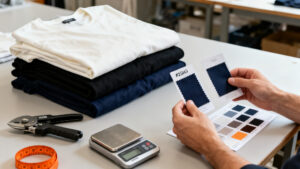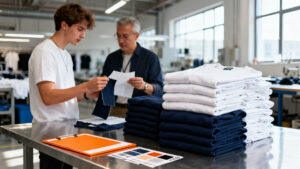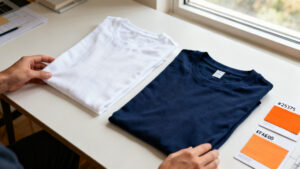
Every founder asks the same question in the first call: what will this collection actually cost? The honest answer is a range, not a number — a heavyweight 300 GSM hoodie and a 180 GSM printed tee can leave the same factory at four times the price difference per unit. What you can control is knowing which line items move that number, and what a realistic all-in budget looks like before you commit to a supplier.
Most streetwear collections cost roughly $8–$18 per t-shirt, $22–$45 per hoodie and $25–$55 per heavyweight outerwear piece at the factory gate, before freight, duties and your own branding costs.1
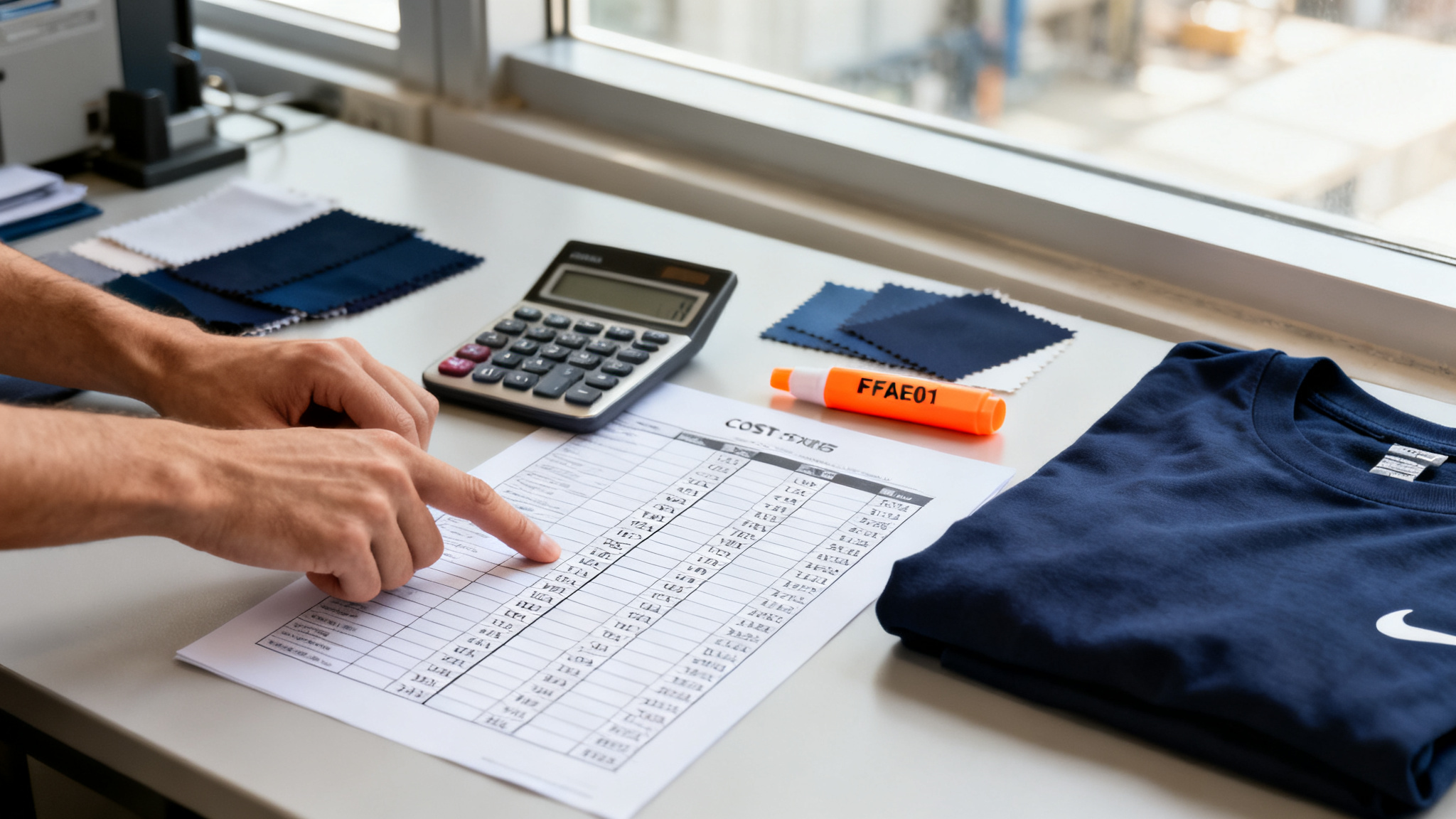
Below is a line-by-line view of where that money goes, how sampling and order quantity change the math, and the costs founders forget to budget for until the invoice arrives.
How much does it cost to manufacture a streetwear collection?
Start with the garment type, because it sets the floor price.
A realistic factory-gate budget is $8–$18 for a 220–280 GSM t-shirt, $22–$45 for a 350–450 GSM hoodie, and $18–$35 for sweatpants or shorts, based on 100–300 pieces per style in cotton or cotton-blend knits.2
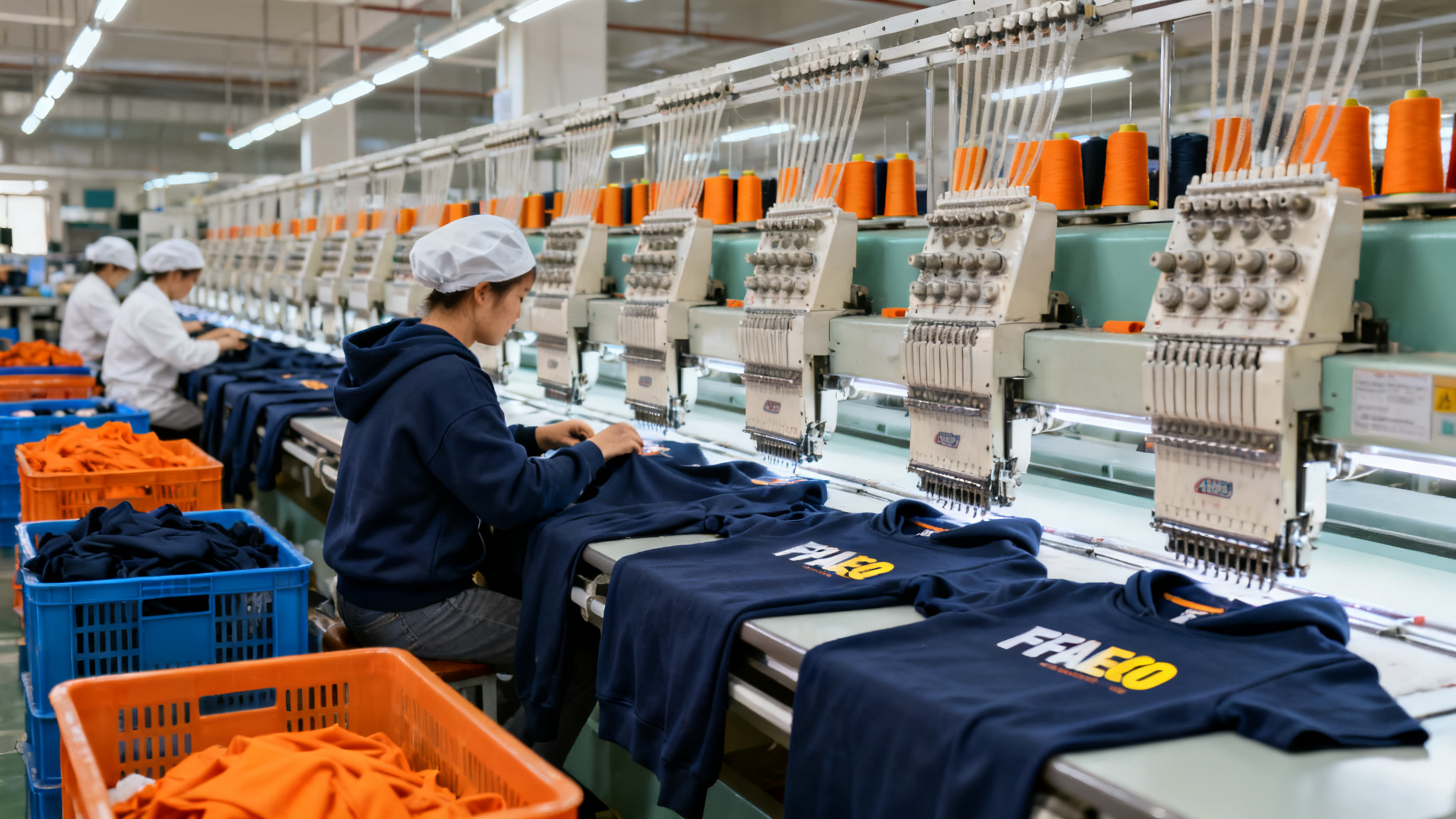
Those ranges assume standard construction: a knit body, ribbed collar or cuffs, one or two decoration placements and basic trims. A 100-piece run of a 260 GSM oversized tee with a one-colour chest print typically lands near $11–$14 per unit; the same tee at 300 pieces drops toward $9–$11. Heavy garments scale differently because the fabric itself is the dominant cost — a 450 GSM fleece hoodie can carry $12–$18 of fabric alone before a single stitch is sewn. Treat any quote far below these ranges as a question, not a bargain: it usually means lighter fabric, lower stitch density, or a different trim spec than the one you approved.
What drives the per-unit cost of a streetwear piece?
Four line items account for most of the price on your quote.
Fabric typically accounts for 40–60% of a knit garment's factory cost, with cut-and-sew labour at 20–30%, decoration at 10–20% and trims and packaging making up the rest.3
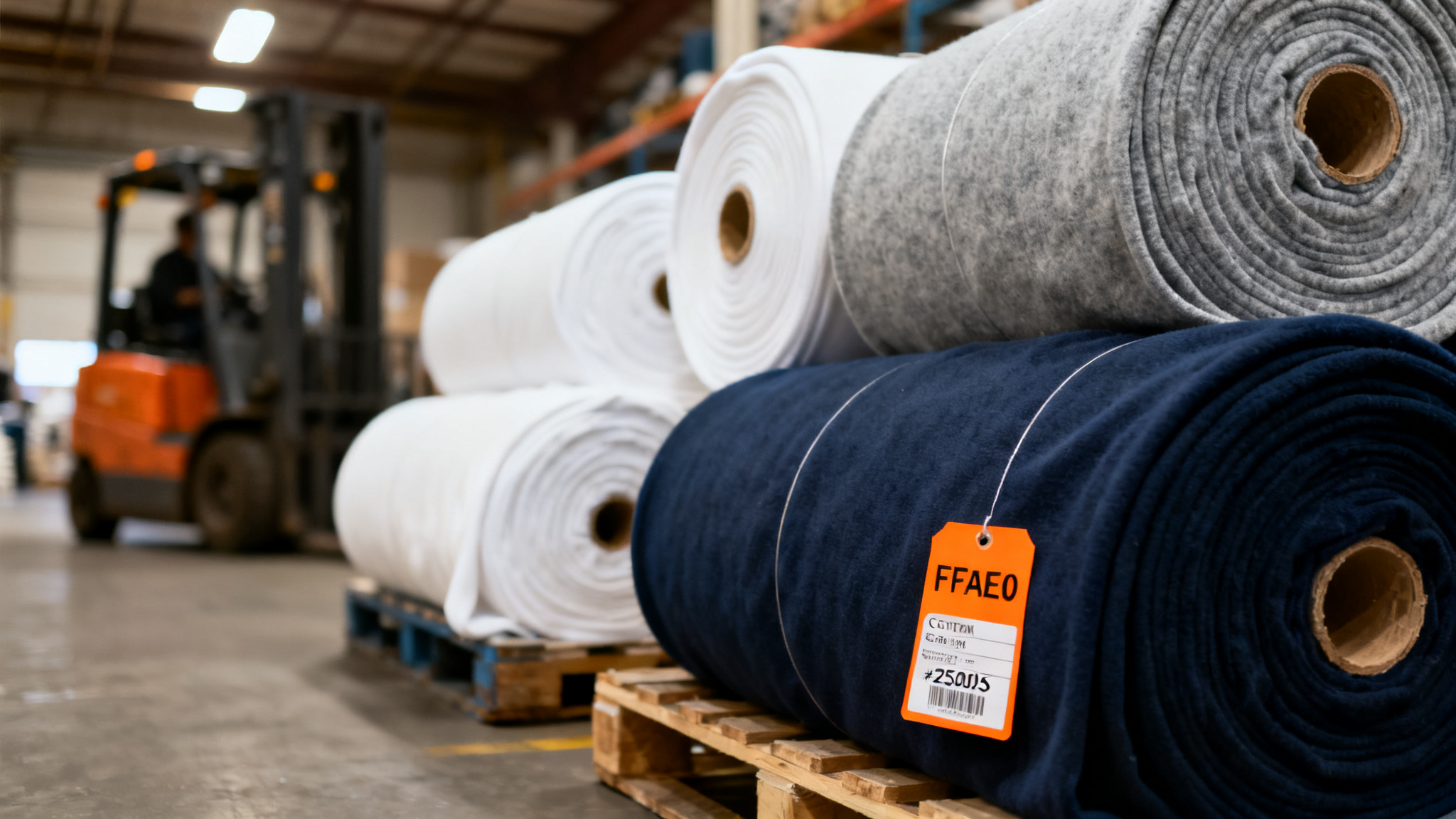
Fabric is where weight, fibre and dye method multiply. Moving from 180 GSM to 280 GSM single jersey adds roughly 50% more raw material per garment; switching from standard reactive dye to garment dye or acid wash adds a wet-processing pass and a higher defect rate. Labour is driven by complexity, not by brand size: a boxy tee with a clean hem is fast, while a multi-panel hoodie with kangaroo pocket, flatlock seams and a lined hood can triple the sewing minutes. Decoration is priced per placement, per colour and per technique — a single-colour screen print is cheap, a puff print or embroidery across the chest is not. Trims look trivial and are not: custom woven labels, metal aglets, YKK-grade zips and branded poly bags can quietly add $1.50–$4 per unit.
How much does sampling and development cost?
Sampling is a fixed cost you pay once, and it is usually money well spent.
Expect $50–$150 per sample for a t-shirt and $120–$300 for a hoodie or jacket, with pattern development, grade sets and lab dips adding $150–$600 per style depending on complexity.4
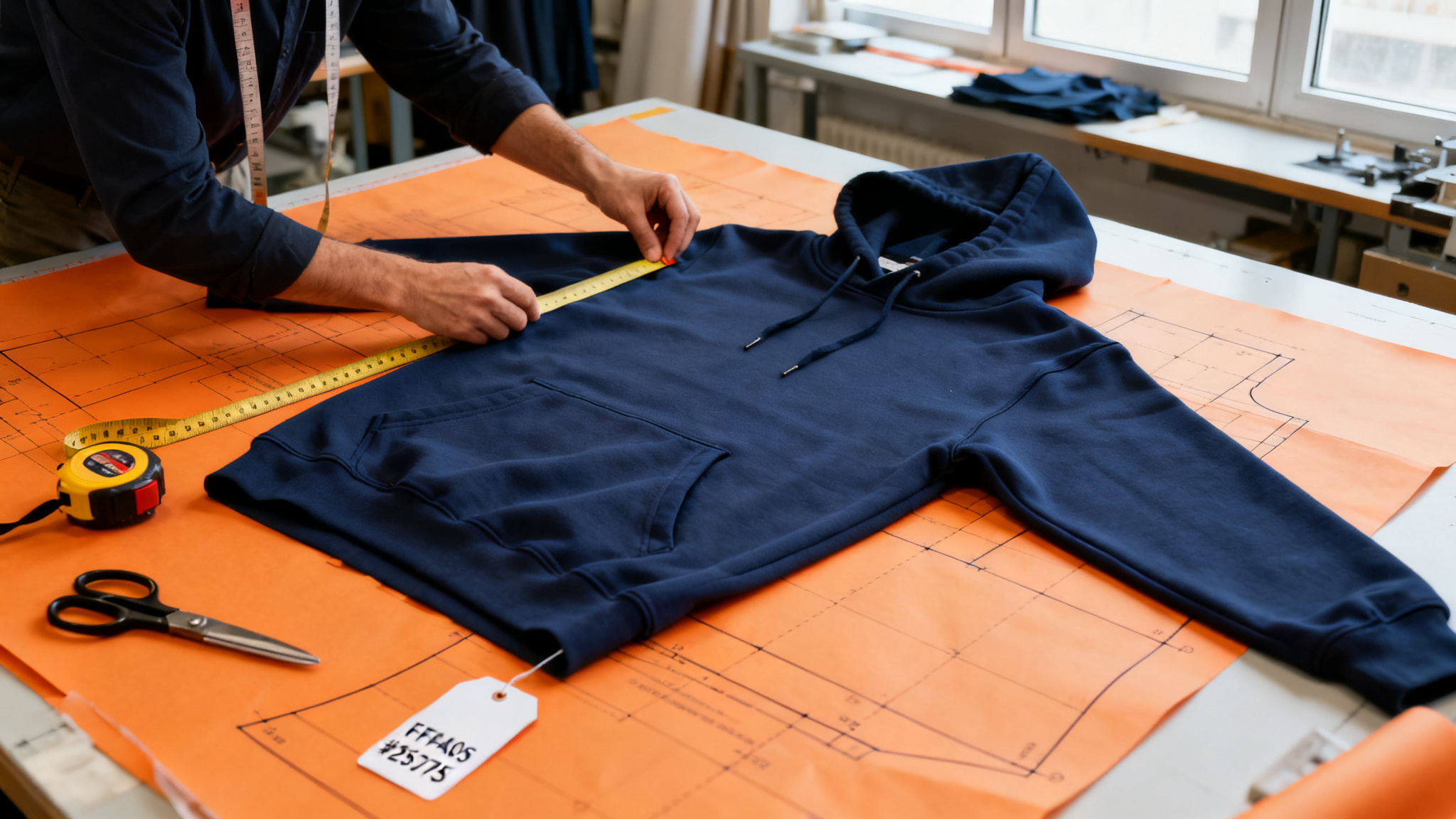
A first collection of five styles typically needs one or two sample rounds per style, which puts development somewhere between $500 and $2,500 before bulk. Many factories credit part or all of the sample fee back against the bulk order, so it is always worth asking. The expensive mistake is skipping the second round: a $120 sample revision is much cheaper than discovering a 2 cm shoulder drop or a collar that twists after 800 units are already cut. Ask for a graded size set rather than a single medium, and confirm the sample is made from the production fabric lot, not a stock substitute.
How does order quantity change the cost per unit?
Price breaks are real, but they flatten faster than most founders expect.
Doubling your order from 100 to 200 pieces typically cuts the unit price by 10–20%, while going from 500 to 1,000 pieces usually saves only 5–10% more.5
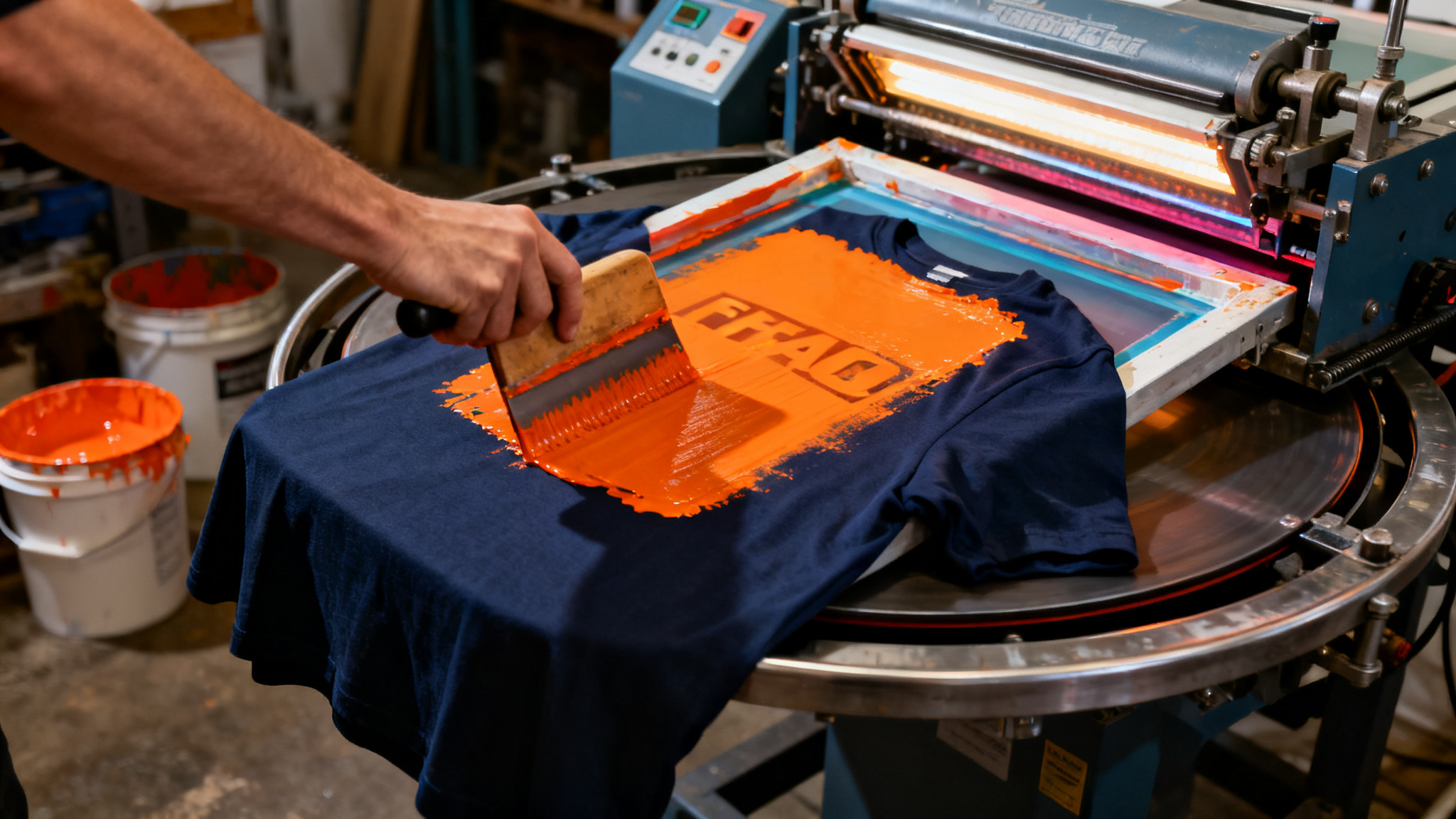
The first jump is large because setup costs — pattern making, screen burning, fabric minimums, machine time — get spread over more units. After a few hundred pieces, setup is fully absorbed and the curve flattens; you are then negotiating on fabric price and factory margin, not on efficiency. This is why chasing a 1,000-piece order to save 60 cents a unit is usually a bad trade against inventory risk. A smarter play for a first drop is 100–150 pieces per style across fewer styles, then reorder the winner at a better price once you have sell-through data.
The factory invoice is rarely the number that hits your bank account.
Budget an extra 20–35% on top of the factory price for freight, import duties, inspection, payment fees and defect allowances to get your true landed cost per unit.6
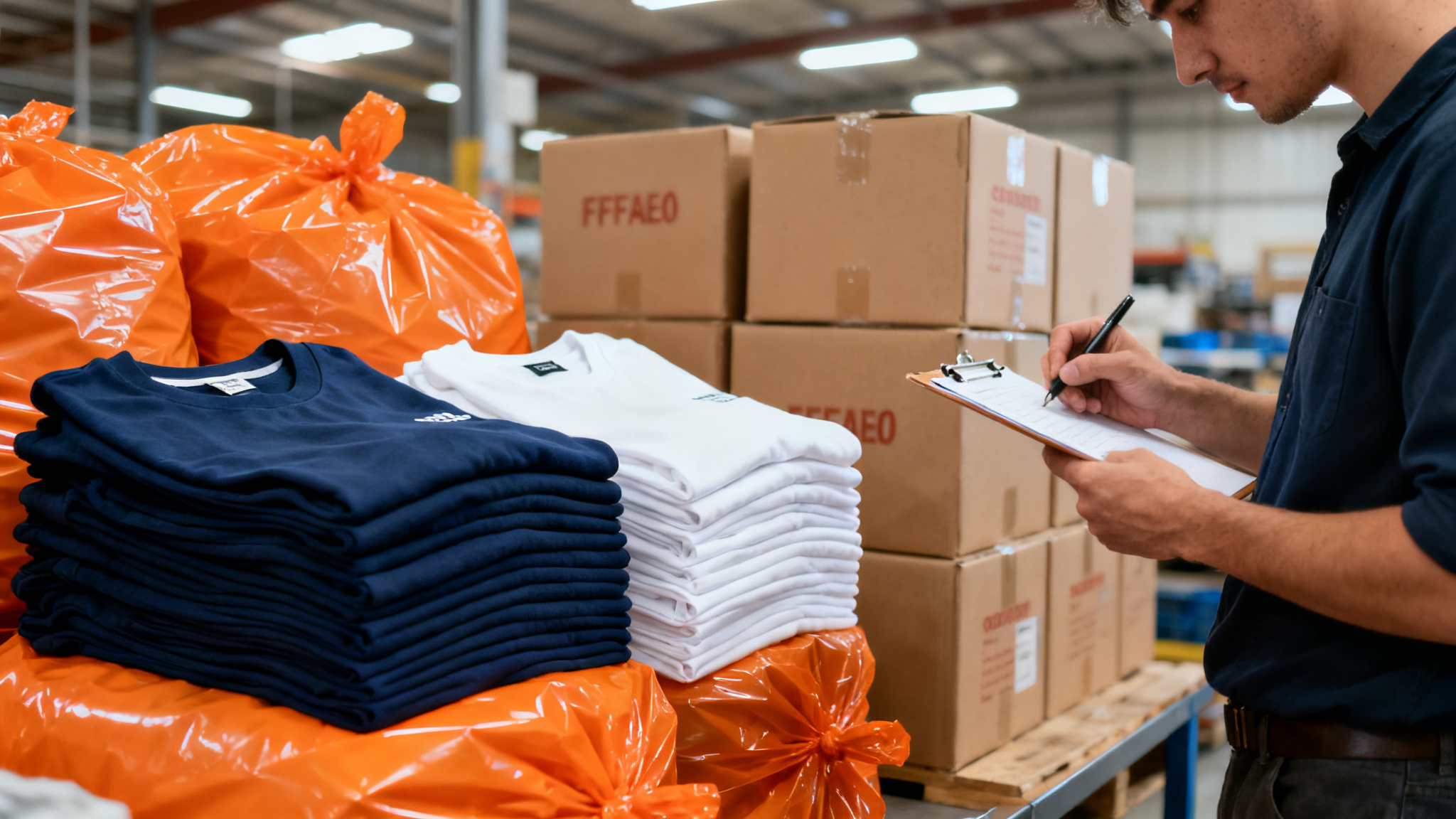
Air freight on a 200 kg first order can add $2–$5 per garment; sea freight is far cheaper per kilo but adds three to five weeks and requires planning. Duties vary by country and by fibre content, so check the harmonised code for knit cotton versus synthetic blends before you price your retail. Add payment costs — a 30% deposit is standard, and international transfers plus FX spreads typically cost 1–3%. Then add a defect allowance: even a good factory will ship 1–3% of units with issues, and replacing them locally is your expense unless your contract specifies AQL inspection and remediation. For a structured walkthrough of what belongs in that contract, see our guide to MOQ in custom streetwear manufacturing and our custom clothing manufacturing process.
Conclusion
A streetwear collection is cheaper than most founders fear and more expensive than the first quote suggests. Plan on $8–$18 per tee and $22–$45 per hoodie at the factory gate, add $500–$2,500 for development, then add 20–35% for freight, duties and fees to reach your real landed cost. Price your retail from that landed number, not from the factory invoice, and keep your first order small enough that a slow seller does not sink the next drop. If you want a transparent line-by-line quote rather than a single number, send Adiwe your styles, quantities and target fabric weights — we quote from low MOQs and break out fabric, labour, decoration and packing so you can see exactly where the money goes.
"Clothing industry", https://en.wikipedia.org/wiki/Clothing_industry. Overview of the global apparel industry, its production stages, cost structure and the role of contract manufacturers. Evidence role: general_support; source type: encyclopedia. Supports: the factory-gate price ranges quoted for common streetwear garment types. Scope note: industry-level overview; actual quotes vary by fabric, quantity and country. ↩
"Unit cost", https://en.wikipedia.org/wiki/Unit_cost. Defines unit cost as total production cost divided by units produced and explains how fixed and variable costs combine per item. Evidence role: general_support; source type: encyclopedia. Supports: the per-unit cost framing and why small runs carry a higher unit price. Scope note: accounting concept, not apparel-specific pricing data. ↩
"Textile manufacturing", https://en.wikipedia.org/wiki/Textile_manufacturing. Covers fibre-to-fabric production including spinning, knitting, dyeing and finishing, and the relative weight of material versus processing costs. Evidence role: general_support; source type: encyclopedia. Supports: fabric as the largest single cost component in knit garments. Scope note: process overview; percentage splits vary by garment and order size. ↩
"Clothing industry", https://en.wikipedia.org/wiki/Clothing_industry. Describes apparel product development, sampling, pattern grading and the pre-production stages that sit before bulk manufacturing. Evidence role: general_support; source type: encyclopedia. Supports: the sampling and pattern development cost ranges given for a first collection. Scope note: describes process stages rather than published price lists. ↩
"Economies of scale", https://en.wikipedia.org/wiki/Economies_of_scale. Explains how average cost per unit falls as output rises and why the benefit diminishes at higher volumes. Evidence role: general_support; source type: encyclopedia. Supports: the 10–20% saving from doubling a small order and the flattening curve beyond a few hundred units. Scope note: economic principle; exact price breaks are supplier-specific. ↩
"Landed cost", https://en.wikipedia.org/wiki/Landed_cost. Defines landed cost as the total of product price, freight, duties, taxes and handling fees incurred to get goods to the buyer. Evidence role: general_support; source type: encyclopedia. Supports: the recommendation to add 20–35% on top of factory price for a true per-unit cost. Scope note: the exact percentage depends on shipping mode, destination country and fibre content. ↩
Ready to make this for your brand?
Adiwe manufactures custom T-shirts, hoodies, jackets, pants, shorts and shirts for brands worldwide — from 50 pcs per style and colour, with private labelling, three-stage QC and a physical sample you approve before bulk.
Custom Hoodie ManufacturingCustom T-Shirt Manufacturing