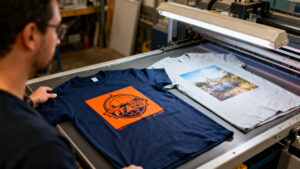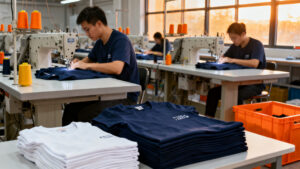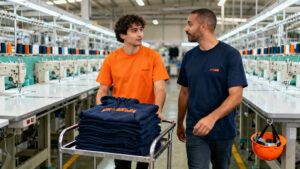
“Should we make this in Portugal or in China?” is usually the second question a founder asks — right after “can anyone make it at all?”. The two countries sit at opposite ends of the same supply chain: one is a vertically integrated giant built for volume and speed, the other a compact European cluster built for craft, proximity and short runs. The answer is rarely a nationality. It is a set of numbers about your order, your market and your calendar.
Choose China for streetwear when you need low MOQs on fully custom pieces, the widest choice of fabrics, washes and prints, and the lowest cost per unit; choose Portugal when you need small runs delivered fast inside the EU, premium knitwear and loopback expertise, “Made in Portugal” positioning and simpler compliance — most growing brands end up using both.1
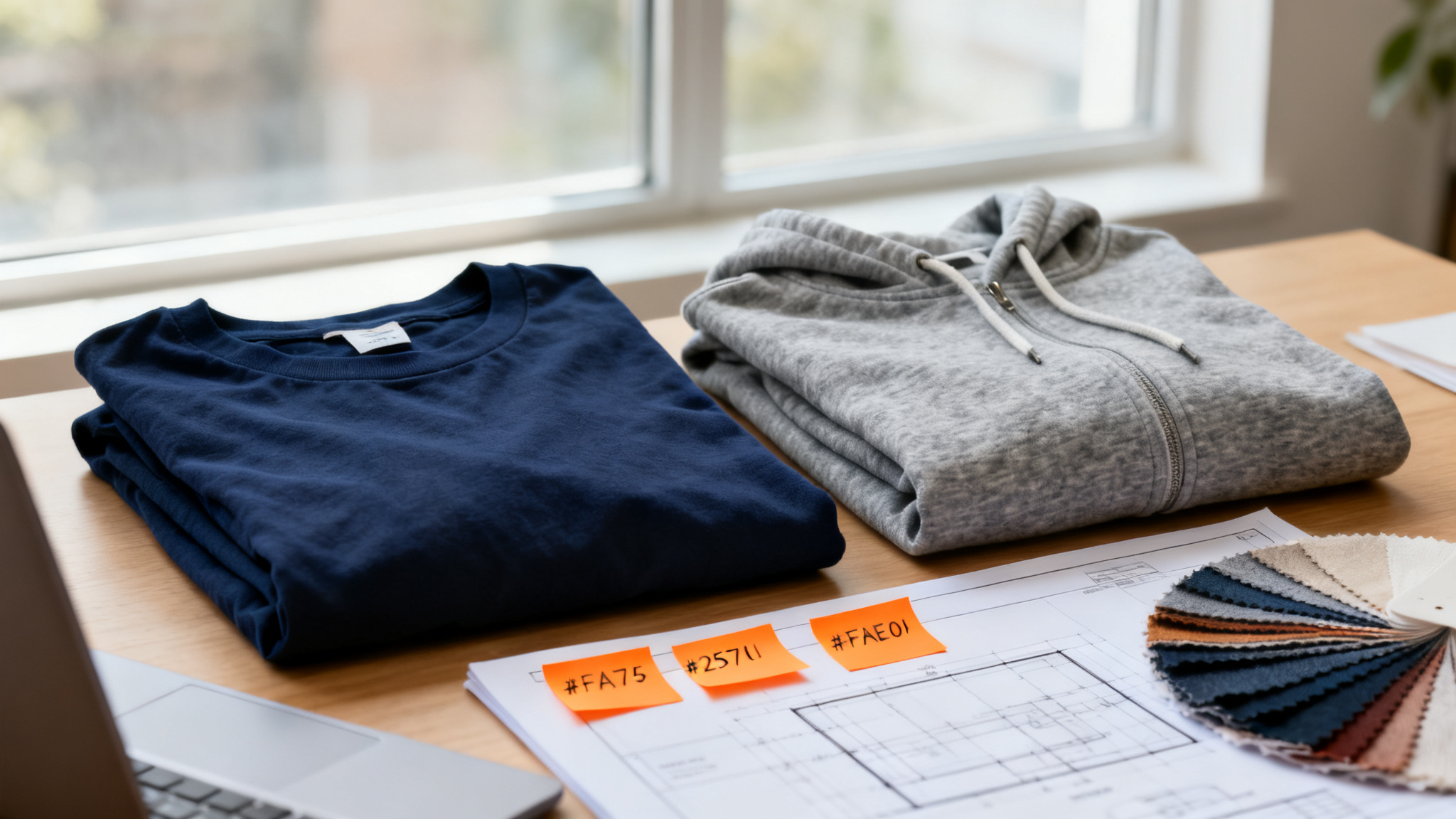
Below is the comparison the way a production manager would actually run it: cost per unit landed, minimums and calendars, fabric and finishing capability, then quality, compliance and IP — with the specific situations where each country wins.
China vs Portugal for streetwear manufacturing: which is better?
Neither country is better in the abstract; they are built for different order profiles.
China wins on scale, price and breadth of capability — a deep cluster of fabric mills, dyehouses, printers, embroiderers and trim suppliers within a few hours’ drive — while Portugal wins on proximity to the EU market, small-batch flexibility at the premium end and a reputation for knitwear and jersey craft.2
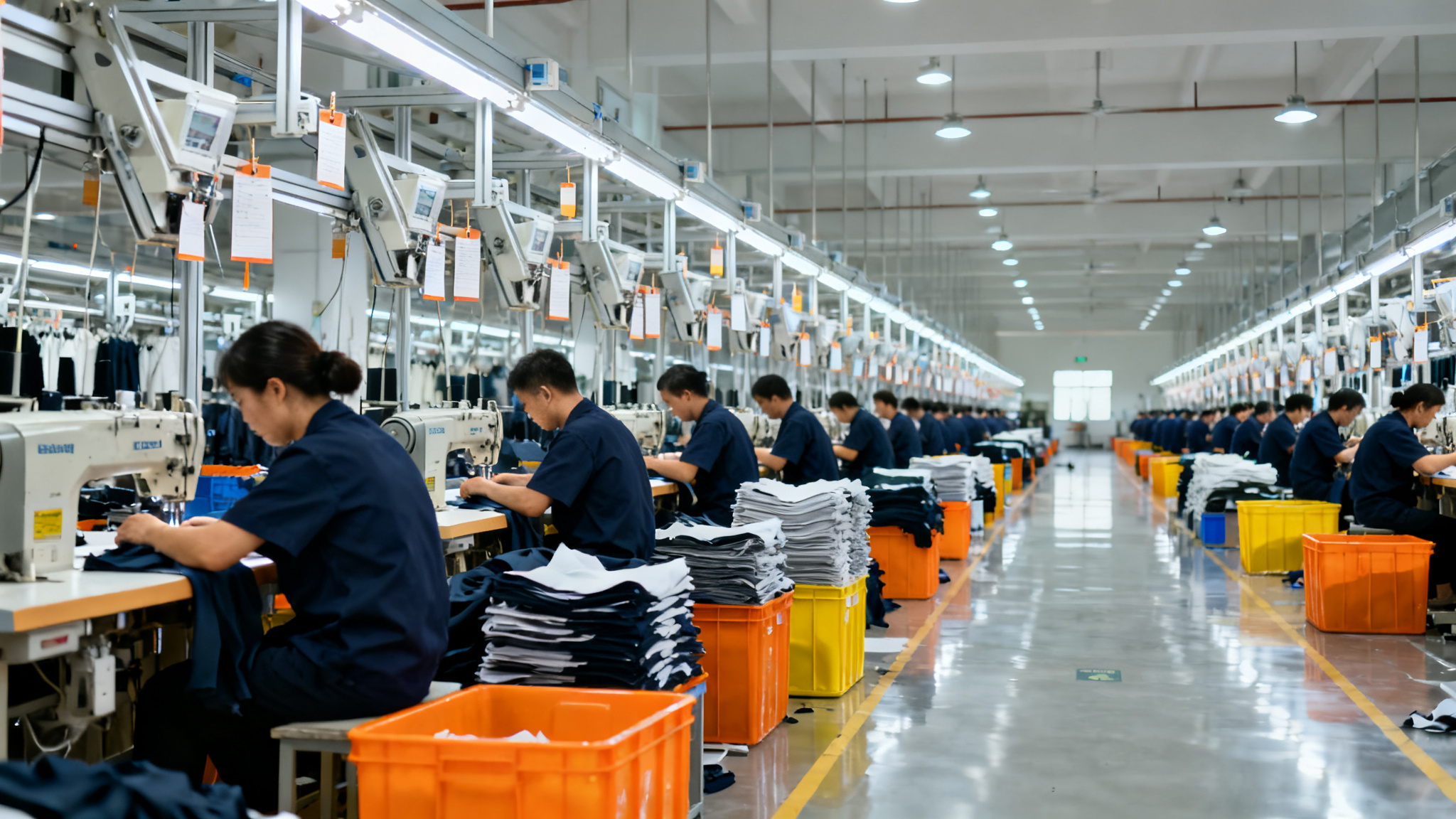
The structural difference is depth versus density. China’s advantage is not one factory but an ecosystem: if your design needs a 400 GSM brushed loopback, a specific Pantone-reactive dye, a puff print and a custom rubber patch, all four exist within a short radius and can be iterated in days. Portugal’s advantage is a tight, specialised cluster — the textile region around Porto and the Ave valley — where mills, knitters, dyehouses and garment makers are also close together, but at a smaller scale, with shorter runs, EU labour standards and a strong technical-textile and knitwear tradition. For a 100-piece first drop sold in Berlin, Portugal is often the practical choice. For a 2,000-piece program with five fabrications and four print techniques, China usually is.
What does streetwear actually cost in China vs Portugal?
Compare landed cost, not FOB price — the gap narrows and sometimes inverts once freight and duty are counted.
China’s unit cost is typically 30–50% lower at the sewing stage, but EU imports from China carry roughly 12% apparel duty plus VAT and 30–45 days of sea freight, while Portuguese production ships duty-free inside the single market in days — on small premium runs the landed difference is often much smaller than the quote suggests.3

China’s cost base comes from scale, integrated supply and lower hourly labour in garment sewing. Portugal’s comes from higher wages, smaller runs and more hand operations — but also from what you do not pay: no import duty within the EU, no ocean transit, no 30-day cash tied up in containers, and far less capital locked in inventory because you can reorder in weeks instead of months. Add air freight to a small Chinese order and the per-unit gap can compress dramatically. There is also a quality-cost effect that never shows up in a spreadsheet: a Portuguese mill that runs 300 pieces may inspect every garment, while a Chinese line running 5,000 may sample-inspect by AQL. Neither is wrong — they are different risk profiles. Our breakdown of what a streetwear collection actually costs shows where these line items sit in a real budget.
How do MOQ and lead time compare between China and Portugal?
This is usually the deciding factor, and it cuts both ways.
Chinese streetwear factories commonly quote 50–100 pieces per style and colour with 7–15 day sampling and 25–45 day bulk production, while Portuguese makers typically ask 150–500 pieces per style, quote 2–4 weeks for samples and 6–10 weeks for bulk — but deliver to an EU warehouse in days rather than a month at sea.4
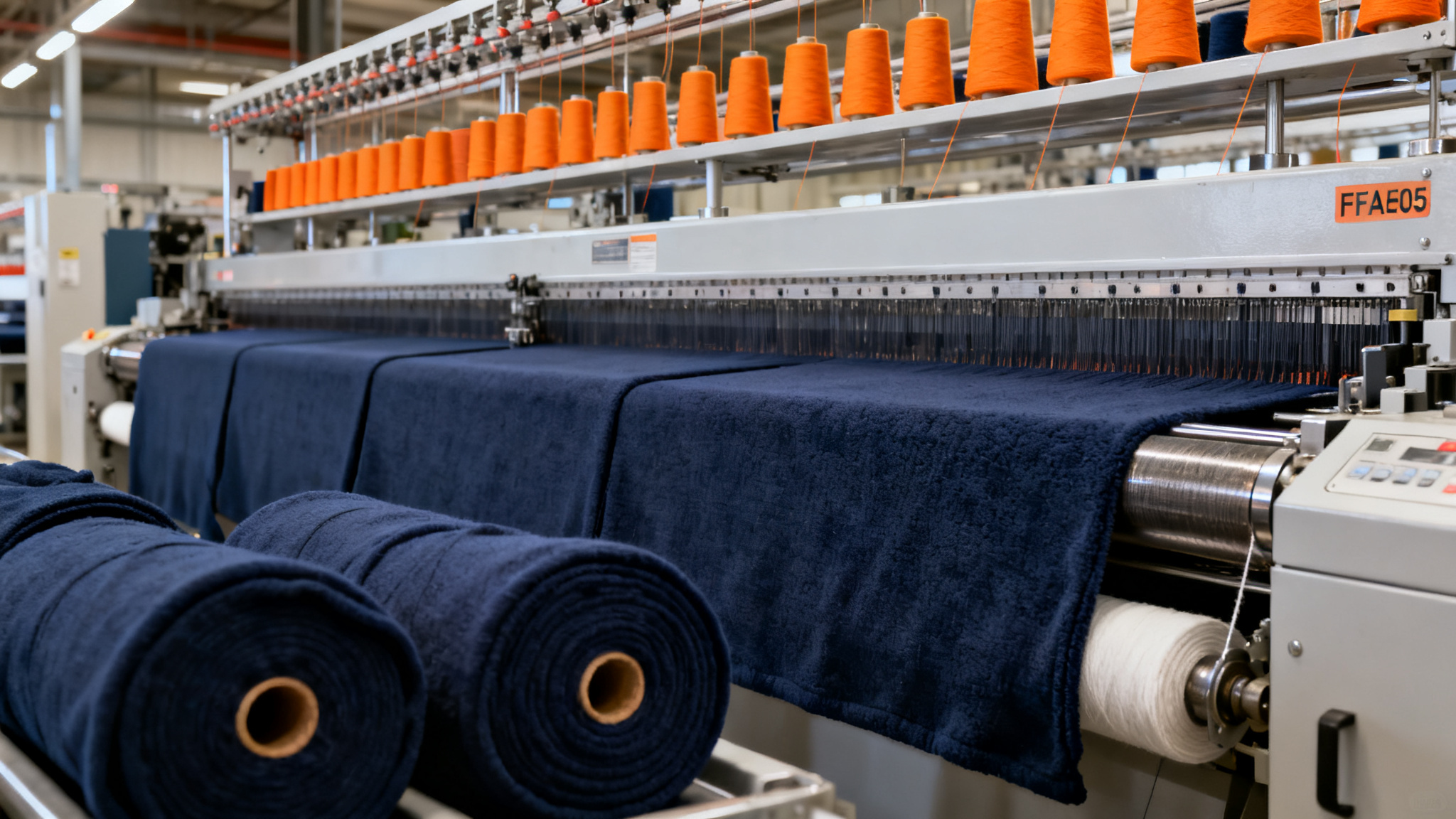
Read the calendar end to end. A Chinese order might be: 10 days sampling, 5 days for your comments and a second round, 35 days production, 35 days sea freight, 7 days customs and inland delivery — about three months from approval to shelf. A Portuguese order might be: 3 weeks sampling, 8 weeks production, 4 days road freight — about eleven weeks, with the ability to top up mid-season. That is why Portugal suits brands running tight, frequent drops close to home, and why China suits brands planning a season ahead and optimising unit margin. MOQ behaves the same way: China’s flexibility on fully custom pieces at low quantities is hard to match, but Portugal’s minimums buy you a mill relationship, not just a cut-and-sew line. If your volumes are still small, our guide to MOQ in custom streetwear manufacturing explains how to negotiate it down.
Which country is better for fabrics, washes and specialty finishes?
China has more options; Portugal has deeper expertise in a narrower band.
Portugal excels in fine-gauge knits, loopback and French terry, wool blends, jacquard and technical fabrics backed by dedicated textile R&D and testing institutes, while China offers a much wider catalogue — garment dyeing, acid wash, enzyme wash, puff, discharge, high-density and foil print — at lower minimums and faster turnaround.5
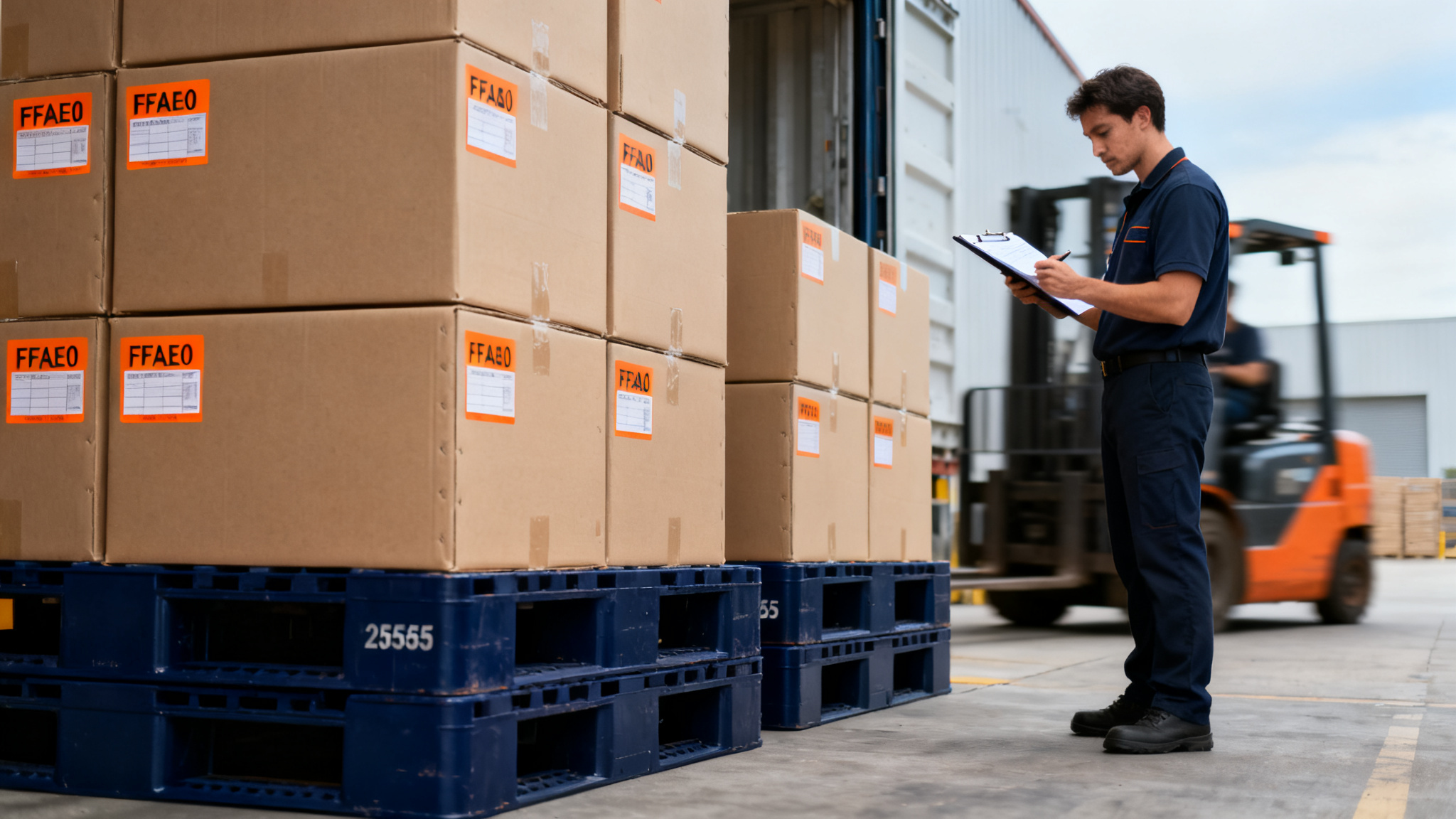
If your line is heavyweight tees, hoodies and sweatpants in solid or garment-dyed colourways, both countries can do it well — Portugal often with a better hand and cleaner loopback, China with more weight and blend options at a lower price. The gap opens on novelty. Acid wash, sun fade, over-dye, puff print, high-density gel, reflective and foil finishes are routine in Chinese streetwear clusters and are often subcontracted or simply unavailable in smaller European workshops. The reverse holds for wool-rich knits, fine-gauge merino, double-jacquard and anything needing close technical collaboration with a mill: Portugal’s textile institutes and yarn spinners make that iteration realistic. A practical rule: put your core solid-colour program where the economics work, and put your most experimental pieces where the technique already exists. For cut-and-sew development across both, see custom hoodie manufacturing.
How do quality control, compliance and IP protection compare?
Both can produce excellent garments; the difference is who carries the compliance risk and how easily you can walk the floor.
Portugal gives you EU labour and chemical law, REACH-aligned materials, easier audits and a two-hour flight to inspect production, while China gives you mature export-grade QC systems, AQL inspection and third-party labs — but requires you to verify the factory, contract the IP and test the materials yourself.6
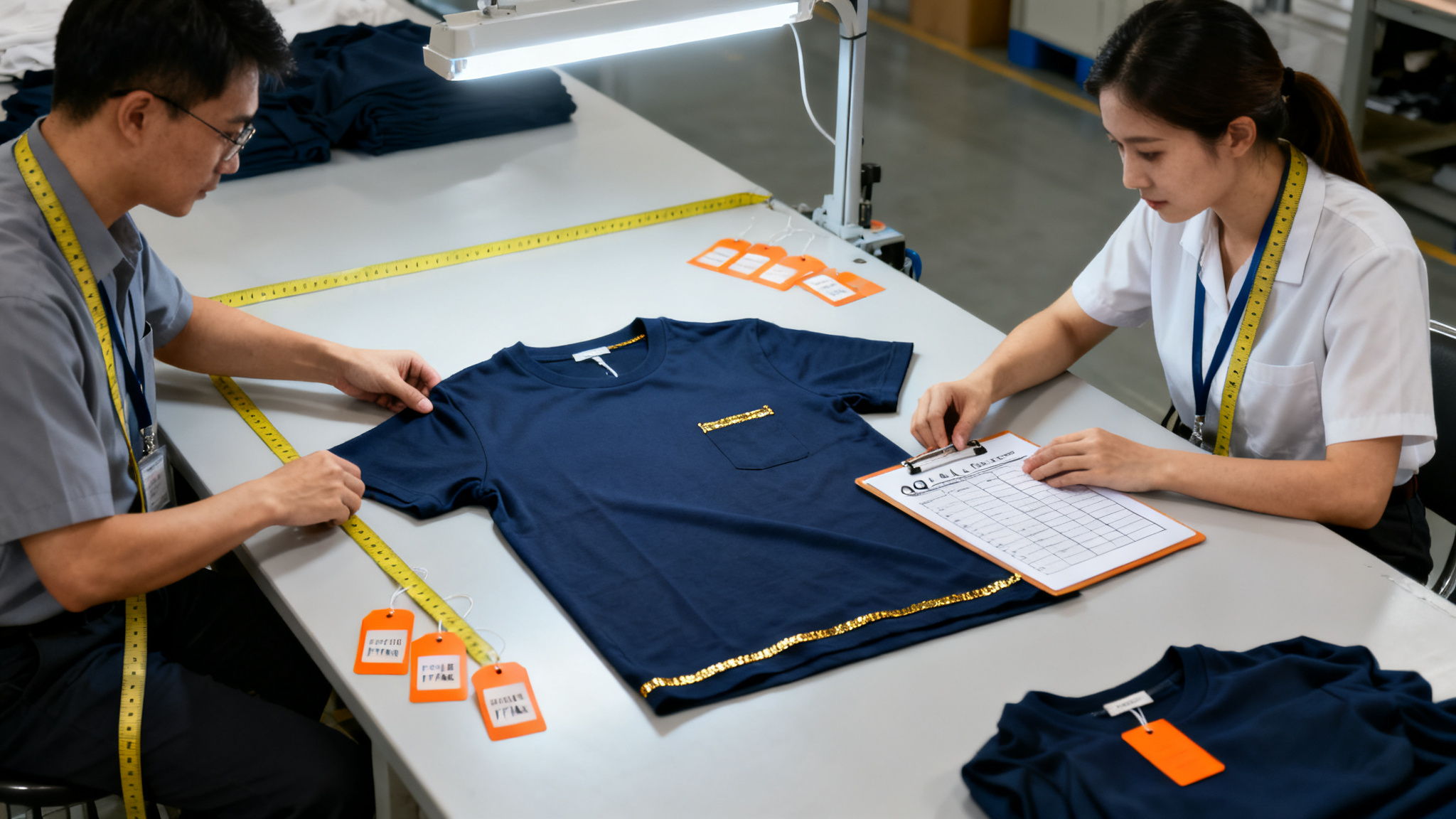
Compliance is the quiet cost nobody quotes. European production arrives with EU chemical and labour standards already applied, which matters more every year as due-diligence rules push documentation down the supply chain. Chinese production can meet the same standards — many export factories hold BSCI, Sedex or ISO certifications and test through Intertek, SGS or BV — but you have to ask, verify and pay for it. IP is the other asymmetry: patterns, prints and tech packs travel easily, so a factory that also sells to other brands needs a signed NDA, tooling ownership and a clear exclusivity clause. None of this argues for one country; it argues for a documented QC protocol and a factory you can actually visit or audit. We walk through the checks in red flags when choosing a manufacturer.
Conclusion
The honest answer is that China and Portugal solve different problems. China solves capability and cost at volume: if you need 300 fully custom pieces across three fabrications with acid wash and puff print, at a price that leaves room for retail margin, the Chinese cluster is still the most complete toolkit in the world. Portugal solves proximity and premium small runs: if you need 200 heavyweight hoodies in eight weeks, sold in the EU, with a clean compliance story and a “Made in Portugal” line on the label, it is hard to beat. The brands that scale usually start where their first drop is cheapest to learn in, then split production by product type rather than by ideology — basics in one place, statement pieces in the other. If you want a partner who can quote both routes on the same tech pack — with MOQ, lead time and landed cost side by side — talk to Adiwe’s custom clothing team or send us your design files for a quote.
"Textile industry in China", https://en.wikipedia.org/wiki/Textile_industry_in_China. Overview of China’s textile and apparel sector, its scale, export orientation and integrated supply chain. Evidence role: general_support; source type: encyclopedia. Supports: China’s position as a large-scale, vertically integrated apparel supplier. Scope note: industry-level reference; factory-level pricing and MOQ vary widely by region and product. ↩
"Textile industry", https://en.wikipedia.org/wiki/Textile_industry. Describes the structure of the global textile industry from fibre and yarn through fabric, dyeing, finishing and garment assembly. Evidence role: general_support; source type: encyclopedia. Supports: the supply-chain structure that makes clusters such as China’s and Portugal’s competitive. Scope note: global overview; does not compare country-level costs directly. ↩
"Textiles and clothing industries", https://single-market-economy.ec.europa.eu/sectors/fashion/textiles-and-clothing-industries_en. European Commission overview of the EU textiles and clothing sector, its SME-dominated structure, turnover and trade context. Evidence role: general_support; source type: government. Supports: the EU market context and the value of duty-free intra-EU supply for European brands. Scope note: EU sector statistics; duty rates and freight costs vary by product code and route. ↩
"Lead time", https://en.wikipedia.org/wiki/Lead_time. Defines lead time as the latency between order confirmation and delivery, including processing, production and logistics. Evidence role: general_support; source type: encyclopedia. Supports: comparing sampling, production and shipping stages rather than FOB dates alone. Scope note: general operations reference; quoted lead times are factory-specific. ↩
"About CITEVE", https://www.citeve.pt/en/about-us/. CITEVE is the Portuguese technological centre for the textile and clothing industries, providing testing, certification, R&D and technical support to mills and garment makers. Evidence role: general_support; source type: industry_body. Supports: Portugal’s technical textile infrastructure and knitwear expertise. Scope note: institutional profile; it documents capability, not pricing or capacity. ↩
"Quality control", https://en.wikipedia.org/wiki/Quality_control. Covers quality control principles including inspection, sampling plans and acceptance criteria used in manufacturing. Evidence role: general_support; source type: encyclopedia. Supports: the case for documented inspection protocols and AQL-based checks regardless of sourcing country. Scope note: general QC reference; apparel-specific tolerances are set in the tech pack. ↩
Ready to make this for your brand?
Adiwe manufactures custom T-shirts, hoodies, jackets, pants, shorts and shirts for brands worldwide — from 50 pcs per style and colour, with private labelling, three-stage QC and a physical sample you approve before bulk.
Custom Hoodie ManufacturingCustom T-Shirt Manufacturing