Every streetwear brand eventually reaches the same wall: the hoodie that made the sample look easy turns into a production order with a hood that will not stand up, a pocket sewn crooked and a zip with a wave in it. The problem is rarely design. It is that the factory was chosen on price per piece instead of on whether it actually builds heavyweight fleece garments week in, week out.
The best hoodie manufacturers for streetwear brands are cut-and-sew factories that run heavyweight fleece as a core product, publish a real MOQ, can document fabric weight in GSM and stitch construction, and let you see both the samples and the line that will make your order.1
There is no single "best" hoodie manufacturer, because a 300-piece first drop and a 30,000-piece seasonal programme need different partners. What does hold true is a short list of things the good ones all have in common — and the questions that separate them from brokers with a catalogue and a forwarding address.
What makes a hoodie manufacturer one of the best for streetwear brands?
Start with what comes off the machines, not what is printed on the brochure.
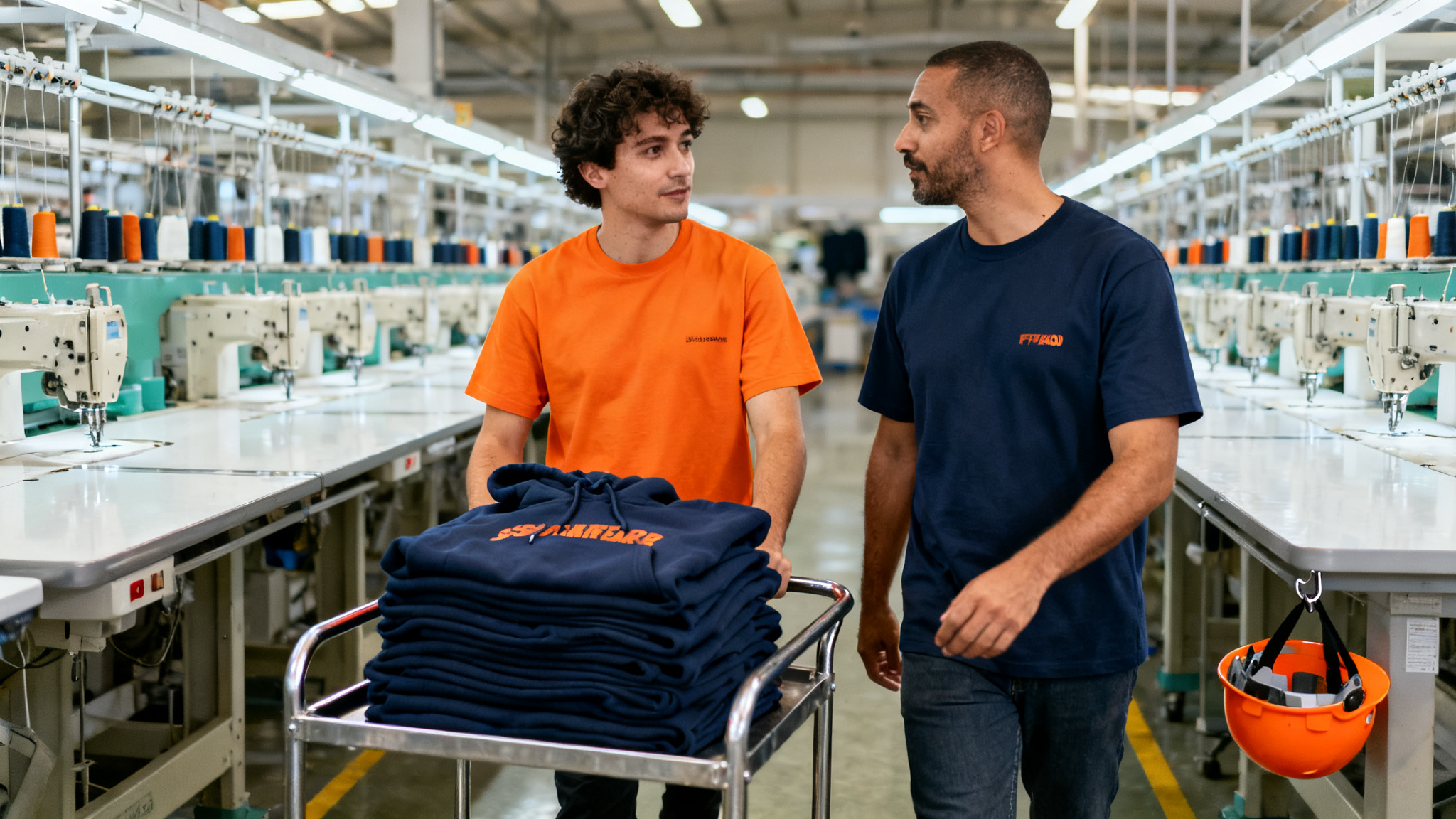
A top-tier hoodie manufacturer is a specialist cut-and-sew operation whose recent production is dominated by heavyweight knitwear — hoodies, crewnecks and joggers — because the coverstitch, bartack and hood-setting skills that make a clean hoodie are not the skills a light-jersey tee line develops.2
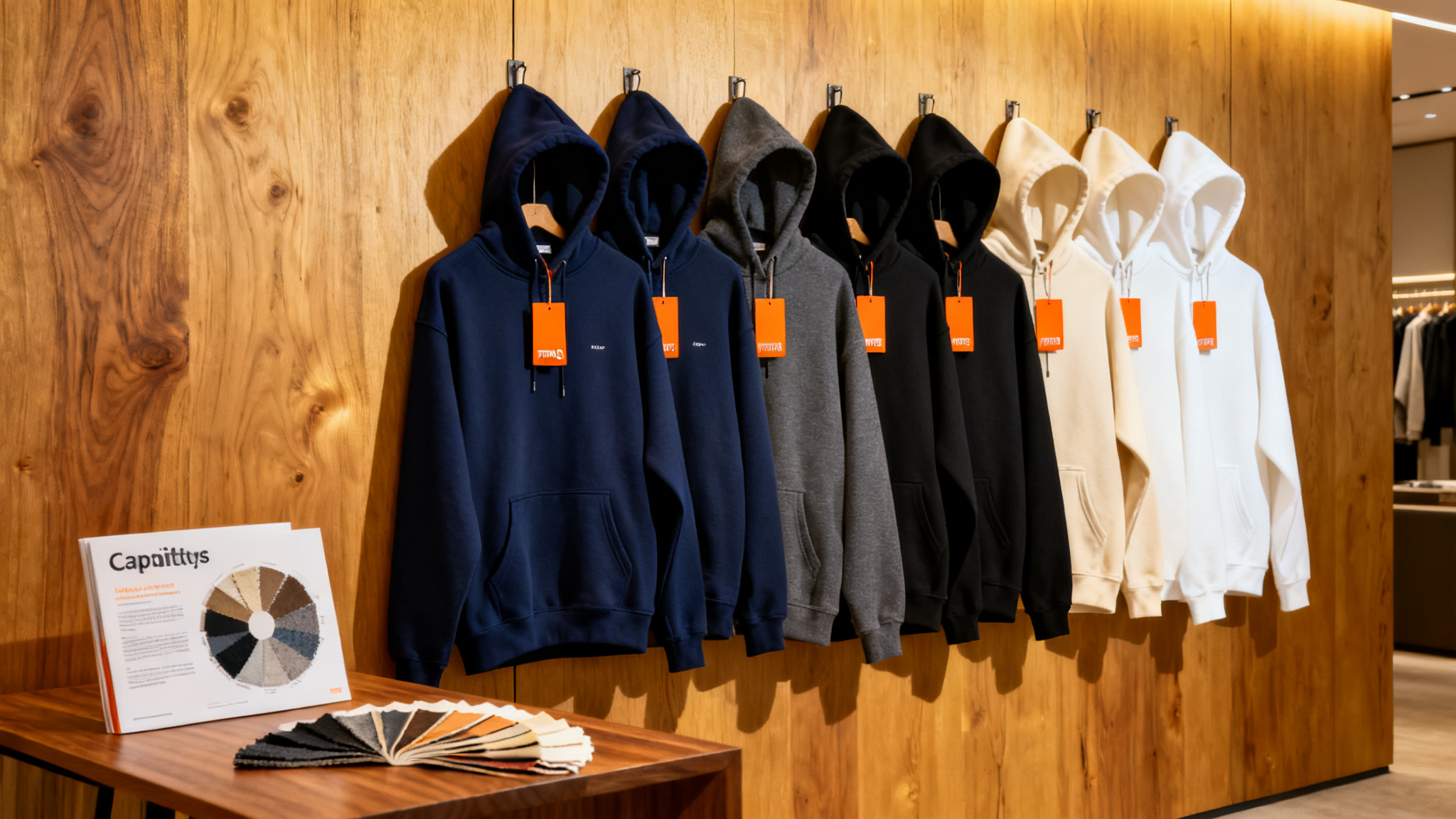
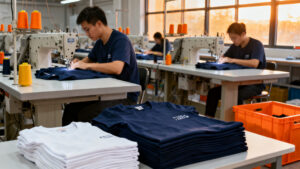
Ask what share of last year's output was fleece or French terry, then ask to see the work orders behind the answer. A factory that mostly runs summer jersey will still quote your hoodie happily; the tell is whether it owns coverstitch machines and pocket bartackers, or subcontracts those operations. Also check the trims it keeps in stock — a real hoodie house has drawcord, eyelets, ribbing and zip tape on the shelf, not on order.
What MOQ and pricing should you expect from the best hoodie manufacturers?
Hoodie minimums sit above t-shirt minimums, and the gap is structural rather than greedy.
Expect meaningful MOQs on heavyweight hoodies — commonly a few hundred pieces per colourway at accessible factories — because cutting, dyeing and setting up a fleece line carries fixed costs that only spread across a real batch.3
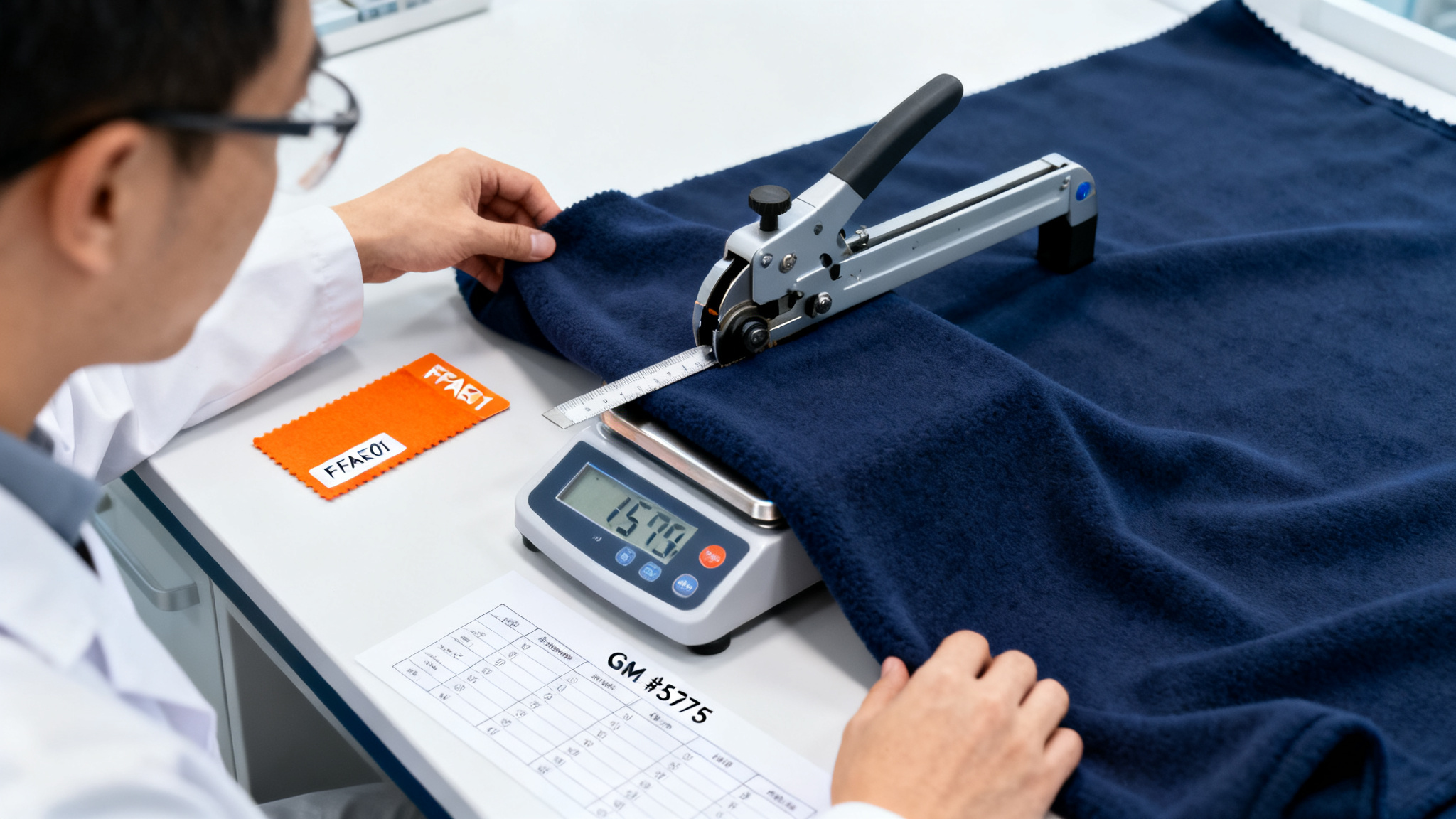
Price per hoodie is driven by fabric weight, fabric composition, decoration method and trim count far more than by labour. A 400 GSM loopback hoodie with a heavy drawcord, metal eyelets and a custom woven label can cost noticeably more than a 280 GSM piece with the same silhouette. Treat any quote that arrives without a stated GSM, a fabric composition and a decoration spec as a placeholder rather than a price. Low-MOQ programmes exist, and they are usually the right entry point for a first drop — see how small-batch runs work for DTC brands before you commit to volume.
How do you verify a hoodie manufacturer's fabric and construction quality?
Verification is physical. Nothing in a PDF proves quality.
Verify quality by asking for the fabric spec sheet, measuring GSM on a cut sample, and inspecting the four failure points on a hoodie: hood shape, pocket alignment, cuff and hem recovery, and zip or placket straightness.4
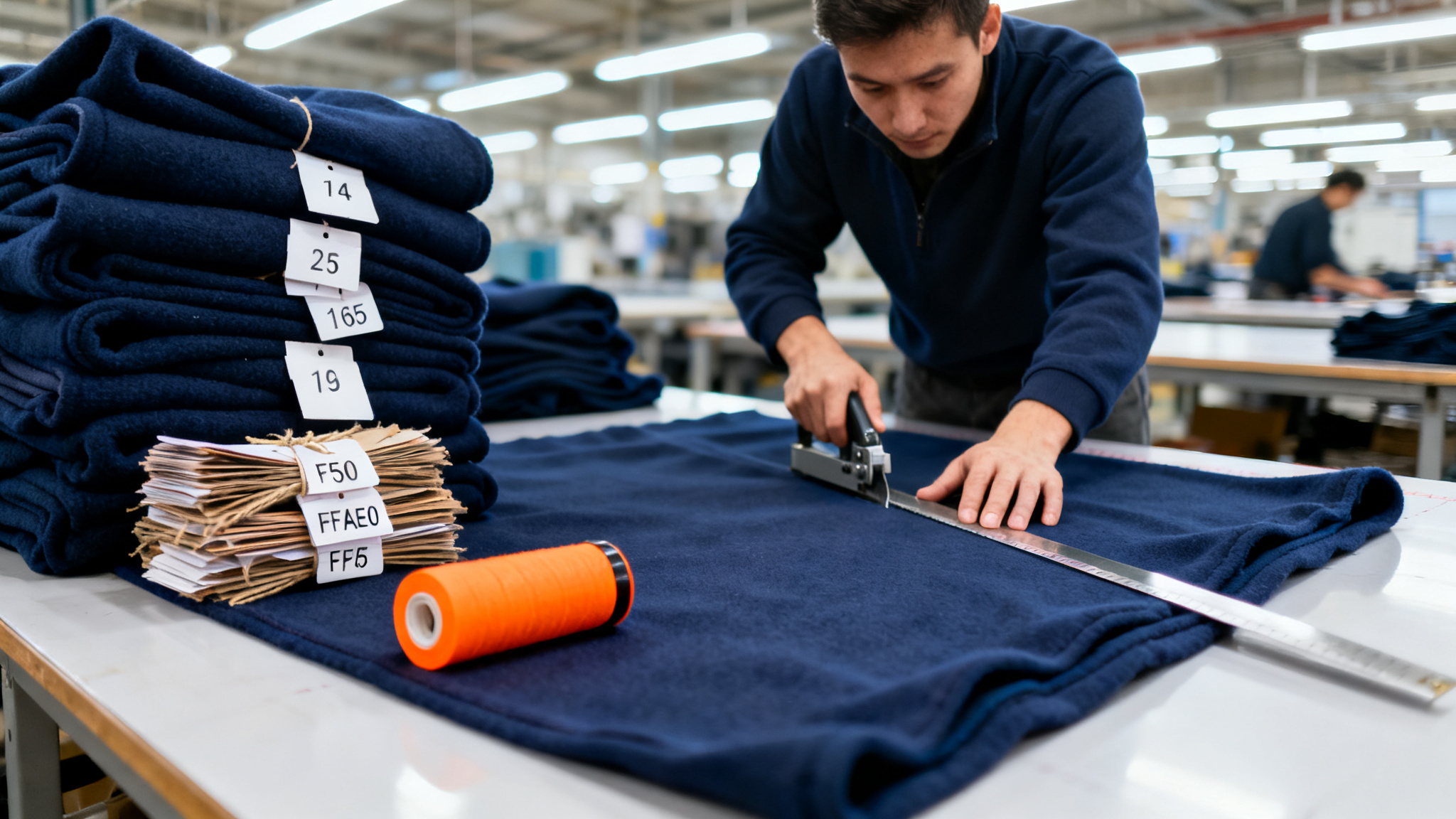
Weigh a sample against its stated weight: a "400 GSM" hoodie that measures 330 GSM is a different product and should be a different price. Then wear-test the piece for a week — wash it twice, check whether the ribbing has relaxed, whether the hood collapsed and whether the print or embroidery has moved. Ask for the AQL level the factory inspects to and for a recent inspection report. Our custom hoodie manufacturing page lists the construction specs we quote against, which is a useful checklist to hold any supplier to.
How long does sampling and production take with a good hoodie manufacturer?
Timelines are the easiest promise to make and the easiest to miss.
A reliable hoodie manufacturer will quote sampling at roughly two to three weeks and bulk production at roughly four to six weeks after sample approval, with fabric booking as the single biggest variable in that estimate.5
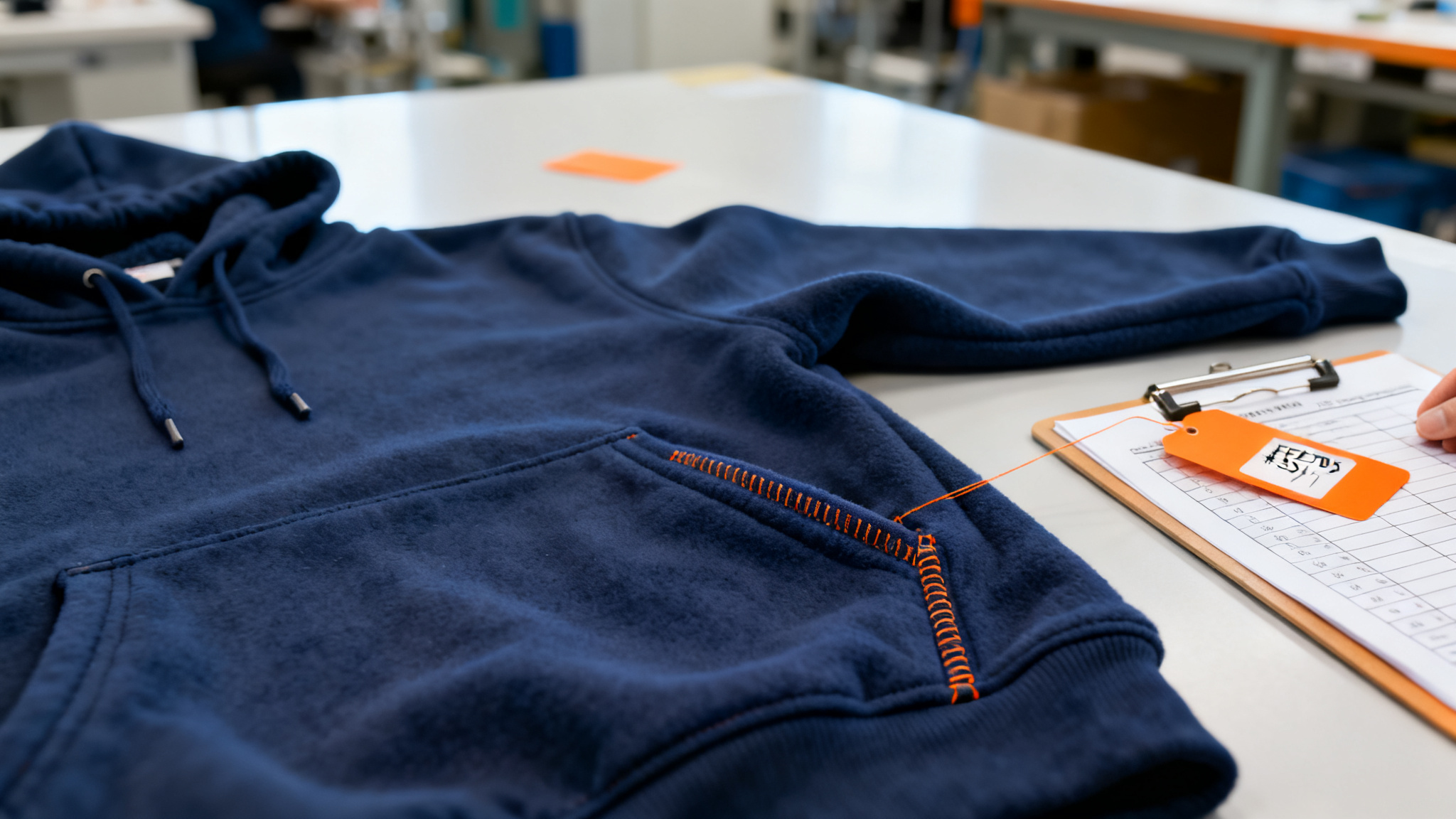
Ask specifically whether your fabric is stock or dyed to order. Stock fleece in navy, black or grey can move in days; a custom Pantone shade in a heavy weight can add weeks before a single garment is cut. The factories worth keeping are the ones that give you a dated schedule with gates — lab dip approval, sample approval, bulk fabric in-house, cut date, ex-factory date — and tell you when a gate slips instead of quietly moving the ship date.
What should you check before signing with a hoodie manufacturer?
The contract stage is where good instincts get tested.
Before you sign, confirm who actually owns the production floor, who holds your tech pack and pattern, what the defect and rework terms are, and whether the factory or a trading company is the party on the contract.6
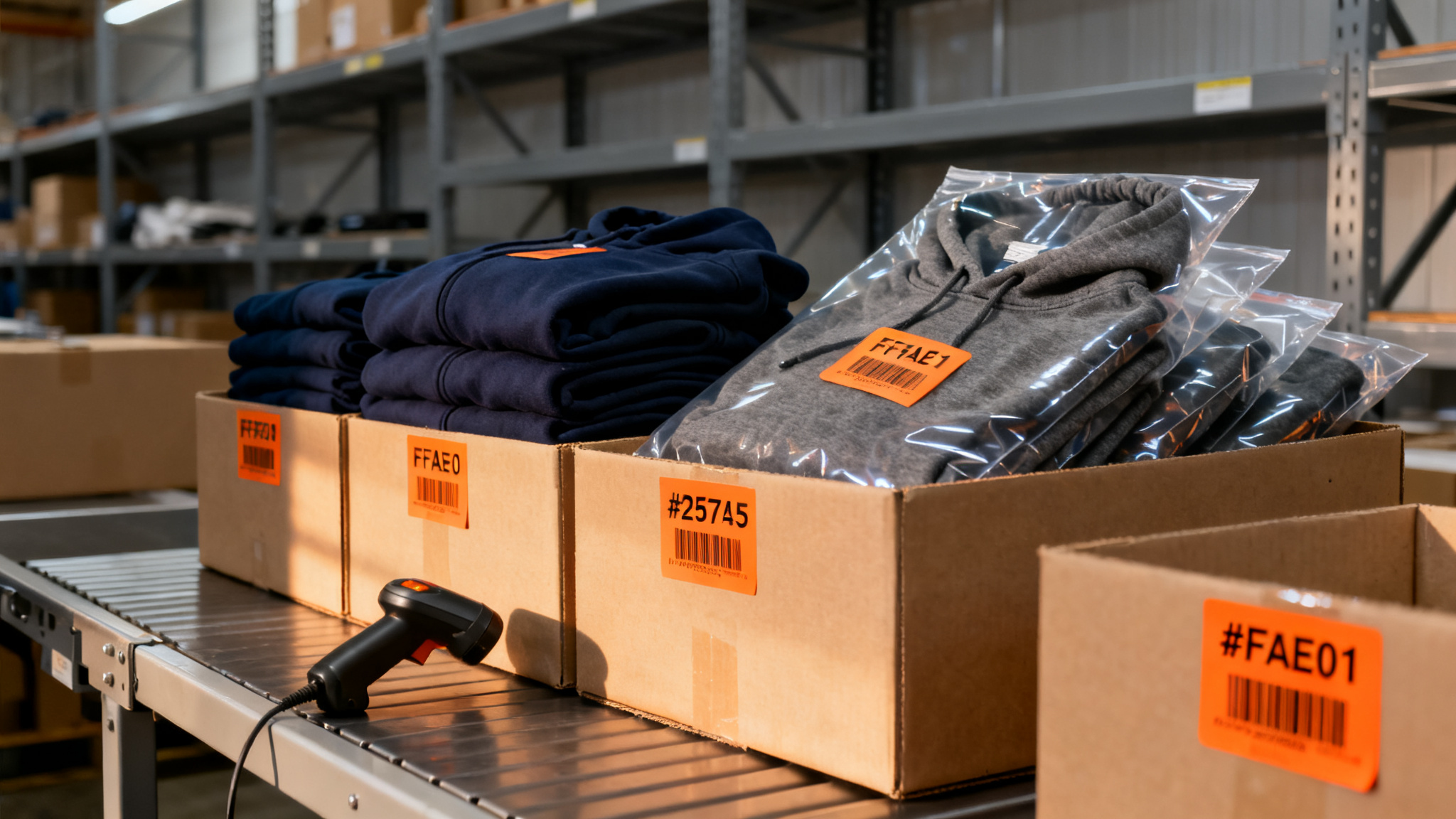
A trading company is not automatically a bad partner — some are excellent — but you should know which one you are dealing with, because it changes who answers for a defect. Put the approved sample, the GSM, the measurement chart and the AQL level in writing as annexes to the order. Ask what happens to your pattern and your label artwork if you leave. And confirm payment terms against production milestones rather than a single large deposit, so your risk is tied to work that exists.
Conclusion
The best hoodie manufacturer for your brand is the one that can prove three things: it builds heavyweight fleece as a habit, it quotes in specifics rather than ranges, and it lets you watch the process from lab dip to final inspection. Everything else — price per piece, brochure photography, trade show badges — is easier to fake than a clean pocket bartack. If you are sourcing a hoodie programme now, send us your tech pack and target quantity and we will tell you plainly what your spec costs and how long it takes.
"Hoodie", https://en.wikipedia.org/wiki/Hoodie. Describes the hoodie as a sweatshirt with a hood and kangaroo pocket, its panel construction and its place in streetwear and casual dress. Evidence role: general_support; source type: encyclopedia. Supports: the definition of the garment category and the construction points (hood, pocket, trims) used as the evaluation criteria throughout this article. Scope note: cultural and historical overview; does not cover manufacturing specifications, MOQs or pricing. ↩
"Clothing industry", https://en.wikipedia.org/wiki/Clothing_industry. Explains how apparel production is organised into cut-and-sew operations and specialised factories serving different product types. Evidence role: general_support; source type: encyclopedia. Supports: the claim that hoodie production requires a cut-and-sew factory specialised in heavyweight knitwear rather than general light-jersey capacity. Scope note: industry-level description; no factory-specific capability benchmarks or audit criteria. ↩
"Mass production", https://en.wikipedia.org/wiki/Mass_production. Covers economies of scale, fixed setup costs and how minimum efficient batch sizes affect unit cost in manufacturing. Evidence role: general_support; source type: encyclopedia. Supports: the explanation of why hoodie MOQs are higher than t-shirt MOQs and why price per piece falls with batch size. Scope note: general manufacturing economics; the specific MOQ and price ranges quoted here are typical apparel industry practice, not figures taken from this source. ↩
"Fleece", https://en.wikipedia.org/wiki/Fleece. Describes fleece fabrics, their pile structure, weight ranges and behaviour in garment use. Evidence role: general_support; source type: encyclopedia. Supports: the fabric weight and composition checks recommended for verifying a heavyweight hoodie before bulk production. Scope note: treats fleece as a fabric family rather than loopback cotton sweatshirting specifically; GSM tolerances should be confirmed against the supplier's own spec sheet. ↩
"Supply chain management", https://en.wikipedia.org/wiki/Supply_chain_management. Explains lead time, upstream material availability and how material booking drives downstream production scheduling. Evidence role: general_support; source type: encyclopedia. Supports: the sampling and production timeline structure and the point that fabric lead time is the main schedule variable. Scope note: general supply chain theory; the day and week ranges given are typical apparel industry practice rather than guarantees. ↩
"Original equipment manufacturer", https://en.wikipedia.org/wiki/Original_equipment_manufacturer. Defines OEM arrangements and the distinction between the party that manufactures a product and the party that resells or brokers it. Evidence role: general_support; source type: encyclopedia. Supports: the due-diligence criteria used to tell a hoodie factory apart from a trading company or middleman before signing. Scope note: general business definition; does not address apparel-specific vetting, IP ownership clauses or payment terms. ↩
Ready to make this for your brand?
Adiwe manufactures custom T-shirts, hoodies, jackets, pants, shorts and shirts for brands worldwide — from 50 pcs per style and colour, with private labelling, three-stage QC and a physical sample you approve before bulk.
Custom Hoodie ManufacturingCustom T-Shirt Manufacturing