OEM / ODM · CHINA
Custom Clothing Manufacturer for Streetwear & Casualwear Brands
OEM/ODM production for T-shirts, hoodies, jackets, pants and shorts — from 100 pieces per style and colour, with in-house sampling in 7–12 days and one quality standard across every drop.
- Two factories · Hubei & Guangdong
- MOQ 100 pcs / style / colour
- Sampling 7–12 days
- Bulk 20–35 days
- Direct factory, no middleman
Send your product list and quantities — a production manager replies within one business day with price, MOQ, fabric options and lead time.
What does a custom clothing manufacturer do?
Adiwe is a China-based OEM/ODM clothing manufacturer producing private-label streetwear and casualwear — T-shirts, hoodies, jackets, pants, shorts and shirts. Brands send a tech pack, reference sample or product list; we develop patterns, make samples in 7–12 days, produce bulk in 20–35 days from 100 pieces per style and colour, and ship retail-ready with export documentation for the US, UK, EU, Australia and Canada.
Who we serve
Who we manufacture for
Four types of buyers, four different pressures. The production model is adjusted to the one you are in.
First collections & limited drops
We turn a reference garment or rough idea into a producible tech pack, quote a realistic first run, and keep the sampling loop short so you can test the market before committing to volume.
For DTC & startup brandsMulti-category seasonal ranges
Consistent fits, repeat colourways and archived specs. Patterns, fabric lots and print settings are stored per style, so your second and third drops match the first.
See product categoriesVolume programmes
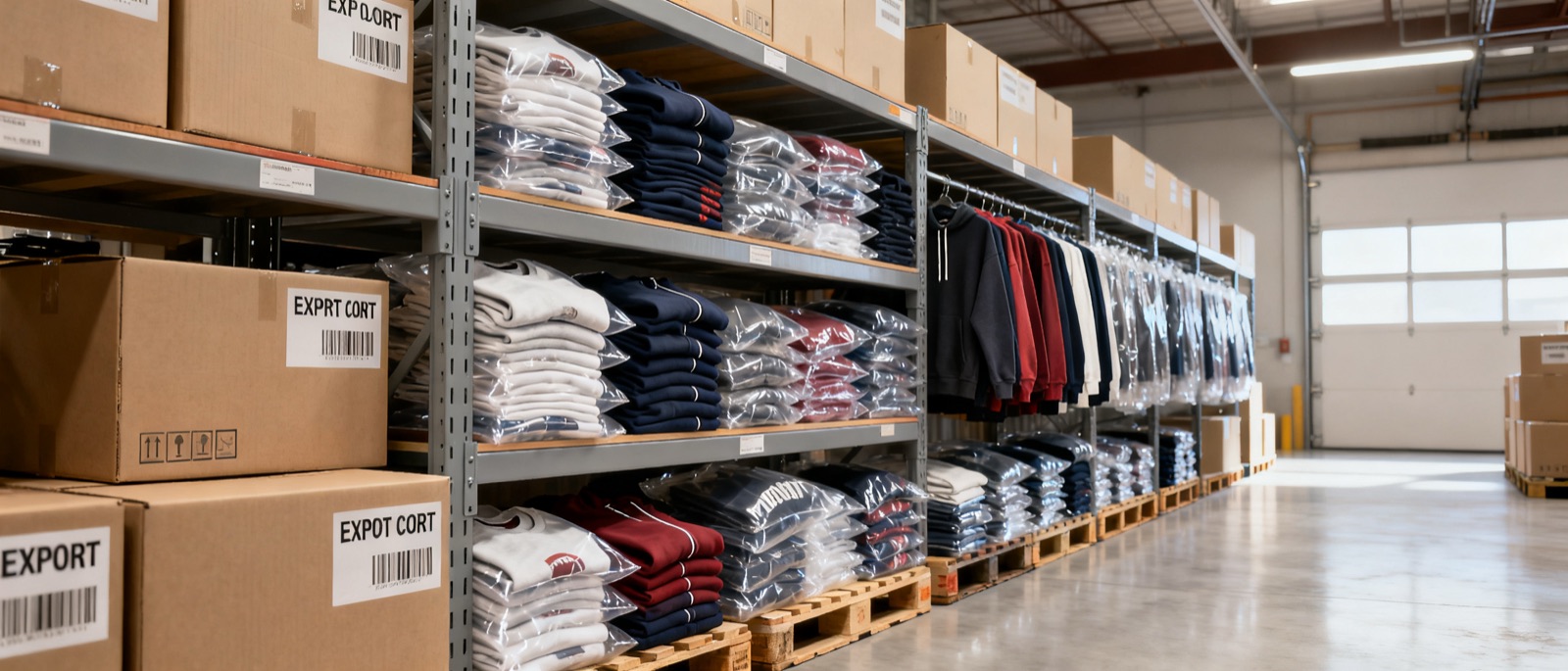
Full size curves, stable grading and retail-ready packing — polybags, hangtags, barcodes and cartons built to your specification.
For wholesalers & distributorsAmazon & online sellers
FBA-ready packing, barcode and label checks, and replenishment-friendly lead times so a restock does not stall your listing.
For Amazon & e-commerce sellersCustomer challenges
The problems brands bring to us
These are the sentences we hear most often in the first call. Each one has a production answer.
“The MOQ killed our first collection before it started.”
Most factories quote 500–1,000 pieces per colour. At 100 pieces per style and colour, a first drop becomes a test instead of a bet.“The reorder didn’t match the first order.”
Different fabric lot, different dye batch, different print settings — and the fit and colour drift.“The factory missed our launch date.”
A date agreed verbally is not a plan. You need milestones, a buffer and someone accountable.“The sample was perfect. The bulk wasn’t.”
Sampling on a separate line, then moving to mass production, is how specifications get lost.“The quote grew after we committed.”
Fabric, cutting, decoration, packing and freight quoted separately — or not quoted at all.“We never speak to the people making our product.”
A trading company adds a layer, a markup and a translation gap between you and the factory floor.How we solve them
Six problems, six production answers
Each answer is a working method, not a promise: how the order is set up, what capability supports it, and what it changes for your business.
Market & end-user insight
What streetwear buyers want now — and what it means for your spec
The product decisions your customers notice are made at the fabric and pattern stage. This is where we push back before sampling.
Heavier fabrics, structured fits
Consumers read weight and structure as quality. Specify 240–320 gsm jersey for tees and 400 gsm+ fleece for hoodies, with compacted or pre-shrunk finishing to hold shape.
Spec decision: confirm gsm and shrinkage tolerance in the tech pack.Oversized and drop-shoulder silhouettes
Grading and armhole shape decide whether an oversized fit looks intentional. A flat sketch will not show it.
Spec decision: approve grade rules and shoulder drop on a physical sample.Washes and surface character
Garment dye, acid wash and vintage wash create the look — and the variability. That variance has to be managed, not hidden.
Spec decision: agree an acceptable range with lab dips and a sealed bulk standard.Quiet branding
Tonal embroidery, woven labels and small chest prints are replacing large graphics. These finishes expose stitch quality, so trims and embroidery density matter more than ever.
Spec decision: approve embroidery density and trim quality on the sample.Smaller, more frequent drops
Drop culture rewards speed: shorter sampling, faster reorders, lower inventory per SKU. A supplier set up only for seasonal bulk cannot support that rhythm.
Spec decision: confirm reorder lead time before you launch.Manufacturing capabilities
What we do in-house
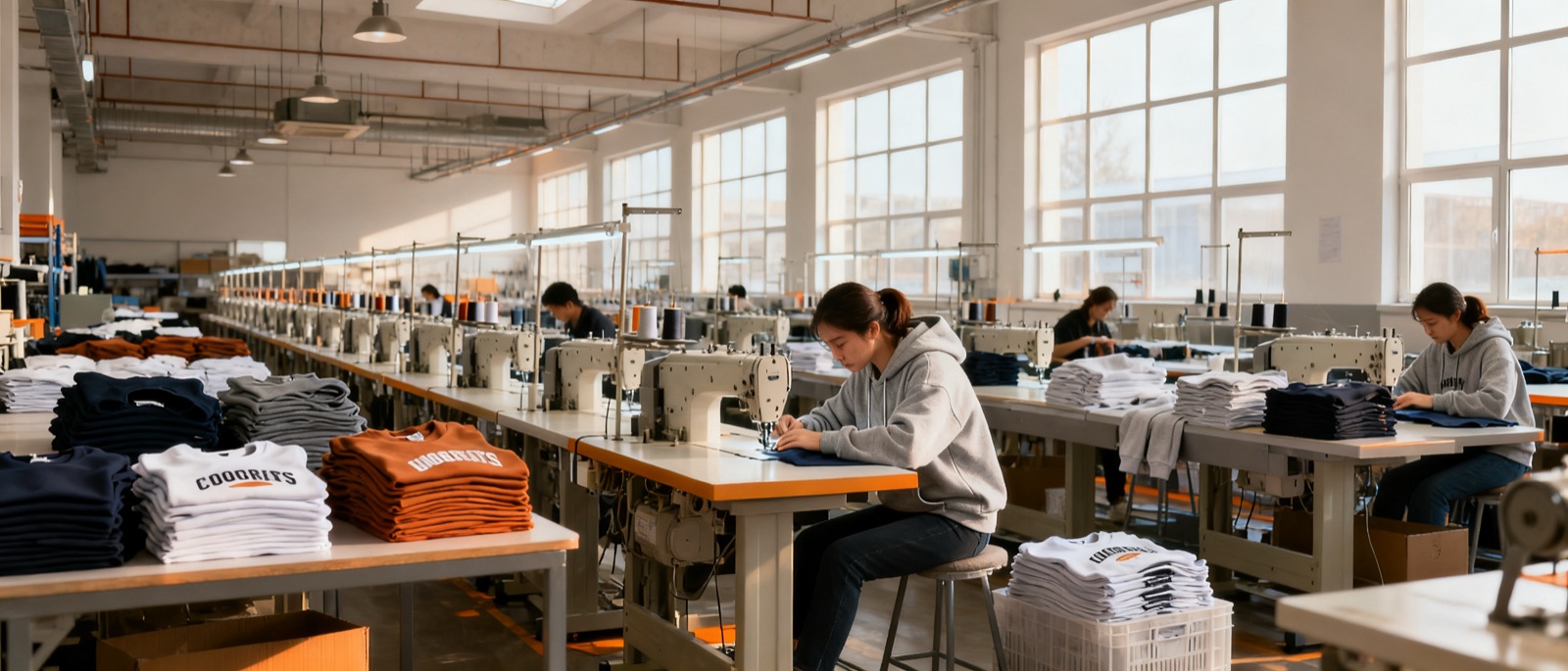
Sampling, production, decoration, quality control and packing happen in our own facilities — there is no trading company between you and the factory floor.
Pattern-making and sample development
In-house pattern makers and sample hands. A physical sample with your labels, prints and packaging takes 7–12 days. Reference garments can be recreated; new styles developed from your tech pack.
Two facilities in Hubei and Guangdong
Bulk production runs 20–35 days depending on garment, decoration and quantity. Capacity grows with your programme across both sites.
Printing and embroidery under one roof
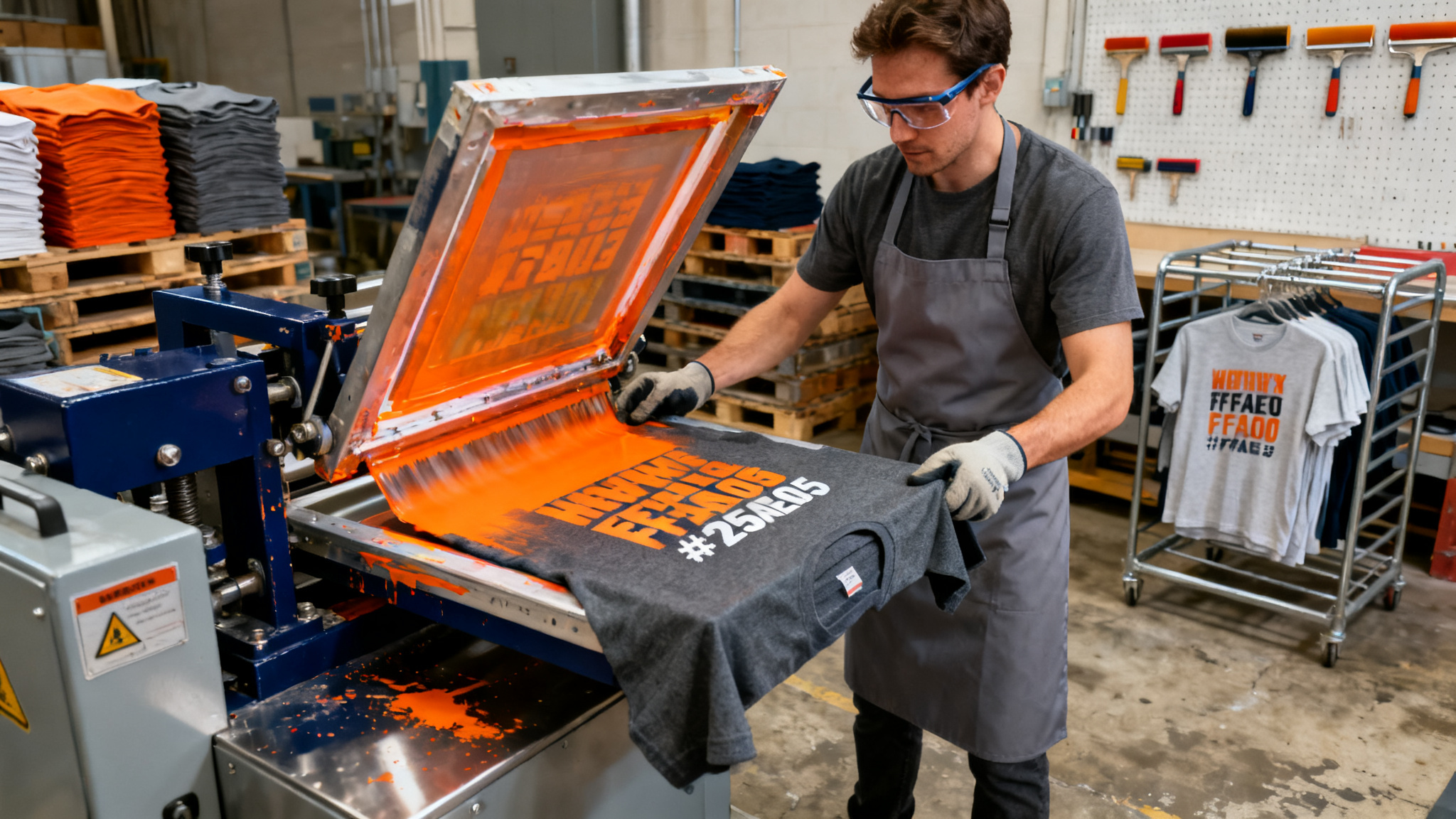
Screen print, DTG, puff, discharge, embroidery and appliqué — handled in-house, so decoration does not wait in a third-party queue.
Branding, packing and export documents
Woven neck labels, care and size labels, swing tags, hangtags, custom buttons, zips and drawcords. OEKO-TEX-certified fabric options; REACH, CPSIA and Prop 65-aware production.
Products & applications
What we manufacture
Six categories, one pattern-making and QC standard — so mixed-category orders run as one production block.
Hoodies & sweats
300–450 gsm fleece and French terry · puff print, embroidery, custom drawcords
Custom hoodiesQuality & delivery
How quality and delivery are controlled
Three checkpoints before anything ships, and a delivery plan agreed in writing.
Incoming fabric
Fabric inspected on arrival for weight, shade, shrinkage and defects before cutting.
In-line production
Measurements and workmanship checked during sewing; decoration checked for adhesion, colour and placement.
Pre-shipment
AQL inspection with a measured spec sheet and photos before packing.
| Stage | Typical timing | Notes |
|---|---|---|
| Sampling | 7–12 days | Includes your labels, prints and packaging |
| Bulk production | 20–35 days | Depends on garment, decoration and quantity |
| Pre-shipment QC | 1–2 days | AQL inspection and packing |
| Shipping | 3–7 days dispatch | DDP, air or sea; transit time confirmed per destination |
Client references and project examples are available on request. We share the relevant category, volume and market — under NDA where required — rather than publishing invented case studies.
Request references →Cooperation process
How an order runs
Six steps, each with a defined owner and a realistic timing.
Brief
You send a tech pack, reference garment or product list. We flag production risks — 1–2 days.
Quote
Fabric options, MOQ, per-piece cost and sample plan — 1–3 days.
Sampling
Pattern, sample and fit review with your labels and artwork — 7–12 days.
Sign-off
Written approval locks the specification and books bulk capacity — 1–2 days.
Bulk
Production with in-line QC and progress photos — 20–35 days.
Shipment
AQL inspection, packing and DDP/air/sea dispatch — 3–7 days plus transit.
FAQ
B2B purchasing questions
What is your minimum order quantity?
Can you produce several categories in one order?
How long do sampling and bulk production take?
Do you make a sample before bulk?
Can you copy a sample I send you?
Which fabrics can you source?
What compliance documents can you provide?
Do you ship DDP?
How do you protect our designs?
How do I start?
Next step
Get a quote and sample plan
Tell us what you want to make. We reply within one business day with price, MOQ, fabric options, lead time and a sampling plan.
Get a Free Quote & Sample Plan
Tell us what you want to make. Our team replies within 1 business day with pricing, MOQ and lead time.