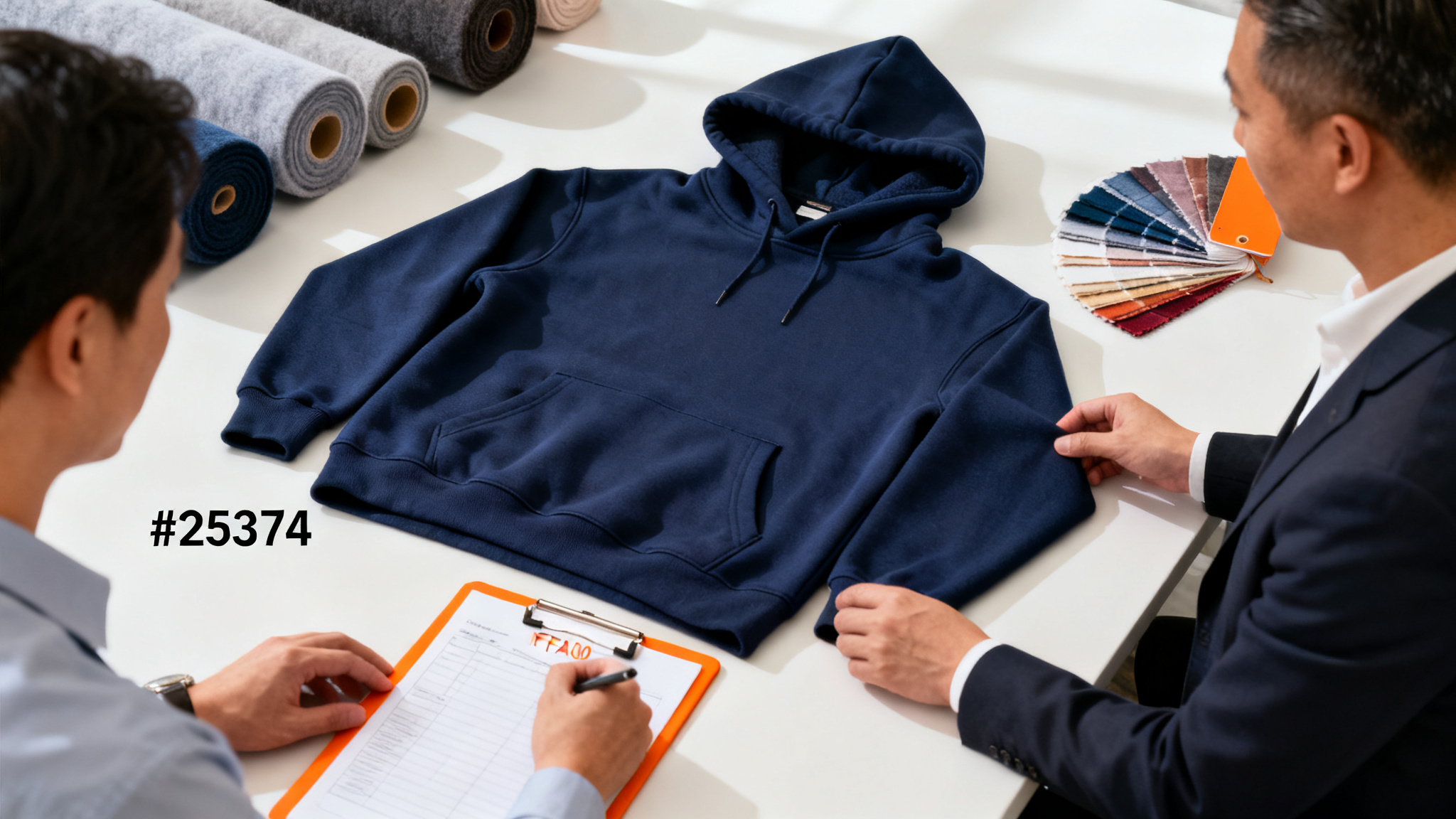
A hoodie is the one product that exposes a factory. It has more panels, more seams, more trims and more ways to go wrong than any t-shirt — a hood that will not sit up, a kangaroo pocket sewn half a centimetre off centre, a zip that waves. Finding a supplier who can cut and sew a heavyweight hoodie properly is a different search from finding someone who can print blanks.
The right custom hoodie manufacturer is a cut-and-sew factory that specialises in heavyweight knitwear — one that can show you recent hoodie production, quote fabric weight in GSM, and confirm its own MOQ, sampling timeline and inspection process before you pay a deposit.1
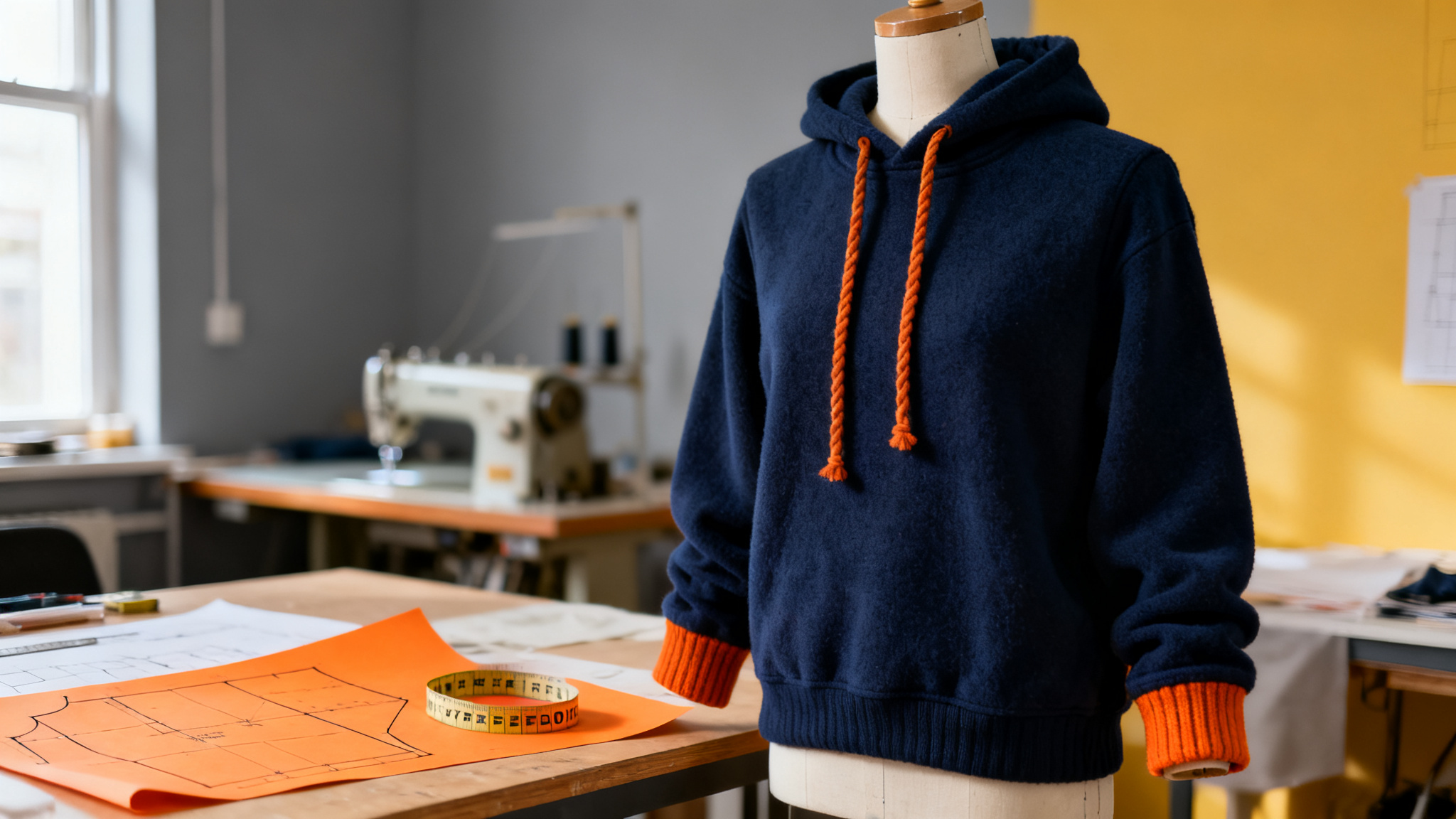
The rest of this guide is the checklist we would use ourselves: what to ask, what to look at, and the answers that tell you whether you are talking to a hoodie factory or a middleman with a catalogue.
What should you look for in a custom hoodie manufacturer?
Start with the garment, not the price list.
Look for a cut-and-sew factory whose recent output is heavyweight knitwear — hoodies, sweatshirts and joggers — because the machines, attachments and operator skill that make a clean hoodie are not the same as those used for light jersey tees.2
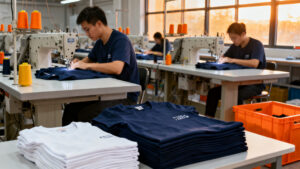
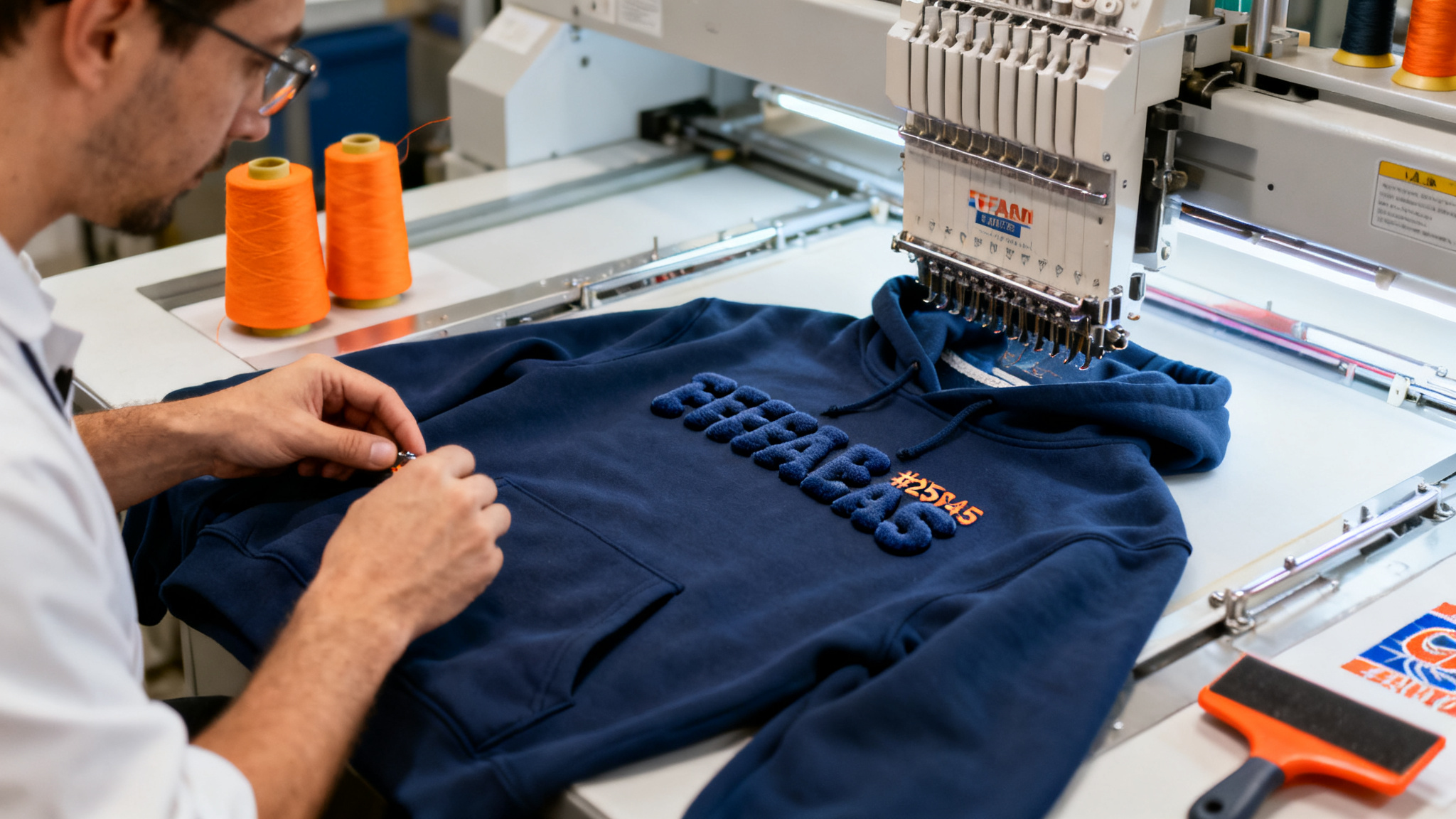
A hoodie needs coverstitch machines for the hem and cuffs, a double-needle setup for the pocket, bartacks at the pocket corners, and someone who can set a hood so the neckline does not stretch. A factory that mostly runs summer tees will quote the job happily and then deliver a hoodie with a collapsed hood and a wavy zip. Ask what percentage of last year's production was fleece or French terry, and ask to see it.
What MOQ and pricing should a custom hoodie order expect?
Hoodie MOQs sit higher than t-shirt MOQs, and for good reason.
Expect a realistic hoodie MOQ of roughly 50–100 pieces per colourway from a specialist factory, with per-unit pricing that falls sharply between the sample run and the 300–500 piece tier because fabric minimums and cutting time dominate the first order.3

Heavyweight loopback fleece is usually dyed to order, so the fabric mill's own minimum drives your minimum. That is why a factory quoting 20 hoodies is often either subsidising the run or planning to buy whatever fleece is already in stock. Get the quote broken into fabric, trims, cutting, sewing, printing or embroidery, and packing — a single lump price hides where the corners will be cut. For the wider cost picture, see what it costs to manufacture a streetwear collection.
How do you verify hoodie fabric and construction quality?
Ask for numbers, then ask for the garment.
Verify fabric by weight and composition — 350–450 GSM for a premium heavyweight hoodie, with a specified cotton/polyester ratio — and verify construction by checking stitch density, pocket alignment, hood shape and cuff recovery on a physical sample, not a photo.4
Weight tells you how the hoodie will hang and how it survives washing; the loopback structure tells you whether the inside will pill. On construction, four checks catch most problems: is the pocket level with the side seams, does the hood stand up without collapsing, do the cuffs snap back after stretching, and are the bartacks actually there. Ask the factory to send the sample with a spec sheet listing GSM, composition, stitch type and stitch density per inch — a supplier who cannot produce that sheet is not running a controlled process.
What does hoodie sampling and production actually take?
Timelines are where optimistic suppliers get caught.
A custom hoodie usually needs 10–20 days for a first sample, one revision round of 7–10 days, then 30–45 days for bulk production once fabric is in-house — so a realistic first drop lands 8–12 weeks after you approve the spec.5

The variable nobody plans for is fabric lead time. Stock fleece can be cut in days; custom-dyed fleece in a specific Pantone can add two to three weeks before the factory even starts. Build the calendar backwards from your launch date, ask for the fabric booking date in writing, and treat any supplier who promises four-week bulk hoodies in custom colours as a risk until they show you the mill confirmation.
What separates a real hoodie factory from a middleman?
Middlemen are not automatically bad — but you should know which one you are paying.
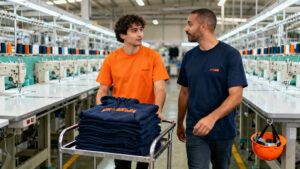
A genuine manufacturer can show its own floor, its own sample room and its own quality control records, while a trading company outsources all three — and the tell is whether your questions about machines, stitch density and inspection get specific answers or get forwarded to someone else.6
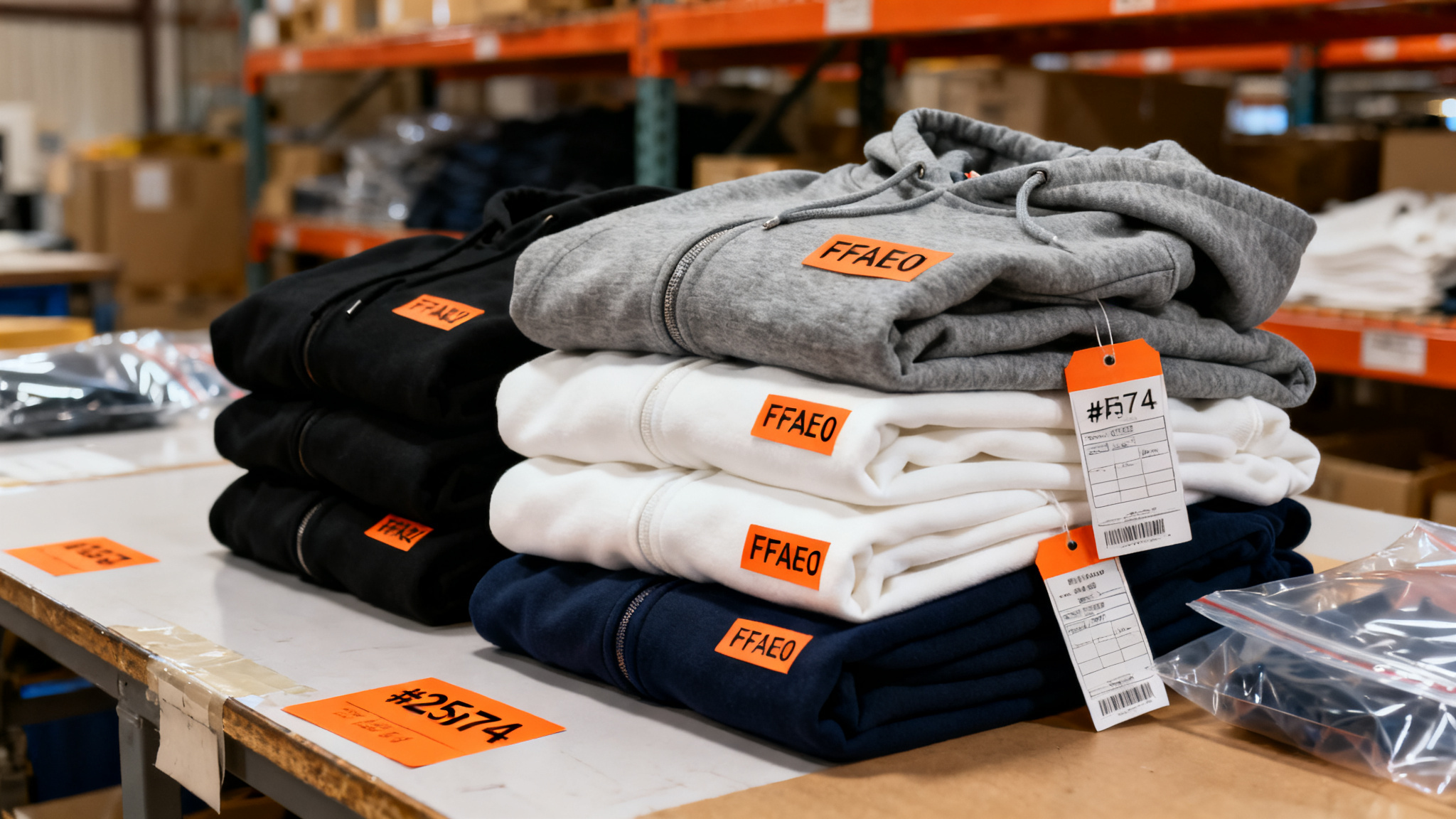
Three questions sort most of it out. Ask which specific machines will run your hoodie and who owns them. Ask for a live video call from the sewing floor, not a saved video. Ask what happens when a bulk order fails inspection — a factory answers with a rework process and an AQL level, a middleman answers with a promise. If you want a deeper filter, our guide to choosing a clothing manufacturer for your streetwear brand walks the same ground for full collections.
Conclusion
Finding a custom hoodie manufacturer comes down to five checks: hoodie-specific production history, a MOQ that matches real fabric minimums, verifiable GSM and construction specs, an honest 8–12 week calendar, and a factory floor you can actually see. Get those and the hoodie arrives the way you designed it; skip them and you will spend your first drop fixing samples. Adiwe builds custom hoodies in heavyweight loopback and French terry at low MOQs with in-house sampling and inspection — send your tech pack or reference hoodie and we will come back with a fabric, price and timeline.
"Hoodie", https://en.wikipedia.org/wiki/Hoodie. Overview of the hooded sweatshirt as a garment, including its construction features, typical materials and place in streetwear. Evidence role: general_support; source type: encyclopedia. Supports: the definition of a hoodie and the panel, hood and pocket construction points used throughout this article. Scope note: cultural and historical overview; does not cover manufacturing specifications or MOQs. ↩
"Clothing industry", https://en.wikipedia.org/wiki/Clothing_industry. Describes how apparel production is organised into cut-and-sew operations, specialised factories and tiers of suppliers. Evidence role: general_support; source type: encyclopedia. Supports: the claim that hoodie production requires a cut-and-sew factory specialised in heavyweight knitwear rather than general light-jersey capacity. Scope note: industry-level description; no factory-specific capability benchmarks. ↩
"Mass production", https://en.wikipedia.org/wiki/Mass_production. Explains economies of scale, setup costs and how minimum efficient batch sizes affect unit pricing in manufacturing. Evidence role: general_support; source type: encyclopedia. Supports: the explanation of why hoodie MOQs and price tiers behave as they do. Scope note: general manufacturing economics; figures quoted in the article are typical industry ranges, not derived from this source. ↩
"Polar fleece", https://en.wikipedia.org/wiki/Polar_fleece. Covers synthetic fleece fabrics, their structure, weight ranges and how they behave in garment use. Evidence role: general_support; source type: encyclopedia. Supports: the fabric weight and composition checks recommended for heavyweight hoodies. Scope note: focuses on polar fleece rather than loopback cotton fleece, though the weight and structure reasoning carries over. ↩
"Supply chain management", https://en.wikipedia.org/wiki/Supply_chain_management. Explains lead time, upstream material availability and how material booking drives downstream production schedules. Evidence role: general_support; source type: encyclopedia. Supports: the sampling and production timeline structure and the point that fabric lead time is the main variable. Scope note: general supply chain theory; the specific day ranges are typical apparel industry practice. ↩
"Original equipment manufacturer", https://en.wikipedia.org/wiki/Original_equipment_manufacturer. Defines OEM arrangements and the distinction between the party that manufactures a product and the party that resells or brokers it. Evidence role: general_support; source type: encyclopedia. Supports: the criteria used to distinguish a real hoodie factory from a trading company or middleman. Scope note: general business definition; does not address apparel-specific vetting methods. ↩
Ready to make this for your brand?
Adiwe manufactures custom T-shirts, hoodies, jackets, pants, shorts and shirts for brands worldwide — from 50 pcs per style and colour, with private labelling, three-stage QC and a physical sample you approve before bulk.
Custom Hoodie ManufacturingCustom T-Shirt Manufacturing