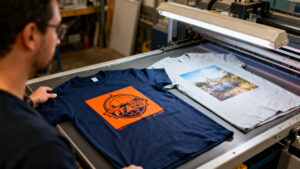
The oversized t-shirt is the hardest basic to get right. Widen the chest a few centimetres too many and it looks like a hand-me-down; drop the shoulder too far and the sleeve swallows the arm. The difference between a premium boxy tee and a sloppy one is a handful of numbers, and they all live in the pattern.
The perfect oversized t-shirt fit comes from a dropped shoulder seam, a wider chest and a controlled body length — usually 20–30 cm wider through the chest than a regular fit, with the shoulder seam sitting 3–6 cm past the natural shoulder.1
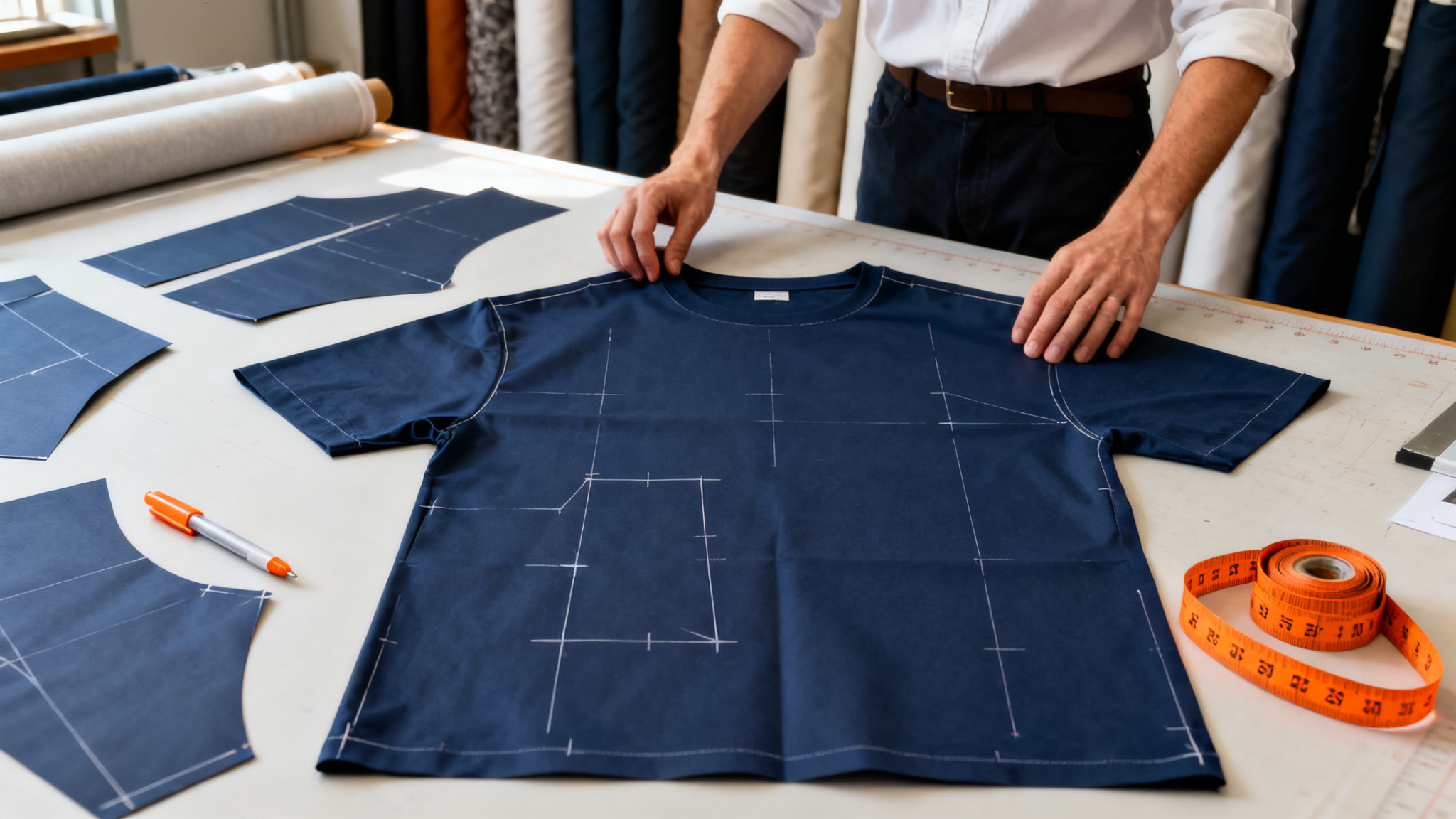
Below are the exact measurements, proportions and grading rules that turn a boxy pattern into a finished fit people actually buy.
What makes an oversized t-shirt fit look intentional instead of just too big?
The line between oversized and sloppy is almost always in the shoulder.
An oversized fit reads intentional when the extra volume is concentrated in the chest and shoulder rather than the length, so the silhouette stays boxy and the hem ends at or just below the hip.2
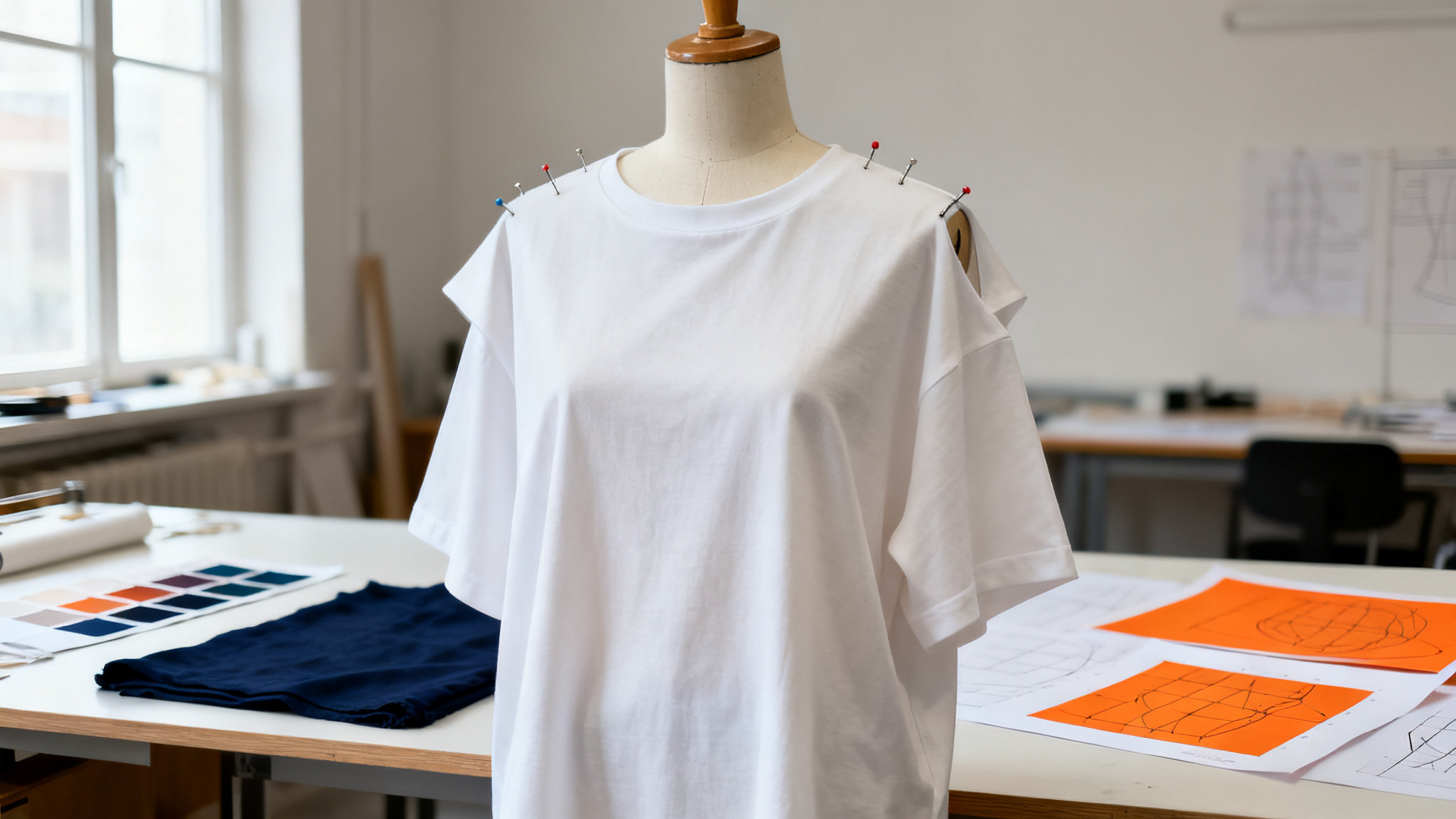
The most common mistake is scaling every measurement up at once, which turns an oversized tee into a tent. A deliberate oversize keeps the body length close to the base fit and pushes the extra fabric into the chest, shoulder and sleeve instead. That is what separates a streetwear boxy tee from a shirt that simply looks like the customer bought two sizes too big.
What measurements define the perfect oversized t-shirt fit?
An oversized tee is defined by five numbers, not one.
The five measurements that define an oversized fit are half-chest width, body length, sleeve length, across-shoulder width and armhole depth, and they must move together or the silhouette falls apart.3
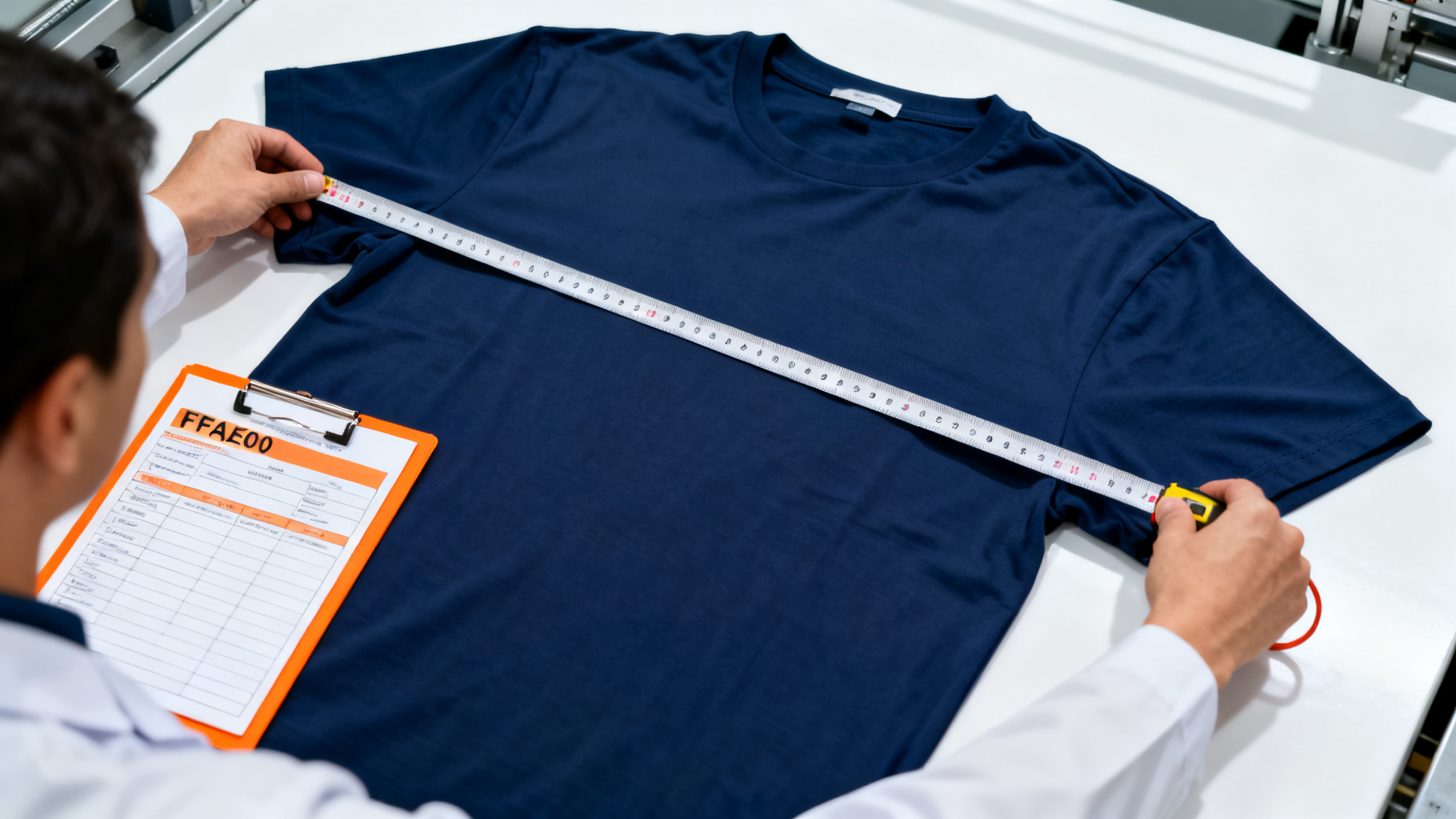
Half-chest width sets the boxy silhouette, body length controls where the hem falls, and sleeve length plus across-shoulder width decide how far the shoulder drops. The armhole depth is the one everyone forgets: drop it too low and the sleeve pulls the whole body up when the wearer moves. Lock these five numbers on a graded size chart before you approve a sample, not after.
How much wider should an oversized t-shirt be than a regular tee?
Width is the biggest lever in an oversized fit, but more is not always better.
Add roughly 15–25 cm to the half-chest of your base fit — about 8–12 cm per side — because beyond that the shirt starts to read as the wrong size rather than a deliberate silhouette.4
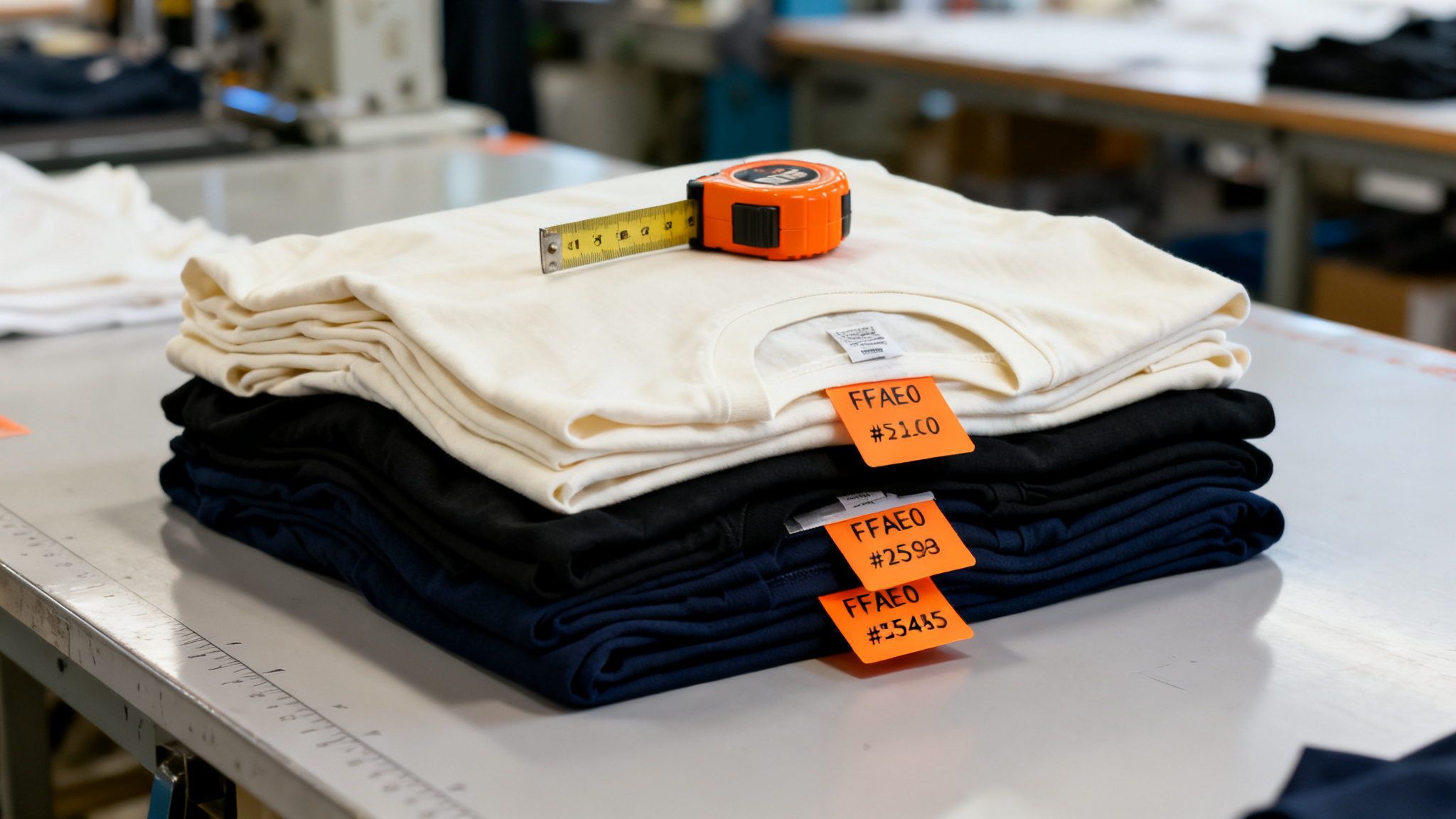
Start from your fitted block and add width in small steps, sampling at +10, +15 and +20 cm before you commit. Every brand has a slightly different taste, but the drop-off is predictable: past roughly +25 cm on the half-chest the neckline starts to gape and the sleeve looks like a wing. Finding your number once and reusing it across every drop is what keeps a brand's fit consistent.
What sleeve and shoulder details complete the oversized silhouette?
The shoulder and sleeve do more than the chest to sell the look.
A dropped shoulder with the shoulder seam extended 3–6 cm past the natural shoulder, paired with a slightly longer sleeve that ends at the upper forearm, is what gives an oversized tee its signature slouch.5
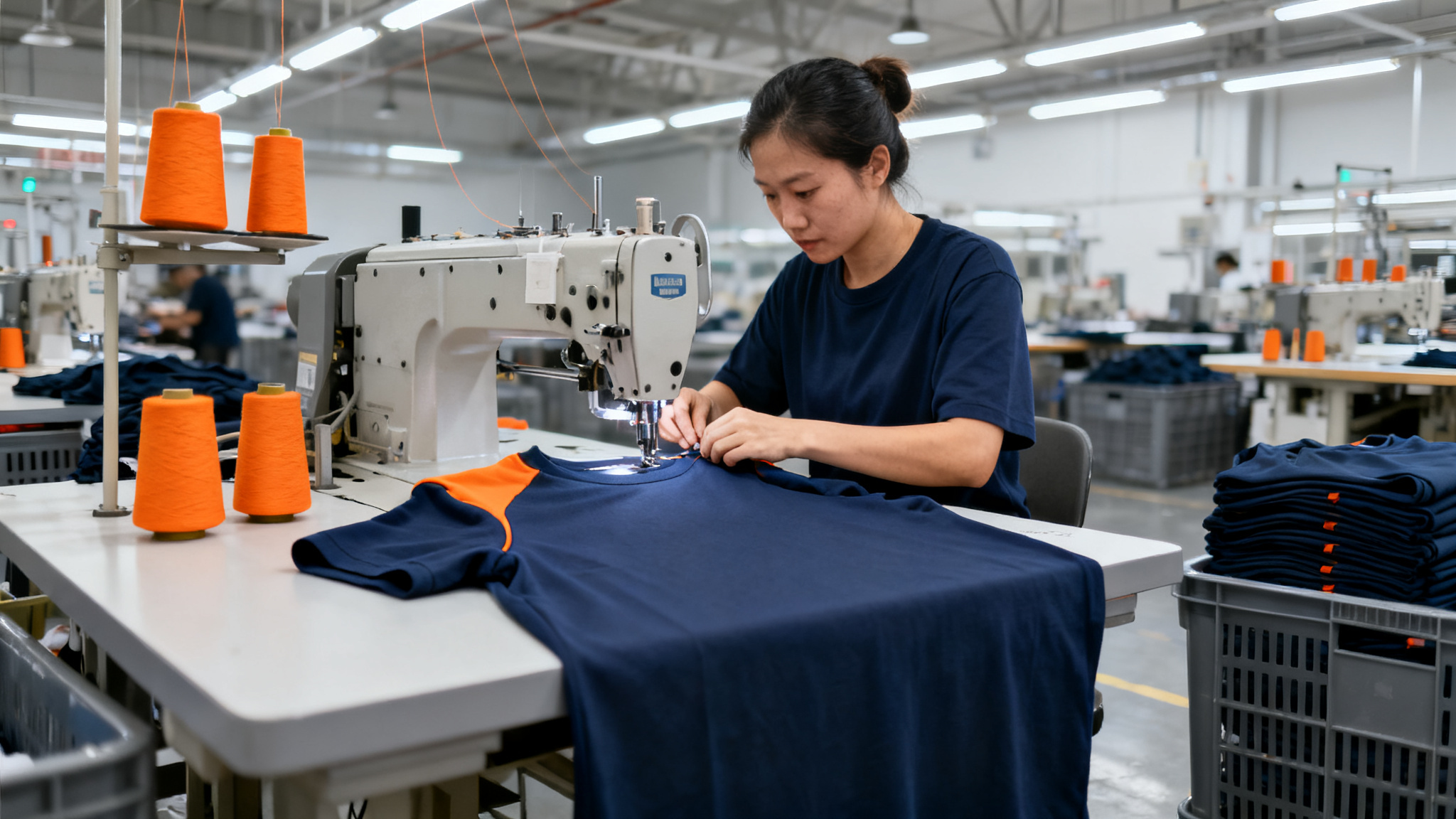
The dropped shoulder is the defining detail of an oversized tee: it removes the hard corner at the shoulder and lets the sleeve fall straight from the neck. Keep the sleeve opening generous but not flared, and let the sleeve length grow in proportion to the drop so the cuff still sits cleanly on the arm instead of bunching at the elbow.
How does fabric weight and drape affect the oversized fit?
The same pattern looks different in different cloth.
Heavier 240–300 GSM jersey holds a boxy shape and drapes in clean folds, while light single jersey collapses against the body and makes the same oversized cut look limp and cheap.6
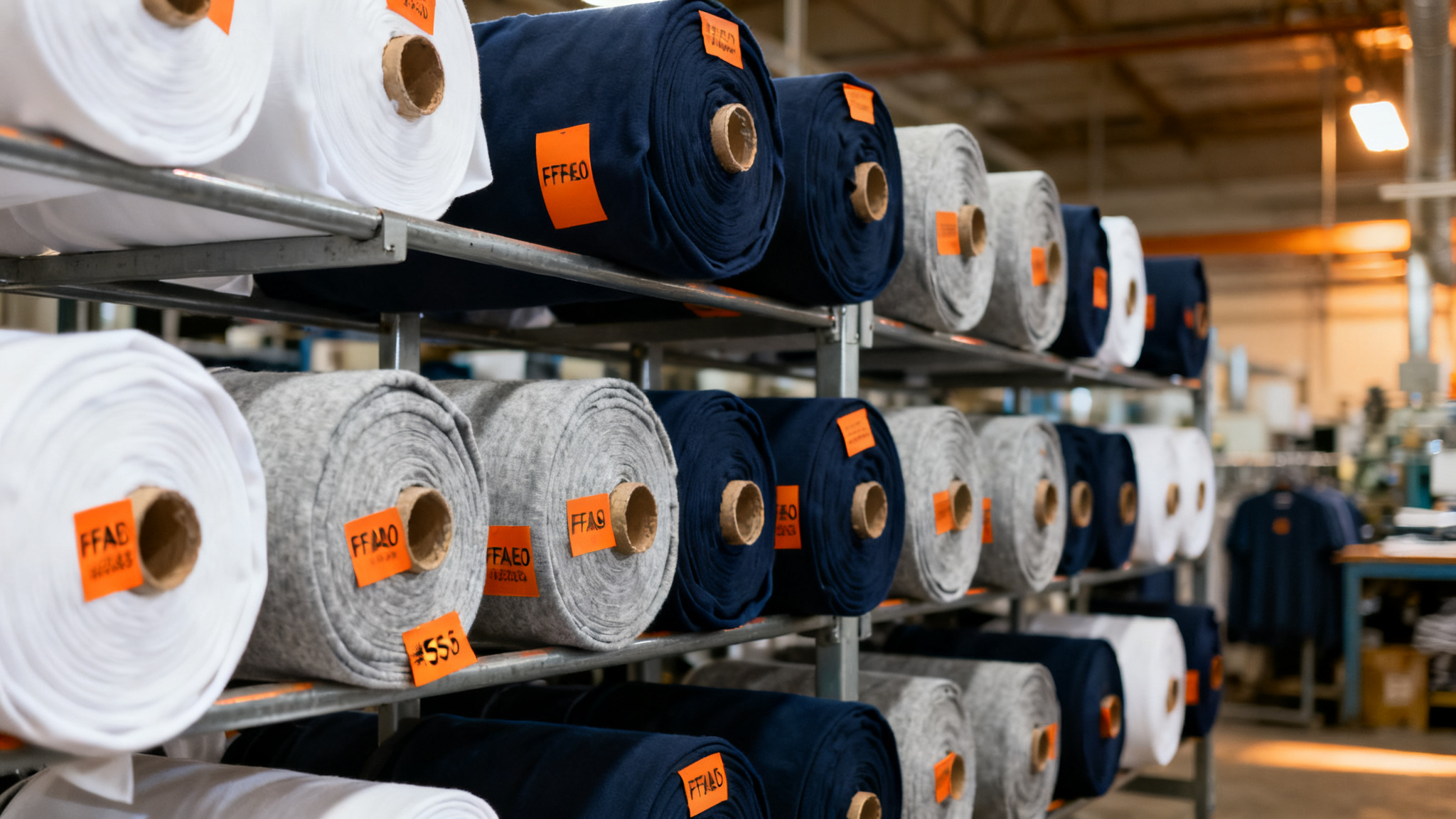
An oversized fit puts more fabric in the air, which means the cloth has to support itself. Light jersey clings and folds at the wrong places, erasing the boxy line you spent weeks grading. Pair your oversized block with 240–300 GSM cotton and the silhouette holds through washing and wear. For a deeper look at the cloth side, see our guide to choosing fabric weight for an oversized t-shirt.
Conclusion
An oversized t-shirt fit is a pattern problem, not a styling problem. Drop the shoulder 3–6 cm, add 15–25 cm to the half-chest, keep the body length controlled, and cut it in 240–300 GSM fabric — then the slouch looks deliberate instead of accidental. If you want a factory that grades your oversized block correctly and sews it in the right cloth, Adiwe’s custom t-shirt manufacturing team can quote oversized programs from low MOQs — send your spec sheet and target measurements and we will come back with a sample plan.
"T-shirt", https://en.wikipedia.org/wiki/T-shirt. Overview of t-shirt construction, common knit fabrics and typical fits including relaxed and oversized styles. Evidence role: general_support; source type: encyclopedia. Supports: the definition of an oversized tee and the dropped-shoulder, wider-chest framing used throughout this article. Scope note: general garment overview; does not give brand-specific grading measurements. ↩
"Fashion design", https://en.wikipedia.org/wiki/Fashion_design. Covers silhouette, proportion and how designers distribute volume to create a garment's intended shape. Evidence role: general_support; source type: encyclopedia. Supports: the claim that intentional oversized silhouettes concentrate volume in the shoulder and chest rather than the length. Scope note: general design principles, not t-shirt-specific grading tables. ↩
"Clothing sizes", https://en.wikipedia.org/wiki/Clothing_sizes. Explains body measurement and garment measurement conventions and how size dimensions relate across a garment. Evidence role: general_support; source type: encyclopedia. Supports: the five core measurements (half-chest, body length, sleeve, shoulder, armhole) used to define a fit. Scope note: focuses on sizing systems rather than oversized pattern rules. ↩
"Pattern (sewing)", https://en.wikipedia.org/wiki/Pattern_(sewing). Describes how garment patterns are drafted and adjusted, including adding ease and width to a base block. Evidence role: general_support; source type: encyclopedia. Supports: the half-chest width increments (roughly 8–12 cm per side) for an oversized fit. Scope note: general patternmaking overview; exact width increments vary by brand and base fit. ↩
"Sleeve", https://en.wikipedia.org/wiki/Sleeve. Describes sleeve construction, set-in versus dropped shoulder styles and how sleeve length shapes a garment's look. Evidence role: general_support; source type: encyclopedia. Supports: the dropped-shoulder and extended sleeve-length details that complete an oversized silhouette. Scope note: covers sleeves generally, not t-shirt-specific measurements. ↩
"Jersey (fabric)", https://en.wikipedia.org/wiki/Jersey_(fabric). Describes single-knit jersey structure, its stretch and drape behaviour and how heavier knits differ from light ones. Evidence role: general_support; source type: encyclopedia. Supports: the claim that heavier jersey holds a boxy shape while light jersey collapses against the body. Scope note: covers knit structure generally, not specific fabric weights. ↩
Ready to make this for your brand?
Adiwe manufactures custom T-shirts, hoodies, jackets, pants, shorts and shirts for brands worldwide — from 50 pcs per style and colour, with private labelling, three-stage QC and a physical sample you approve before bulk.
Custom Hoodie ManufacturingCustom T-Shirt Manufacturing