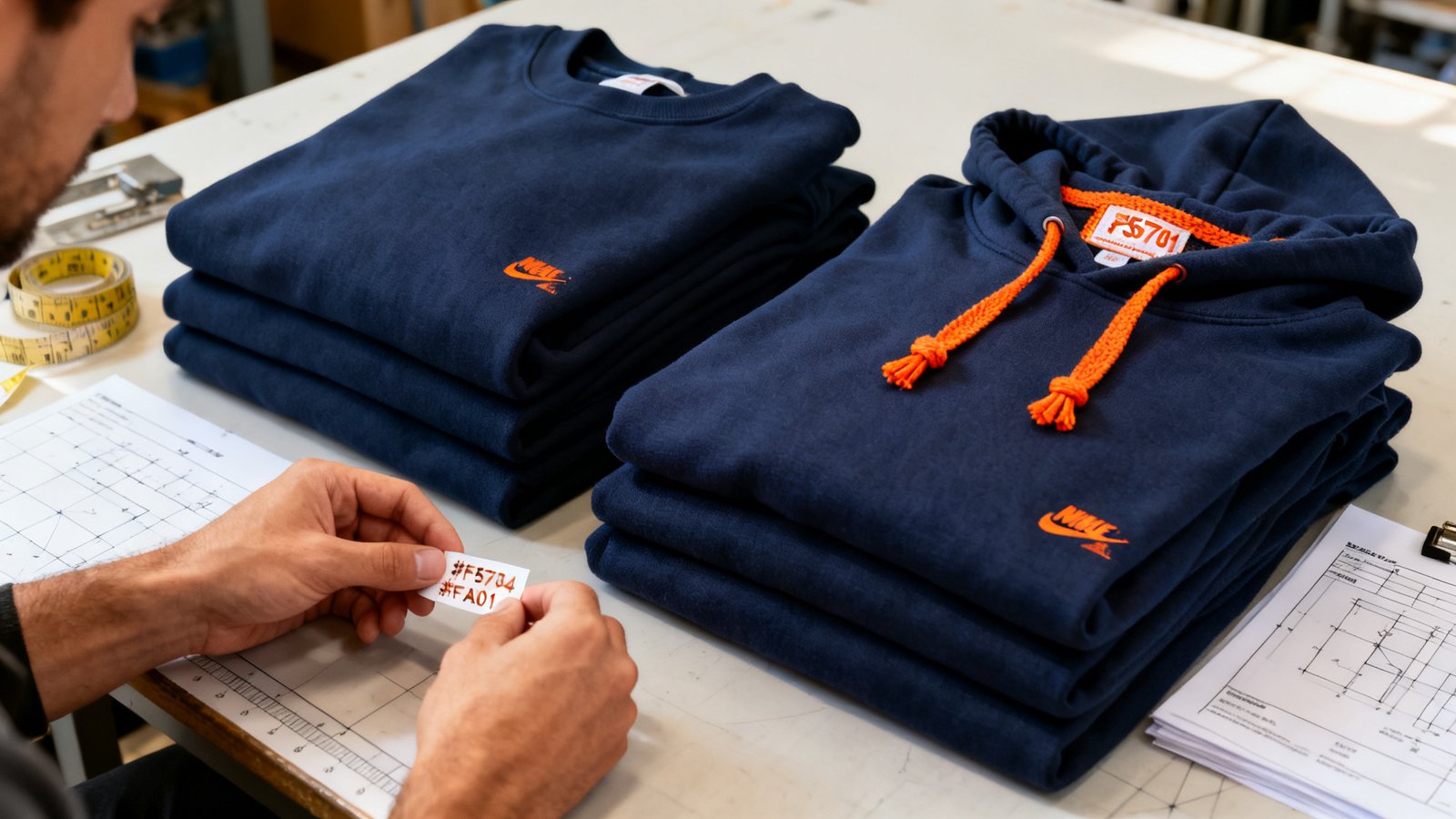
Two brands order the same 300-piece hoodie run and get quotes that differ by almost half. One supplier is selling them a garment that already exists in a catalogue with their woven label sewn in; the other is building the garment from a pattern. Both are legitimate ways to launch, but they buy very different things — and confusing the two is how founders end up with a product they cannot reorder, differentiate or defend on price.
Private label means you buy an existing, pre-developed garment and put your own brand on it — your label, hangtag and packaging — while custom clothing manufacturing means the garment itself is made to your specification, with your pattern, fit, fabric, colour and trims, so no other brand can sell the identical piece.1
The trade-off is simple to state and harder to price: private label is faster, cheaper and lower risk, custom manufacturing is slower, more expensive and the only route to a product that is genuinely yours. Most streetwear brands end up using both, at different points in their life cycle.
What is the difference between private label and custom clothing manufacturing?
The two terms are used almost interchangeably in supplier emails, yet they describe completely different amounts of product ownership.
In private label, the supplier owns the design and you own the brand: the fit, fabric, weight and construction come from an existing catalogue product, and you choose the colourways, size curve, labels and packaging. In custom manufacturing, you own the design as well — a pattern is created or adapted for you, fabric is selected or developed, and trims are made to your drawings.2
Practically, the dividing line is the pattern. If nobody is cutting a new pattern or grading a new size run for you, it is private label, even if the supplier dyes the garment in your colour and sews in your label. Once pattern making, grading, fit samples and fabric development enter the quote, you are in custom territory. That distinction matters because the pattern is the asset that gives a streetwear brand its silhouette — the boxy drop shoulder, the cropped hem, the wide rib — and in a private label arrangement that asset belongs to the supplier, not to you.
Is private label cheaper than custom clothing manufacturing?
Unit price is the number founders compare first, and private label usually wins it — but not always by as much as the first quote suggests.
Private label is cheaper per unit, particularly at low quantities, because you are not paying for pattern development, sample rounds, fabric minimums or custom trim tooling; the supplier spreads those costs across every buyer of that style. Custom manufacturing carries those development costs upfront, so its unit price only becomes competitive once your volume amortises them.3
Break a custom quote into its parts and the picture gets clearer: pattern making and grading, one to three sample rounds, fabric development or a dye lot at the mill's minimum, custom woven labels, drawcords, zipper pulls and print screens, plus a quality inspection and often a small-order surcharge. At a hundred pieces those costs dominate. At a thousand pieces they spread thin, and a well-negotiated custom program can land within a couple of dollars of a private label blank — with a fit nobody else has. The trap is treating the private label saving as pure profit when it is really the price of being interchangeable. If you want to see where the money actually goes on a first run, our breakdown of manufacturing for DTC brands covers the development line items.
How do MOQ and lead time differ between private label and custom manufacturing?
Volume and calendar are usually the two constraints that decide the model for a young brand, more than price.
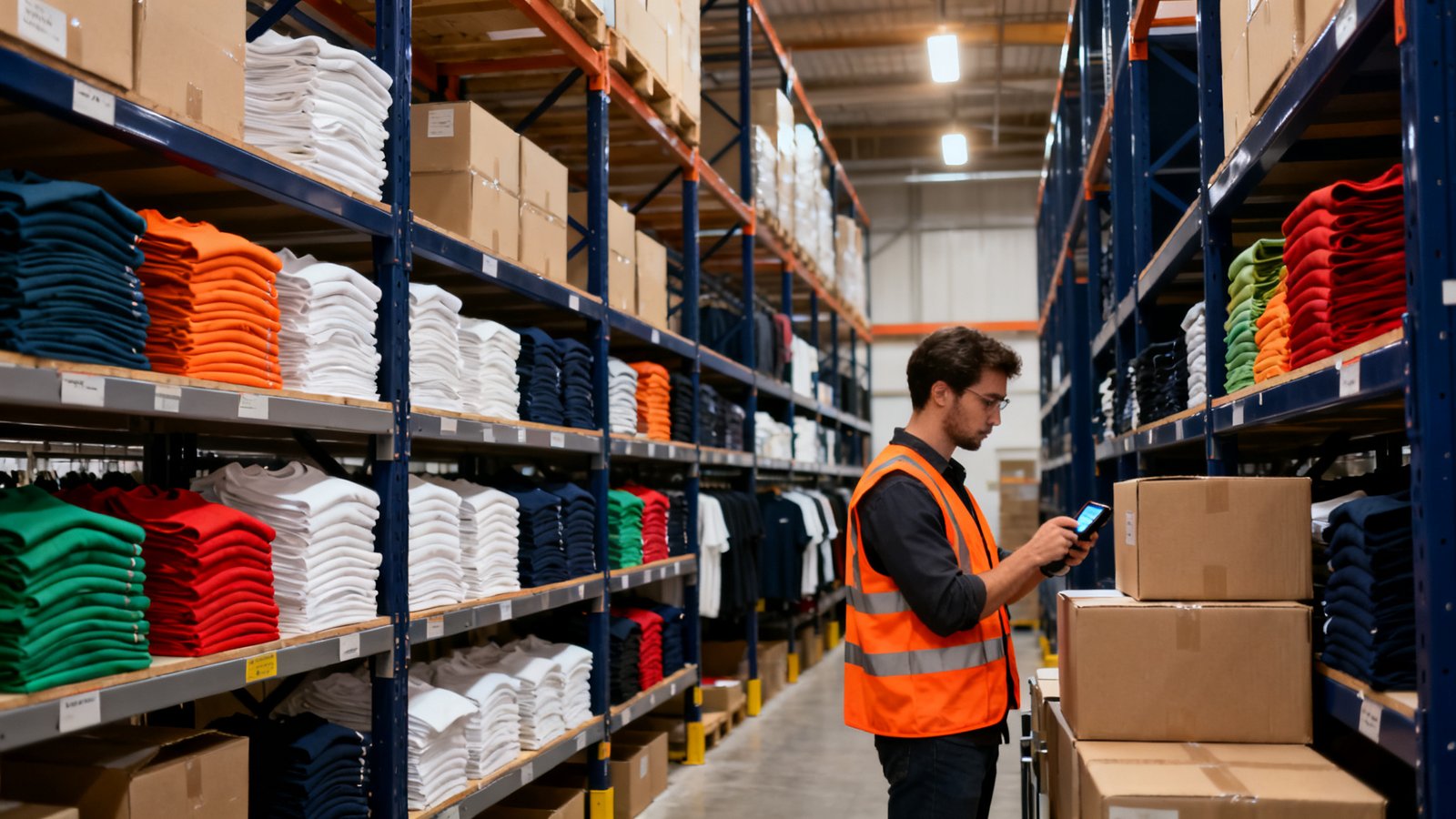
Private label MOQs are set by what the supplier already holds in stock, so you can often buy tens of pieces per colour and ship within days to a few weeks. Custom manufacturing MOQs are driven by fabric minimums — knitting, dyeing and finishing runs at the mill — and by cutting efficiency, so they are typically higher, and lead time includes sampling before bulk production even starts.4
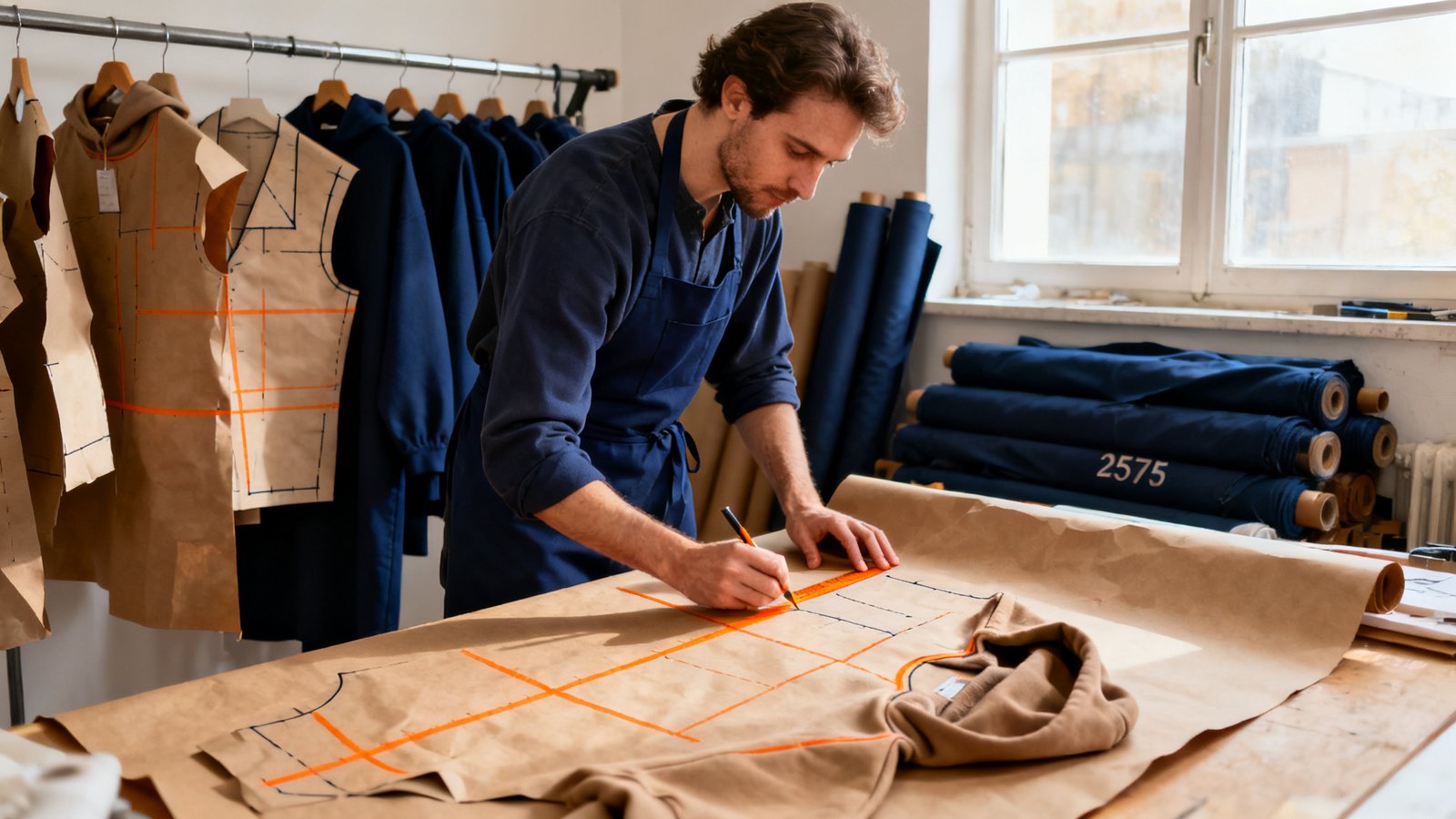
A realistic custom timeline is two to four weeks for sampling and fit approval, one to two weeks for fabric production or dyeing if the colour is not in stock, then three to five weeks of bulk sewing, finishing and inspection. Private label compresses all of that to picking stock, decorating it and shipping. The MOQ side is where the mill's minimum bites: a custom fabric in a custom Pantone often starts at several hundred metres, which becomes several hundred garments. If your first drop is 150 pieces, that single constraint can rule out a bespoke fabric even when the factory is willing to cut small.
Which model should a streetwear brand choose?
The honest answer is that the right choice depends on what you are trying to prove with this specific product.
Choose private label to test demand quickly, add basics and accessories, protect cash flow and hit a tight launch date. Choose custom manufacturing when fit, silhouette or fabric is the reason people will buy — a signature oversized block, a heavyweight loopback, a proprietary wash — because those are the things private label cannot give you.5
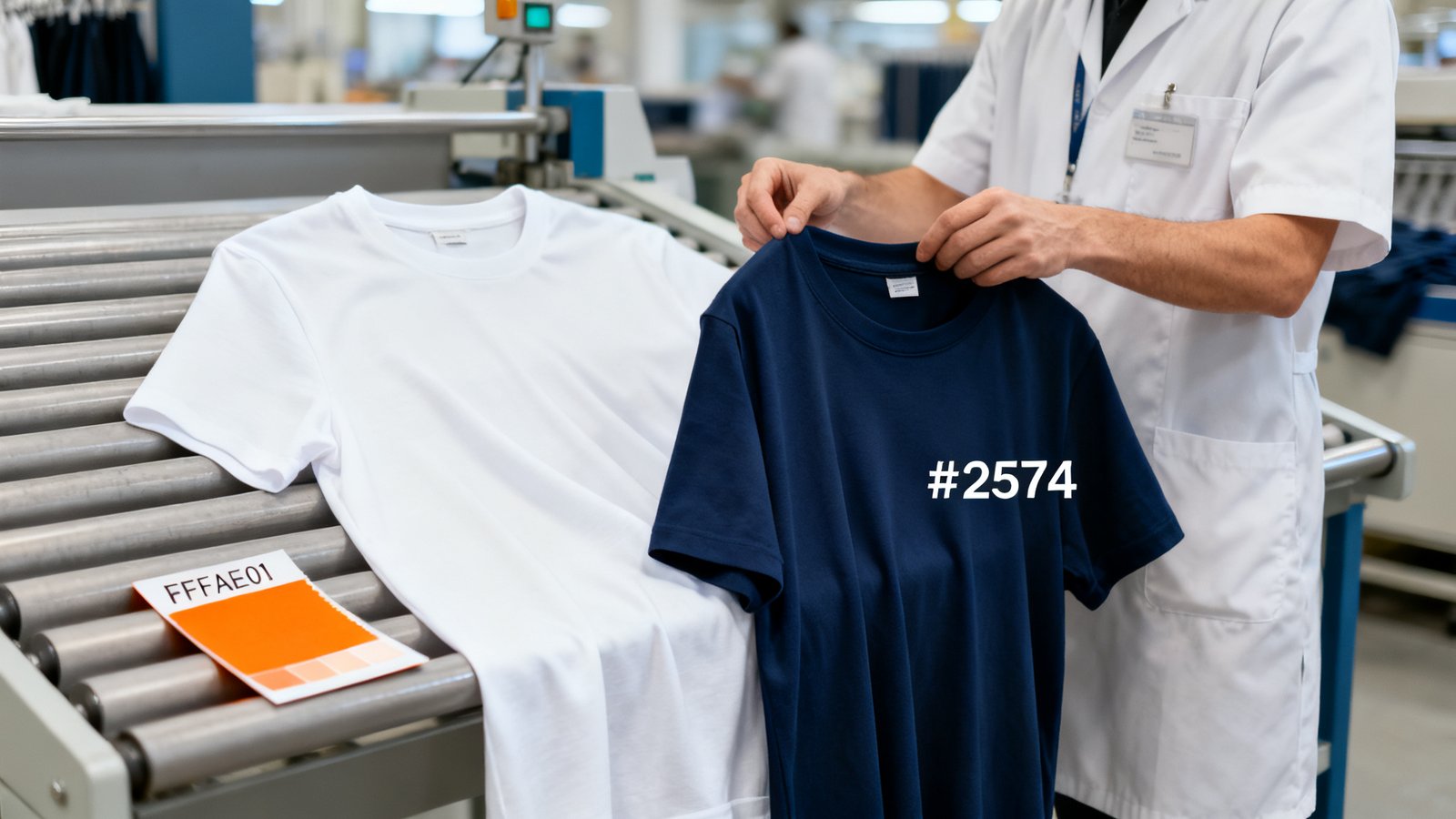
Streetwear is unusually fit-driven for a category that looks casual. A 240 gsm boxy tee with a specific shoulder drop and body width reads completely differently from a standard retail cut, and that difference is a pattern, not a print. So the pragmatic structure most growing brands land on is hybrid: private label or stock blanks for the pieces where the graphic carries the product — basics, promo, accessories, a fast capsule — and custom development for the two or three hero silhouettes that define the collection. You get speed where speed is worth paying for, and ownership where ownership builds brand equity. Just keep the labelling consistent so the cheap piece and the expensive piece feel like the same label.
What should you verify before committing to either model?
Both models carry a specific failure mode, and each one is cheap to prevent at the quoting stage and expensive to fix afterwards.
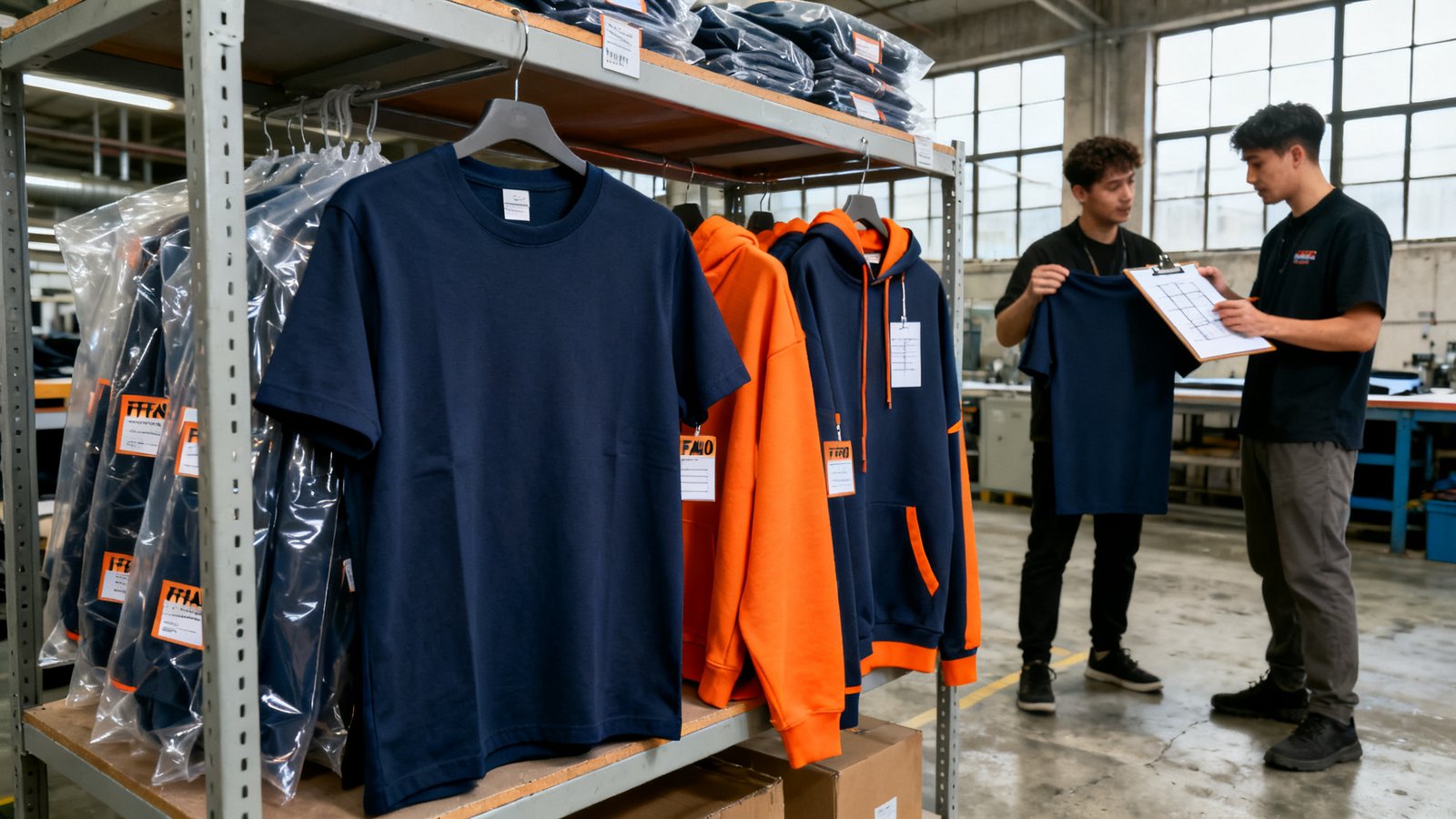
For private label, verify exclusivity, stock continuity and reorder terms in writing, because the same blank is being sold to your competitors and can be discontinued without notice. For custom manufacturing, verify pattern and artwork ownership, the fabric and trim specification on paper, size tolerances and the inspection standard — otherwise sample-to-bulk drift and hidden subcontracting appear after you have paid the deposit.6
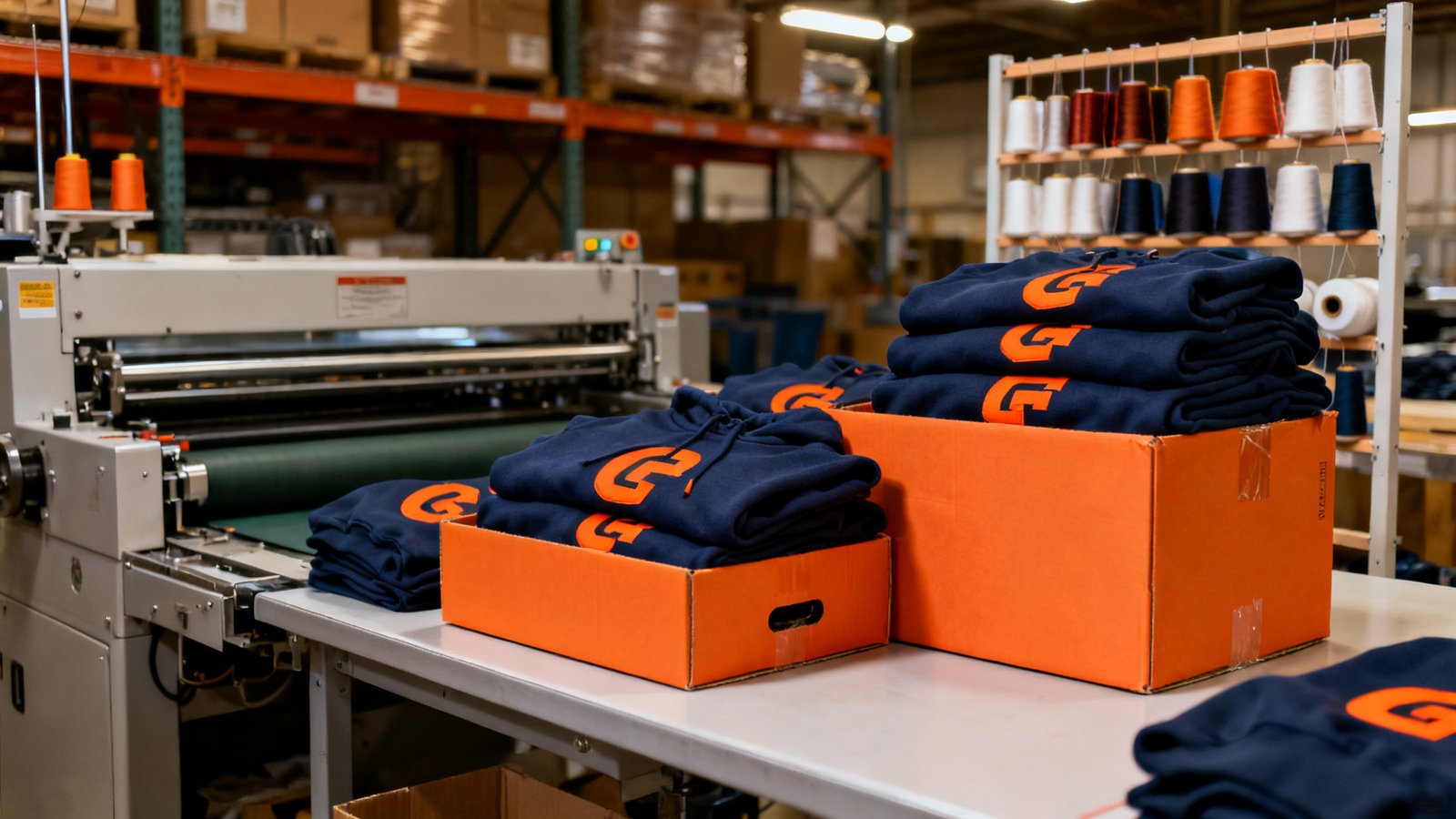
On the private label side, ask three questions: can I have this colour and style exclusively in my market, how many months of stock do you hold, and what happens if the mill stops producing it? Get the answer in the purchase agreement, not in a chat message. On the custom side, the equivalent checklist is a signed tech pack with a measurement spec and tolerance table, the exact fabric composition and weight with a test report, named trim suppliers, an AQL inspection level with a defined defect classification, and a clause confirming the pattern and artwork are yours and will not be reused. Then keep a sealed, approved sample as the bulk standard. If you want the pattern, fabric and trim decisions handled in one place rather than split across three suppliers, our custom clothing manufacturer team builds from your tech pack and quotes private label and full custom side by side.
Conclusion
Private label buys you speed and a low entry cost on a garment that already exists; custom manufacturing buys you a fit, fabric and silhouette that are yours alone. Neither is the "professional" choice — the professional choice is matching the model to what the product needs to prove, then locking exclusivity, ownership and tolerances in writing before money moves. If you are weighing the two for an upcoming drop, send us your designs and target quantities and we will tell you honestly which route your product actually needs.
"Private label", https://en.wikipedia.org/wiki/Private_label. Defines private label products as goods manufactured by one company and sold under another company's brand, and outlines the retailer-supplier relationship behind them. Evidence role: general_support; source type: encyclopedia. Supports: the answer-first definition of private label as an existing product carrying your brand rather than your design. Scope note: covers private label across retail categories; does not address garment-specific MOQs, fabric development or apparel pricing. ↩
"White-label product", https://en.wikipedia.org/wiki/White-label_product. Explains white-label goods as products produced by one manufacturer that other companies rebrand and resell, including the generic-product logic behind the model. Evidence role: general_support; source type: encyclopedia. Supports: the distinction that in private label the supplier owns the design and the buyer owns only the brand presentation. Scope note: generic commercial overview; does not discuss apparel patterns, grading or exclusivity clauses. ↩
"Private label", https://en.wikipedia.org/wiki/Private_label. Describes the commercial rationale for private label, in which retailers capture margin by sourcing existing production instead of funding product development. Evidence role: general_support; source type: encyclopedia. Supports: the claim that private label avoids development costs and is therefore cheaper per unit at low volume. Scope note: margin and strategy discussion; gives no unit costs, development budgets or volume break-even figures. ↩
"Contract manufacturer", https://en.wikipedia.org/wiki/Contract_manufacturer. Describes contract manufacturing as production carried out by a third party under the buyer's specification, covering the commercial structure of outsourced manufacturing. Evidence role: general_support; source type: encyclopedia. Supports: the explanation that custom manufacturing carries specification and setup obligations that shift MOQ and lead time compared with buying stock. Scope note: broad manufacturing overview; no apparel-specific minimums, mill dye-lot rules or calendar benchmarks. ↩
"Original design manufacturer", https://en.wikipedia.org/wiki/Original_design_manufacturer. Explains the ODM model, in which a manufacturer develops the product design and the buyer brands it, in contrast to buyer-specified OEM production. Evidence role: general_support; source type: encyclopedia. Supports: the framing of a spectrum from supplier-owned design to buyer-owned design, and where custom development sits on it. Scope note: electronics-led examples; the apparel application is analogous rather than documented. ↩
"Quality control", https://en.wikipedia.org/wiki/Quality_control. Defines quality control as the process of verifying that products meet specified requirements, including inspection, sampling and defect classification. Evidence role: general_support; source type: encyclopedia. Supports: the recommendation to define tolerances, inspection levels and defect classes before production rather than after delivery. Scope note: general QC theory; does not specify AQL tables, garment measurement points or apparel audit formats. ↩
Ready to make this for your brand?
Adiwe manufactures custom T-shirts, hoodies, jackets, pants, shorts and shirts for brands worldwide — from 100 pcs per style and colour, with private labelling, three-stage QC and a physical sample you approve before bulk.
Custom Hoodie ManufacturingCustom T-Shirt Manufacturing