Labels are the part of a garment nobody photographs and every customer reads. They carry the fibre content, the wash instructions, the size, the country of origin and the name you spent months choosing — and if they are ordered late or specified loosely, they are also the reason a finished production run sits in a warehouse waiting to be re-labelled.
Custom clothing labels are chosen by matching the label type — woven, printed or heat transfer — to the fabric, the care requirements and the retail channel, and by ordering them before sampling so the neck label, care label and hang tag are approved alongside the garment.1
Most first-time brands treat labels as a packaging decision made at the end of production. They are actually a materials decision made at the start: the label substrate has to survive the same wash cycle as the garment, the attachment method has to suit the seam it goes into, and the copy has to satisfy the labelling rules of every market you ship to. Get those three right at sampling and the rest is artwork. If you are still building the rest of the product spec, our custom clothing manufacturing guide covers how labels sit alongside fabric, trims and construction in a full tech pack.
What are the main types of clothing labels?
There are four label families in a normal streetwear programme, and each one has a different job.
The four core label types are woven labels, printed fabric labels, heat transfer labels and hang tags; woven and printed labels sit inside the garment, while hang tags and care labels carry retail and compliance information.2 Confusing them is the most common cause of a label that looks wrong on the finished piece.
Woven labels are made on a loom, so the design is built from threads rather than printed on top — the result is a soft, dense label with a slight relief that reads as premium at the neck. Printed labels are fabric tape printed with the artwork, which allows fine detail, gradients and small type at a lower cost. Heat transfer labels are printed onto a film and applied with heat and pressure, giving a smooth, flat, "tagless" finish with no sewing. Hang tags are the retail layer: card, string and often a barcode. A typical drop needs a main neck label, a care label, an optional size label and a hang tag, and each is specified separately.
Woven vs printed labels: which should your brand use?
The choice usually comes down to budget per piece versus perceived quality at the neck.
Woven labels suit premium positioning, minimal text and long production runs, while printed labels suit detailed artwork, short runs and tight budgets; heat transfer suits tagless comfort and lightweight fabrics.3 Neither is objectively better — the garment weight and the price point decide.
On heavyweight cotton and fleece, a woven label with a damask or satin ground feels correct and survives repeated washing without curling. On lightweight jersey or performance fabric, a woven label can feel stiff against the skin, which is where a soft printed or heat transfer label wins. Woven set-up costs are higher because the loom has to be prepared, so woven labels only make sense above a few hundred pieces per design; printed labels have a much lower entry point and are ideal for a first drop or a capsule. Many brands mix the two: a woven main label for the drop, printed care labels for volume, and heat transfer for anything worn against the skin. Ask for physical samples of both before committing — photography flatters woven labels badly.
What information must a clothing label carry?
Compliance copy is not optional, and the required content varies by market.
A care label must state fibre content, washing and drying instructions, and the country of origin; in the EU and UK the fibre composition has to be given in descending order by weight, and retail hang tags usually add a barcode and price.1 Missing or wrong care content is one of the most common reasons a shipment is refused at retail.
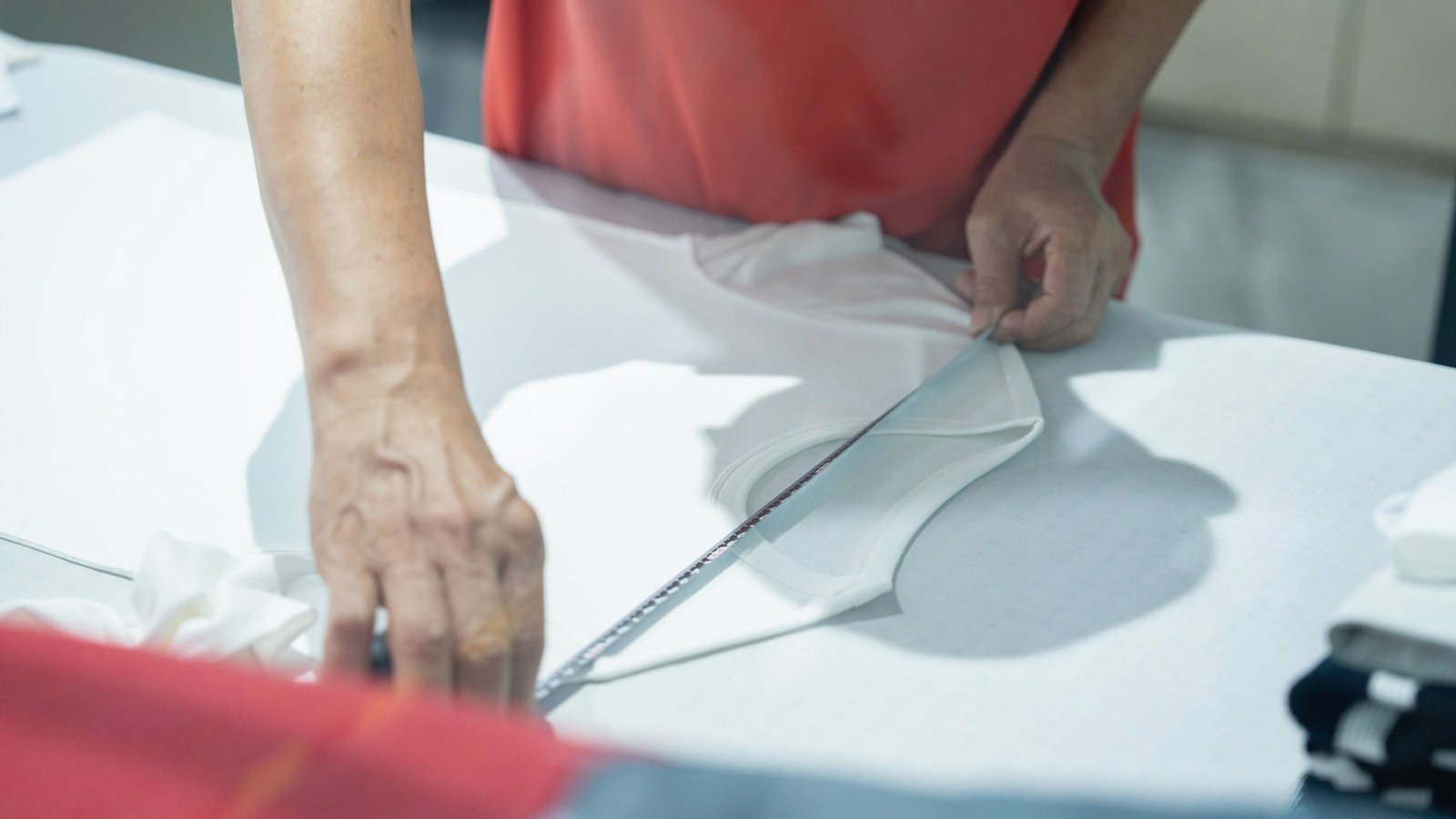
Practically, that means one label often cannot do everything. Brands typically use a small woven or printed main label at the centre neck for identity and size, a separate multi-panel care label in the side seam for fibre content, wash symbols and origin, and a hang tag for the story, price and barcode. Care symbols follow an international standard, which is why a single set of symbols can travel across markets while the text stays in the local language. If you sell through a retailer or marketplace, ask for their label spec before you print anything — barcode placement and tag size are usually dictated by the buyer, not by you.
How do you order custom labels without delaying production?
Labels have their own lead time, and it does not compress because the garment is running late.
Custom woven labels typically need 10–20 working days plus sampling, printed labels 7–15 working days, and hang tags 5–10 days, so all of them should be approved before the fabric is cut for bulk.4
The workable sequence is to approve label artwork together with the fabric and trims at the sampling stage, order labels once the sample is signed off, and have them delivered to the factory before bulk cutting starts. Artwork approval needs a physical or high-resolution digital proof, because thin strokes and reverse-out type below about 3 mm will fill in on a woven label. Watch the minimum order quantity too: woven labels are usually quoted in rolls of 1,000 or more, so a 300-piece first drop may mean buying a stock label or accepting a higher per-unit price. Confirm the fold type and the seam allowance as well — centre-fold, end-fold and miter-fold labels are attached differently and are not interchangeable once the garment pattern is set.
The hang tag is where a small brand gets the most perceived value per dollar.
Hang tags carry the brand story, size, price and barcode, and are the cheapest place in the whole product to add a premium impression; they are also the item most often forgotten in the production schedule.5
A heavier uncoated stock, a single spot colour, a clean die-cut and a flat cotton string do more for the unboxing than an extra print on the garment. Keep the tag copy short: brand line, size, price, barcode, and one line about the product. Attach with a standard tagging gun so the hole does not tear, and specify where the tag sits so it does not mark the fabric in transit. Because tags are printed separately from the garment, they can be re-printed cheaply between drops — which makes them a low-risk place to test a rebrand or a seasonal story before you commit to new woven labels.
Conclusion
Choosing custom labels is a short list of decisions made in the right order: pick the label type against fabric weight and price point, put identity on the neck label and compliance on the care label, approve artwork before bulk cutting, and use the hang tag for the story. Order labels with the same discipline as fabric and they will never hold a shipment. If you want the label, trim and packaging spec built into one production plan, send us your design files and we will quote labels together with the garment, or start from our custom t-shirt manufacturing page for tees and basics.
"Care label", https://en.wikipedia.org/wiki/Care_label. Explains care labelling: fibre content, washing and ironing instructions, country of origin, and the use of standardised care symbols. Evidence role: general_support; source type: encyclopedia. Supports: the required content of a care label and the practice of using international symbols so one label works across markets. Scope note: describes labelling conventions in general; exact legal wording and language requirements differ by country and by retailer. ↩
"Label", https://en.wikipedia.org/wiki/Label. Describes labels as attached information carriers and distinguishes permanent garment labelling from removable retail tags. Evidence role: general_support; source type: encyclopedia. Supports: the split between labels sewn into the garment and tags attached for retail sale. Scope note: covers labels broadly across industries; it does not compare woven, printed and heat transfer construction methods. ↩
"Weaving", https://en.wikipedia.org/wiki/Weaving. Describes warp and weft interlacing and the loom set-up required before a pattern can be produced. Evidence role: general_support; source type: encyclopedia. Supports: woven labels are produced thread-by-thread on a loom, which is why set-up cost is high and fine detail is limited compared with printing. Scope note: textile production in general; narrow-fabric label looms and their commercial minimums are not described. ↩
"Lead time", https://en.wikipedia.org/wiki/Lead_time. Defines lead time as the cumulative time from order to delivery, including queue and processing time for each component. Evidence role: general_support; source type: encyclopedia. Supports: trims and labels run on their own clock in parallel with garment production and must be ordered early enough to arrive before cutting. Scope note: general supply-chain concept; the day ranges quoted are apparel-industry rules of thumb, not figures from this source. ↩
"Hang tag", https://en.wikipedia.org/wiki/Hang_tag. Describes the retail tag attached to merchandise carrying brand, price and product information. Evidence role: general_support; source type: encyclopedia. Supports: hang tags function as the removable retail information layer, separate from permanent garment labels. Scope note: brief general description; material, print and attachment specifications are industry practice rather than content of the source. ↩
"Textile manufacturing", https://en.wikipedia.org/wiki/Textile_manufacturing. Covers the conversion of fibre into yarn, fabric and finished textile goods, including the sequence of production stages. Evidence role: general_support; source type: encyclopedia. Supports: trims and labels are separate manufactured inputs that must be scheduled alongside fabric and assembly rather than assumed to be available on demand. Scope note: industrial overview; it does not address label MOQs or brand-level order sequencing. ↩
Ready to make this for your brand?
Adiwe manufactures custom T-shirts, hoodies, jackets, pants, shorts and shirts for brands worldwide — from 100 pcs per style and colour, with private labelling, three-stage QC and a physical sample you approve before bulk.
Custom Hoodie ManufacturingCustom T-Shirt Manufacturing