A brand signs off a six-colour chest graphic, prints it beautifully, then adds a small logo to the sleeve — and discovers the two decorations share nothing: not the price, not the lead time, not the way they fail. Screen printing and embroidery are often treated as interchangeable decoration options on a quote sheet, but they solve different problems. Choosing the wrong one shows up as dull detail, a stiff puckered panel, or a unit cost that quietly eats the margin on your best-selling piece.
For most streetwear brands, screen printing is the better choice for large, multi-colour graphics on t-shirts because it is cheaper per piece at volume and handles fine detail, gradients and coverage that stitching cannot, while embroidery is the better choice for small logos on caps, heavyweight hoodies and workwear because stitched thread does not crack, peel or fade the way a print can.1
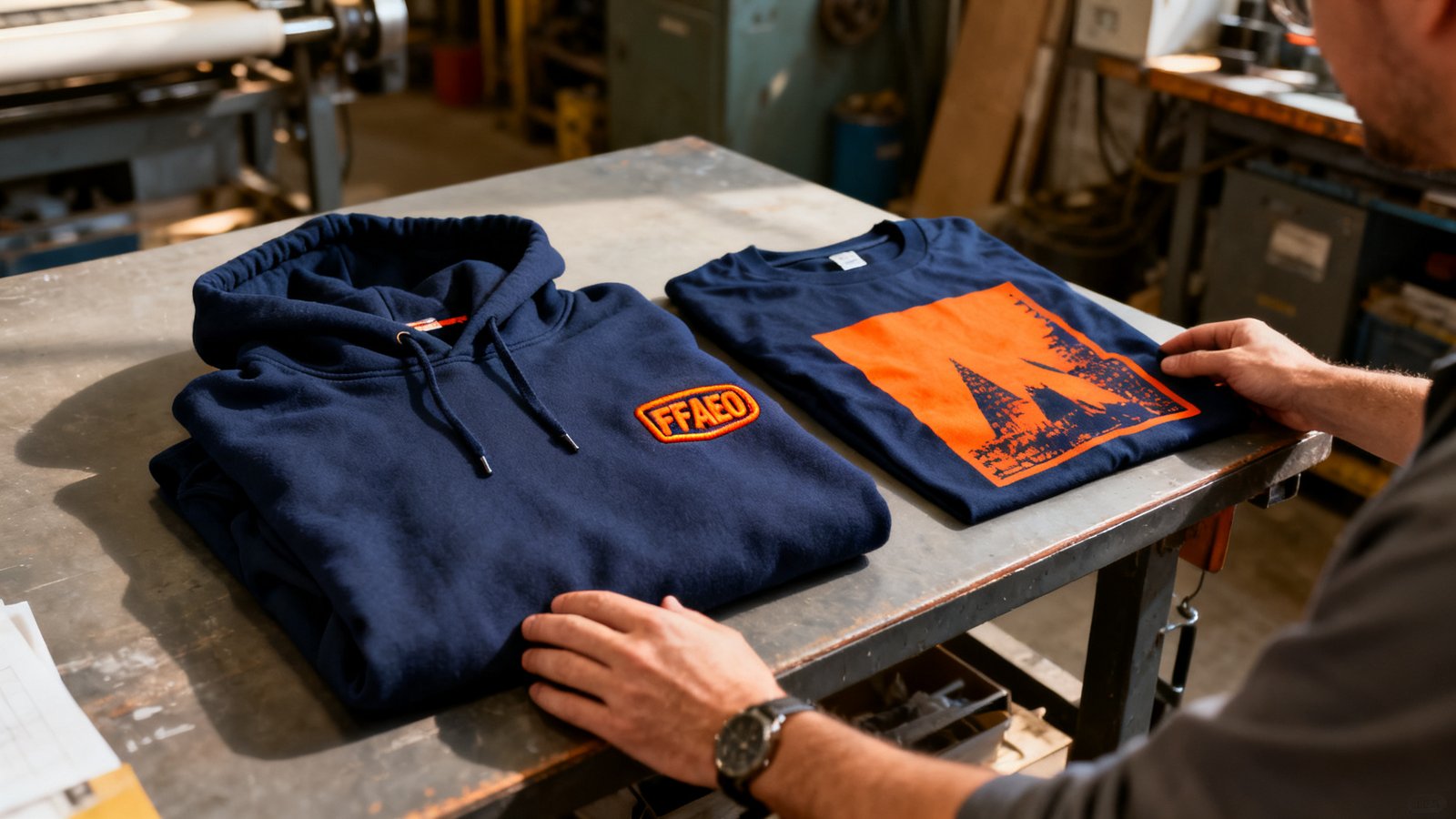
The decision comes down to four things: the size and complexity of the artwork, the garment it sits on, the quantity you are ordering, and how the piece will be worn and washed. Get those right and the method usually chooses itself.
What is the difference between screen printing and embroidery?
The two methods build decoration in opposite directions, which is why they behave so differently on the same garment.
Screen printing forces ink through a mesh stencil so it sits on top of the fabric as a thin printed film, while embroidery uses a needle and thread to stitch a design into the fabric, building a raised, tactile motif out of thousands of stitches.2
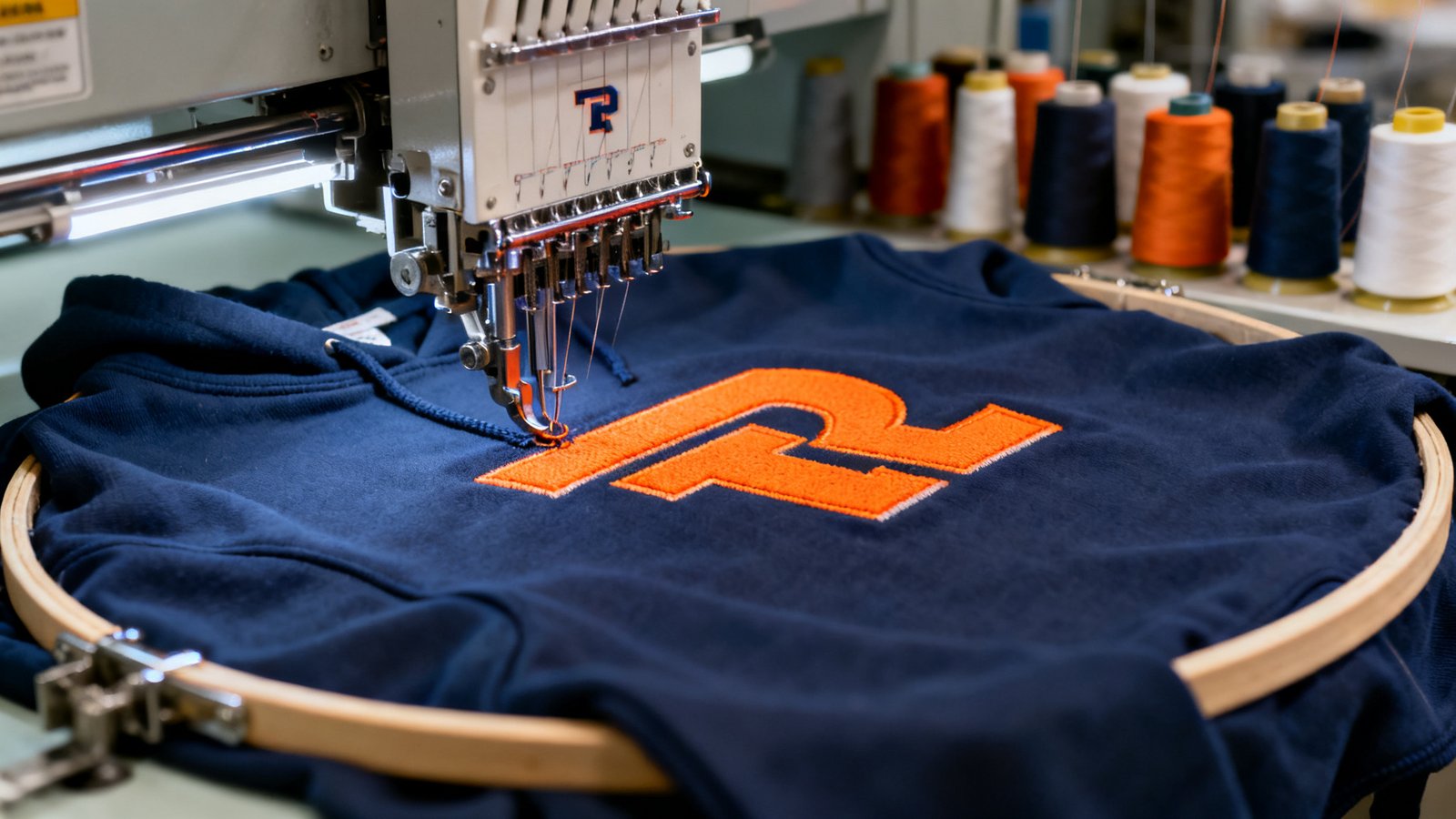
Screen printing is a surface process: each colour needs its own screen and pass, so setup is front-loaded and the ink layer adds almost no weight. Embroidery is a structural process: a digitised file tells the machine where to place every stitch, and the thread physically passes through the fabric. That means embroidery adds weight and bulk, changes how a panel drapes, and locks the design to a stitch count rather than a colour count — the single fact that drives most of the cost and quality differences below.
Which is cheaper for a clothing brand: screen printing or embroidery?
Cost is the first question every founder asks, and the honest answer is that each method is cheap in a different size band.
Screen printing is usually cheaper per piece for large artwork because cost scales with the number of colours and screens, while embroidery cost scales with stitch count and design size, so a small embroidered logo is economical but a large embroidered back panel becomes expensive fast.3
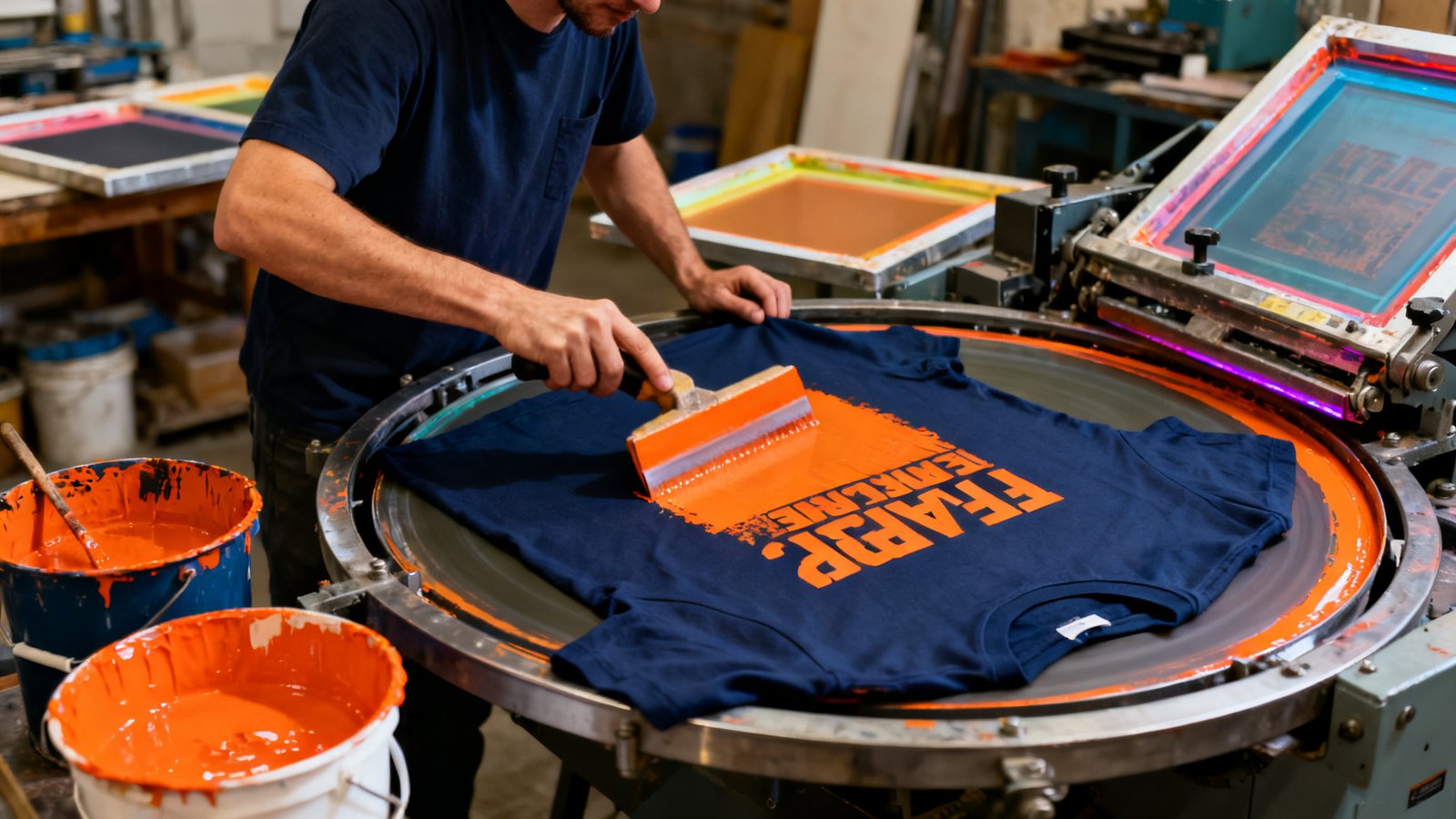
A one-colour screen print at 300 pieces is routinely a few dollars per unit, while the same graphic embroidered across a full back could run five to ten times that because the stitch count is enormous and machine time is the constraint. Flip it: a 6 cm chest logo in three thread colours is a quick, low-stitch job that embroidery handles beautifully, while screen printing it needs three screens and careful registration for a tiny area. As a working rule, price embroidery first for logos under roughly 10 cm wide, and price screen printing first for anything larger than an A5 area or with more than four colours. Always ask for both quotes on your actual artwork and garment, with digitising fees, backing, freight and reprints itemised.
When should a brand choose embroidery?
Embroidery is not the premium-only option. It is the durability-and-texture option, and it solves specific problems better than any print.
Embroidery is the right call for small logos on caps, beanies, hoodies, polos and heavyweight jackets, for uniform and workwear programmes, and for any design where a raised, tactile logo signals quality more convincingly than a flat print.4
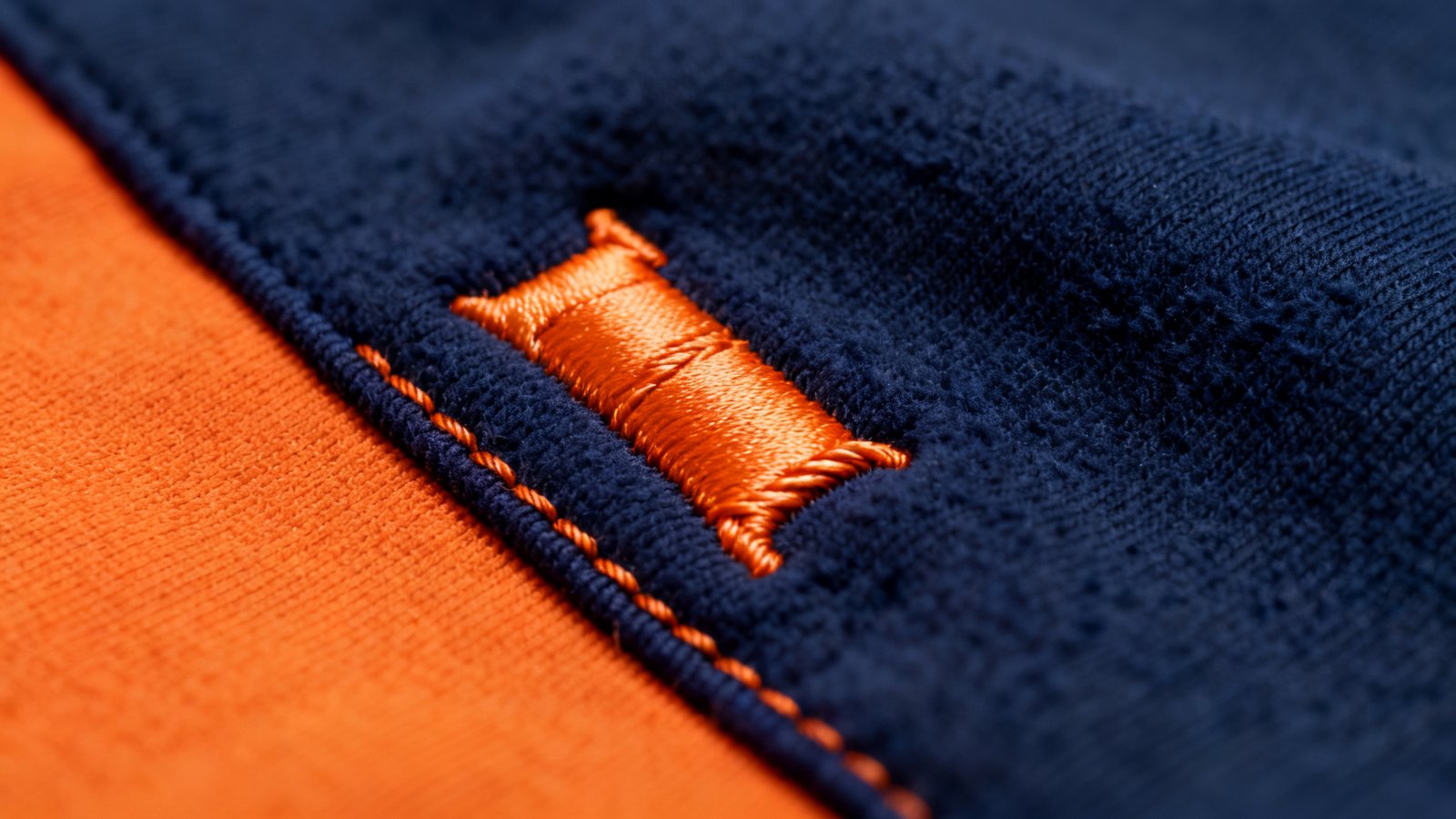
Where embroidery earns its place in streetwear is where the garment is heavy and the logo is small: a puff-embroidered chest hit on a 450 gsm hoodie, a tonal stitch on a corduroy cap, a chain-stitch patch on a varsity jacket. It also survives industrial laundering, which is why uniforms and workwear lean on it. The limits are just as clear: fine linework, small text under about 5 mm, gradients and photographic artwork do not translate, and dense coverage on lightweight jersey will pucker and stiffen the panel. If your design needs detail, embroidery is the wrong tool no matter how good the machine is.
How does embroidery hold up after washing?
Durability is where the cheapest quote often stops being the cheapest option.
A correctly digitised and backed embroidery usually outlasts a print because polyester thread is strong, colour-fast and stitched through the fabric, whereas a plastisol print is a surface film that can crack, flake or fade with abrasion and repeated washing.5
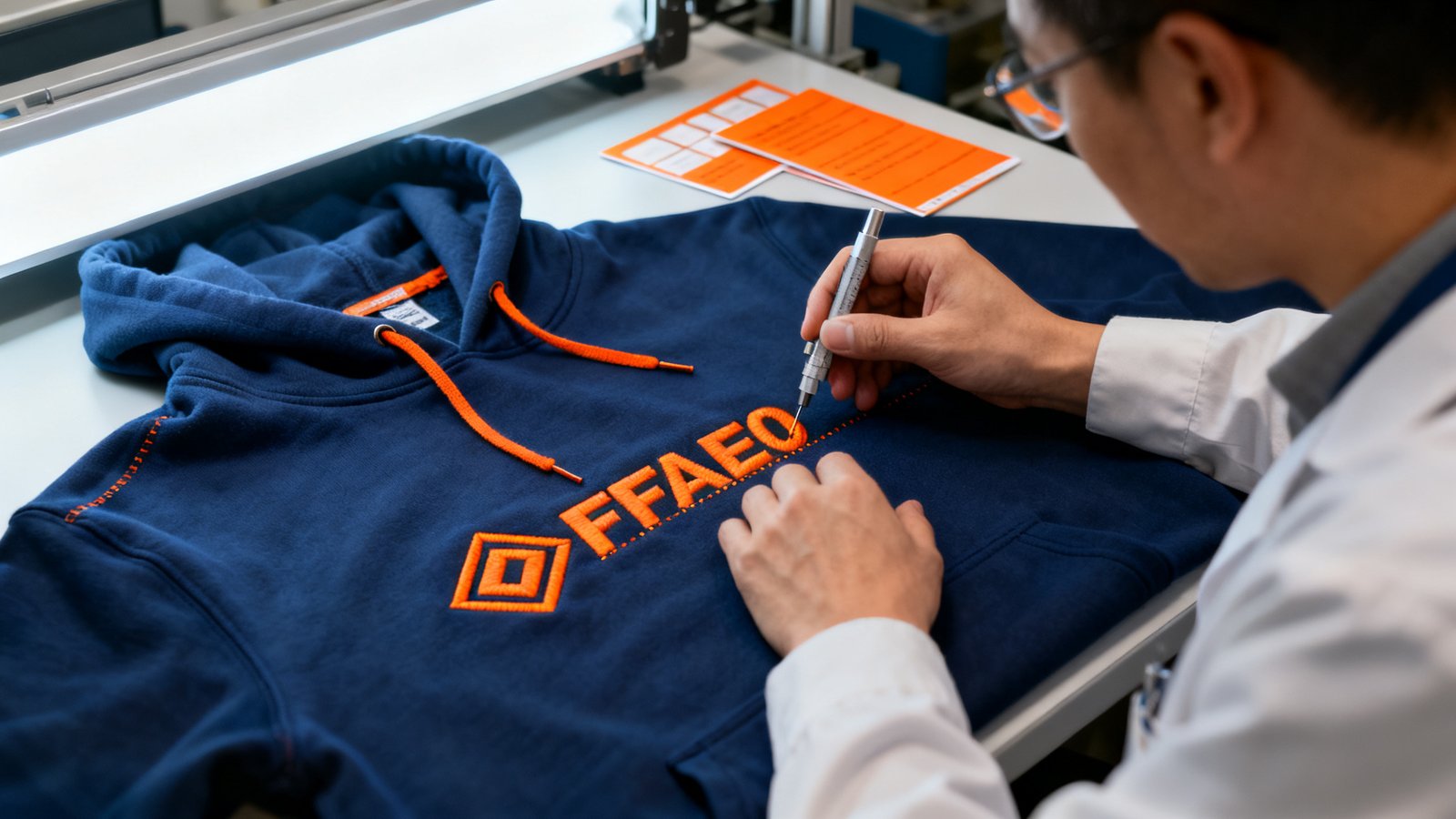
Both methods fail for predictable reasons. A print fails when it is under-cured or stretched across a high-flex area, and a plastisol film that looks perfect on day one can crack within a handful of washes. Embroidery fails when the backing is too light for the stitch density, when the fabric is too thin for the design, or when the thread is a poor-quality rayon that bleeds or dulls. That is why the useful question is not "which lasts longer" but "what thread, what backing and what wash test?" Ask for a five-wash test on your own garment at 30°C, inside out, and compare the result against the approved sample under the same light.
What should you check before approving an embroidery sample?
The sample is the last point where an embroidery problem is still cheap to fix.
Approve embroidery against the digitised file and the physical sample — checking stitch count, logo dimensions, placement, thread colour, backing type, puckering and how the fabric recovers — because thread colour fastness and stitch density determine how the logo looks after a season of wear.6
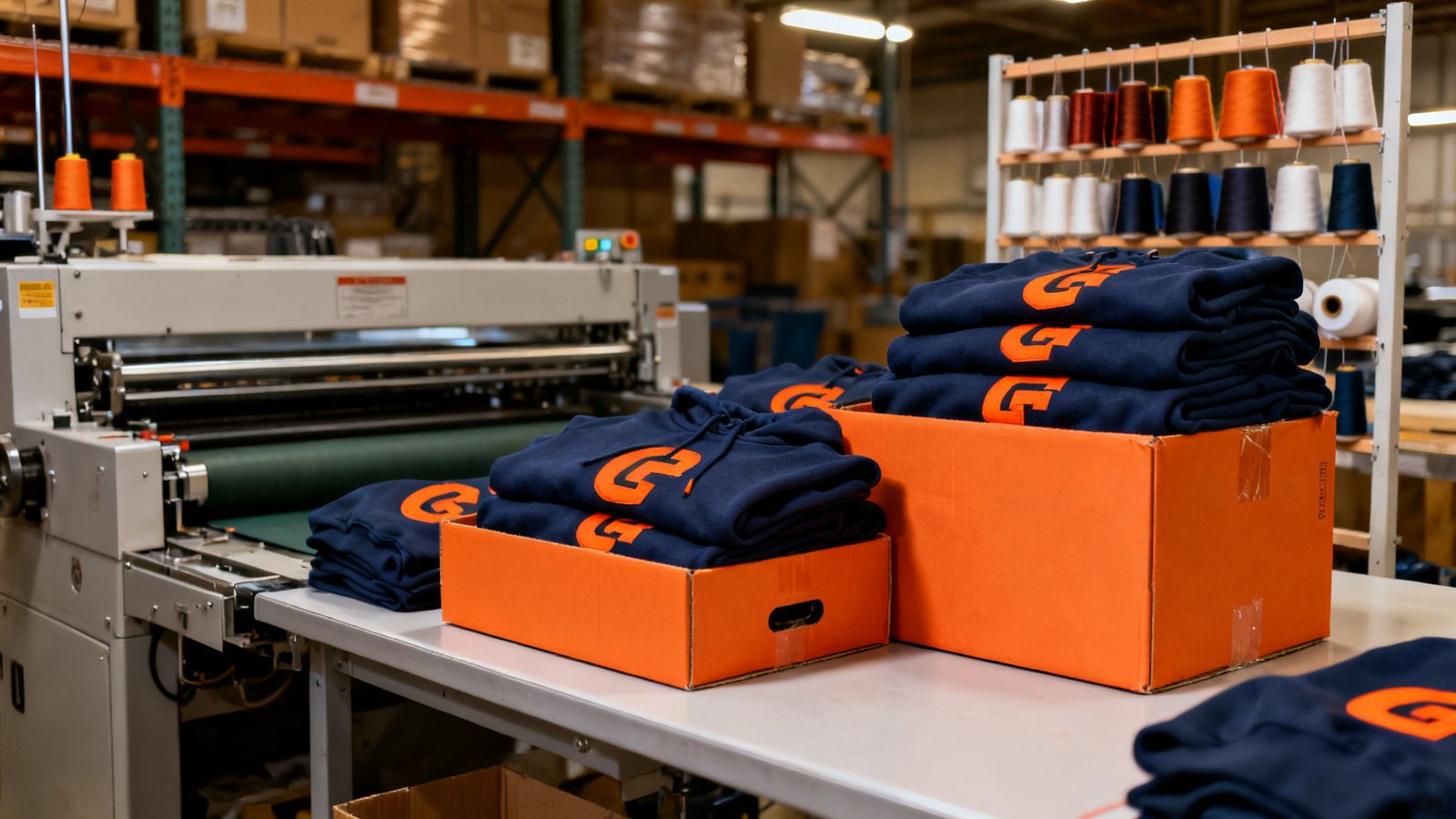
Approve with measurements, not impressions: logo height and width in centimetres, position measured from the collar seam and centre line, stitch count per colour, thread Pantone match under D65 light, backing type and weight, and a straight-on photograph of the finished piece worn or laid flat. Check the reverse side too — a clean back with a suitable backing tells you more about production discipline than the front does. Then seal the approved sample and make it the bulk standard. If you want the decoration method, fabric and garment weight chosen together rather than guessed, our custom clothing manufacturing team quotes print and embroidery on the same tech pack, and our custom hoodie manufacturing page covers the fleece weights that embroidery sits best on.
Conclusion
Screen printing gives you large, detailed, multi-colour graphics at a low cost per piece once volume absorbs the setup, which is why it still owns the t-shirt. Embroidery gives you a raised, tactile, wash-resistant logo with a premium read, which is why it owns caps, heavyweight fleece and workwear. Choose by artwork size and garment weight, then lock the digitised file, thread, backing and a wash-tested sealed standard so the reorder matches the drop. If you are deciding between the two for an upcoming collection, send us the artwork and target quantity and we will quote both methods side by side.
"Embroidery", https://en.wikipedia.org/wiki/Embroidery. Overview of embroidery as the craft of decorating fabric with needle and thread, covering materials, stitch types and its use on garments and accessories. Evidence role: general_support; source type: encyclopedia. Supports: the answer-first claim that embroidery suits small, durable, textured logos on heavy garments while printing suits large multi-colour graphics. Scope note: craft and history overview; does not address commercial pricing, MOQs or machine capability. ↩
"Screen printing", https://en.wikipedia.org/wiki/Screen_printing. Describes screen printing as a stencil process in which ink is forced through a mesh onto the substrate, and explains that each colour requires a separate screen. Evidence role: general_support; source type: encyclopedia. Supports: the explanation that screen printing deposits a surface ink film, in contrast to embroidery stitching through the fabric. Scope note: process description only; garment-specific mesh counts, ink systems and cure settings are supplier dependent. ↩
"Machine embroidery", https://en.wikipedia.org/wiki/Machine_embroidery. Covers machine embroidery techniques and the use of digitised stitch files that control stitch placement, density and colour changes. Evidence role: general_support; source type: encyclopedia. Supports: the claim that embroidery cost is driven by stitch count and design size rather than by number of colours. Scope note: technical overview; does not give stitch-count pricing, machine throughput or regional labour rates. ↩
"Embroidery", https://en.wikipedia.org/wiki/Embroidery. Reviews common applications of embroidery, including garment decoration, caps, badges and uniform use, and the tactile raised quality of stitched decoration. Evidence role: general_support; source type: encyclopedia. Supports: the recommendation of embroidery for small logos on caps, fleece, polos, jackets and uniform programmes. Scope note: general application overview; does not compare embroidery with printing on cost, lead time or artwork limits. ↩
"Polyester", https://en.wikipedia.org/wiki/Polyester. Describes polyester as a strong synthetic fibre with good resistance to stretching, shrinking and most chemicals, widely used in textile threads. Evidence role: general_support; source type: encyclopedia. Supports: the durability comparison, in which polyester embroidery thread holds up better than a surface print film over repeated washing. Scope note: fibre-science overview; does not cover specific thread brands, backing types or wash-test protocols. ↩
"Colour fastness", https://en.wikipedia.org/wiki/Colour_fastness. Defines colour fastness as resistance of a colour to fading and bleeding, and describes standard test methods for wash, rub and light fastness. Evidence role: general_support; source type: encyclopedia. Supports: the recommendation to verify thread colour fastness and to run a wash test before approving an embroidery standard. Scope note: describes test standards and grading; does not predict the performance of any specific thread or backing combination. ↩
Ready to make this for your brand?
Adiwe manufactures custom T-shirts, hoodies, jackets, pants, shorts and shirts for brands worldwide — from 100 pcs per style and colour, with private labelling, three-stage QC and a physical sample you approve before bulk.
Custom Hoodie ManufacturingCustom T-Shirt Manufacturing