A brand approves a chest logo, waits three weeks for the sample, and opens the box to something flat, thin and slightly puckered — nothing like the thick, tactile patch they pictured. The artwork was never the problem. "Embroidery" is not one technique but a family of them, and flat satin stitching, 3D puff, chain stitch, appliqué and chenille each need a different digitised file, a different minimum letter height, and a different machine. Choosing the wrong one shows up as illegible small text, foam poking through a curve, or a unit price that doubles because nobody counted stitches.
Streetwear brands generally choose between five embroidery types — flat satin, 3D puff, chain stitch, appliqué and chenille — and the right one is set by artwork size, minimum letter height and garment weight: flat satin for fine detail under about 10 mm, 3D puff for bold block lettering with no fine interior detail, chain stitch for a vintage hand-stitched line, and appliqué or chenille when a large shape would otherwise run into tens of thousands of stitches.1
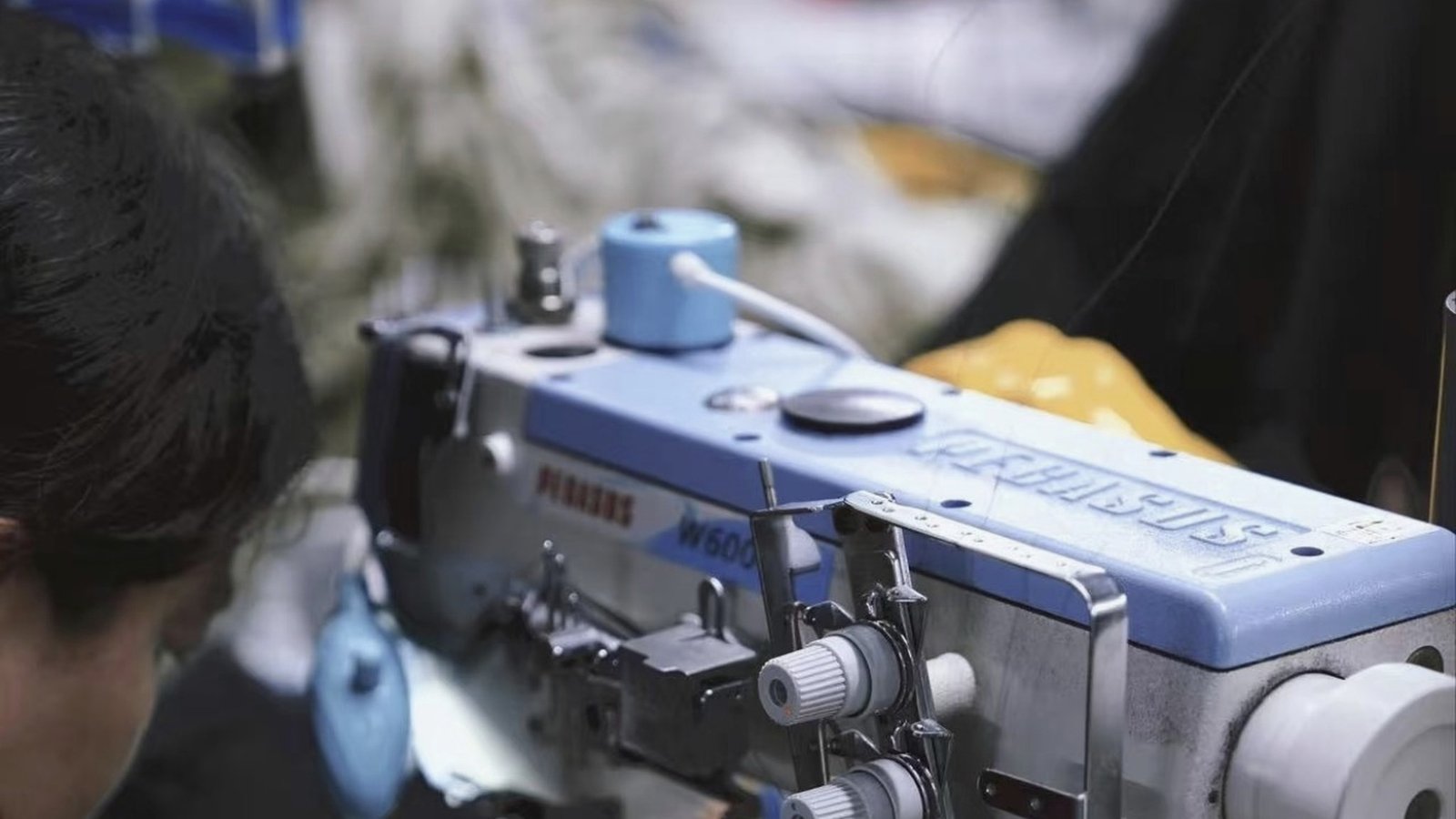
All five run on commercial multi-head machines and are quoted the same way: a one-time digitising fee plus a price per piece based on stitch count and colour changes. What changes is the file, the backing, the thread and sometimes the machine itself — which is why two factories can quote the same logo at prices that differ by a factor of two.
What Are the Main Embroidery Types Used on Streetwear?
Most quote sheets present embroidery as a single line item, so it helps to know which constructions are actually on the table before you approve artwork.
The five types that cover almost every streetwear programme are flat (satin and fill) embroidery, 3D puff embroidery, chain stitch, appliqué and chenille, and flat embroidery accounts for the large majority of chest, sleeve and back-neck logos because it reproduces the smallest detail at the lowest stitch count.2
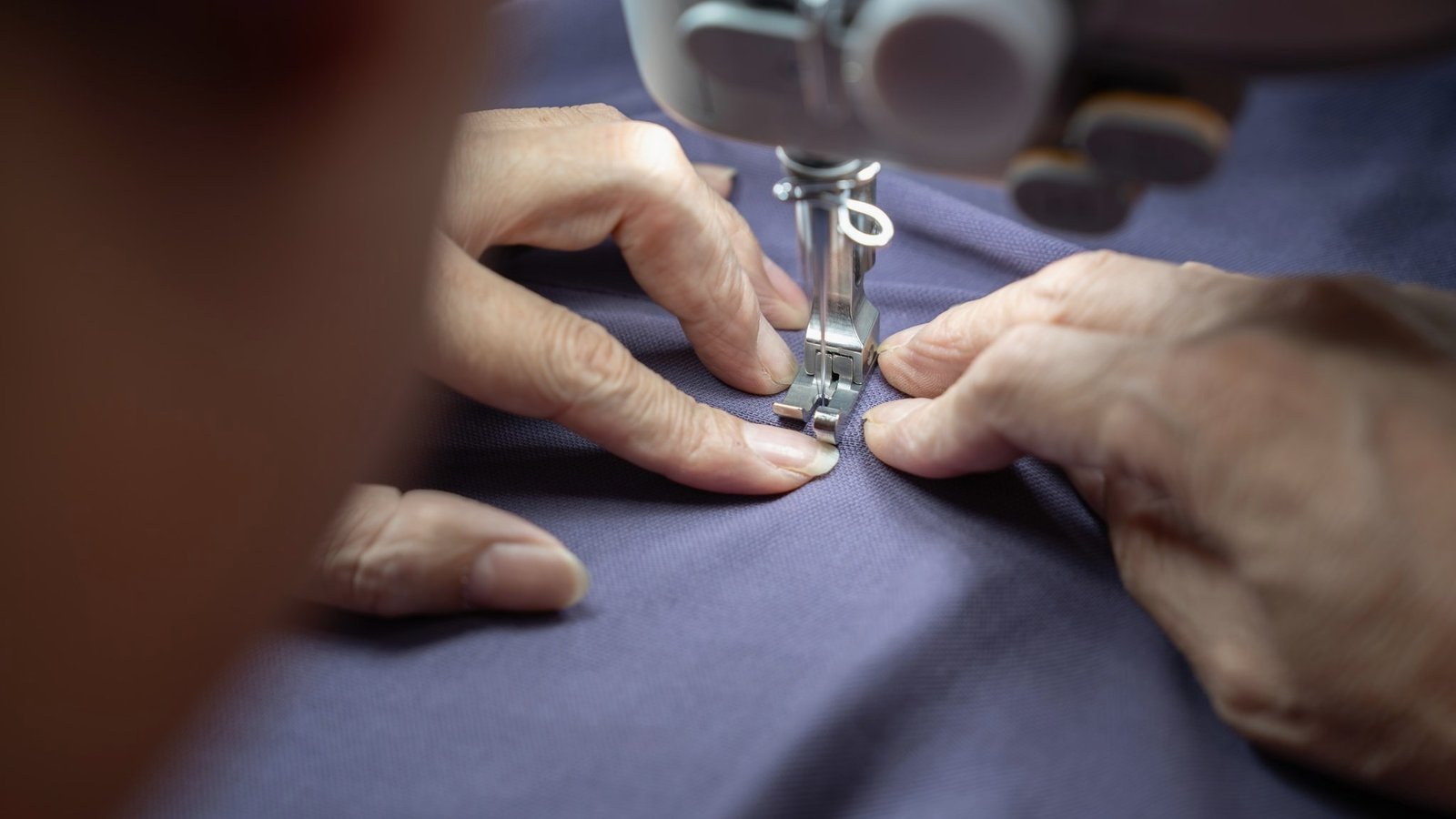
Flat embroidery is the baseline: satin stitching for letters and borders, tatami or fill stitching behind larger areas. 3D puff adds a foam layer under the stitches for height. Chain stitch builds a line from interlocking loops rather than flat coverage. Appliqué stitches a cut fabric shape onto the garment and finishes the edge, and chenille substitutes tufted yarn for flat thread. Cross-stitch and towel-pile finishes exist too, but they read as niche or seasonal rather than core line items.
What Is Flat Embroidery and When Should You Use It?
Flat embroidery is what most brands mean by default, and it is also the type with the tightest technical limits.
Flat embroidery — satin stitch for lettering and borders, fill stitching behind large shapes — is the right choice for chest logos, sleeve hits and back-neck marks up to roughly 80 mm wide, because it lies flat against the garment, holds lettering down to about 4–5 mm cap height and adds the least stiffness or weight.3
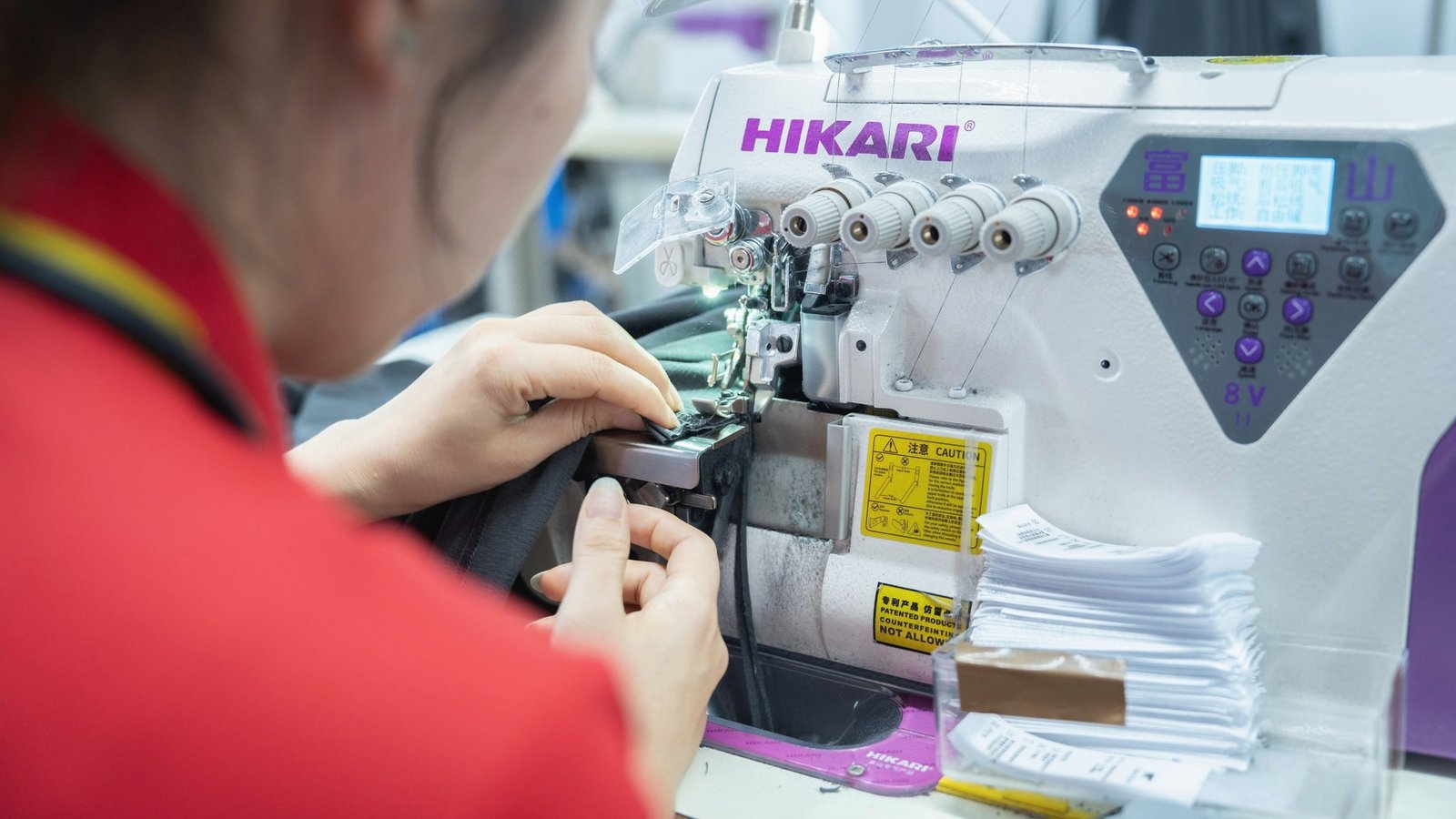
The practical constraints are stitch density and pull compensation. Dense satin on lightweight jersey pulls the fabric and leaves a puckered panel, so a 150–180 GSM tee often needs a cut-away backing and a slightly lower density than the same logo on a 400 GSM hoodie. Thin strokes below about 1 mm, gradients and photographic detail do not survive stitching — those belong in a print or a woven patch. Ask for the stitch count on the digitised file: a typical chest logo lands between 4,000 and 8,000 stitches, and anything far above that usually means fill stitching where a lighter path would do.
How Does 3D Puff Embroidery Work?
Puff is the finish that makes a logo look like a raised rubber badge, and it is the type most often approved on a mockup that the machine cannot actually hold.
3D puff embroidery stitches over a layer of foam placed on the fabric and then trims the surplus foam, producing a raised domed logo that works on bold block lettering and simple silhouettes at 10–12 mm minimum stroke width, but fails on fine detail, small text, tight counters and thin curves where the foam shows through.4
Puff is digitised as a dedicated file with a denser outer border and a fill that traps the foam, which means it is not simply a setting applied to your flat file. The trim step is manual or semi-manual, so it adds cost and handling time, and it is much less forgiving on stretchy, textured or washed fabrics. It performs best on structured caps, heavyweight fleece and flat woven panels. If your artwork has counters inside letters (A, O, R) or a stroke thinner than about 10 mm, expect either a broken-looking logo or a factory asking you to simplify the design.
What Is Chain Stitch Embroidery Used For?
Chain stitch is the type behind the hand-stitched, slightly imperfect look that vintage-inspired labels chase.
Chain stitch embroidery builds a raised line from interlocking loops of thread rather than flat satin coverage, giving a soft, hand-stitched cord-like line that suits vintage, workwear and collegiate-style graphics — but it needs a dedicated chain-stitch machine, so fewer factories offer it and minimums, lead times and sampling costs run higher than flat embroidery.5
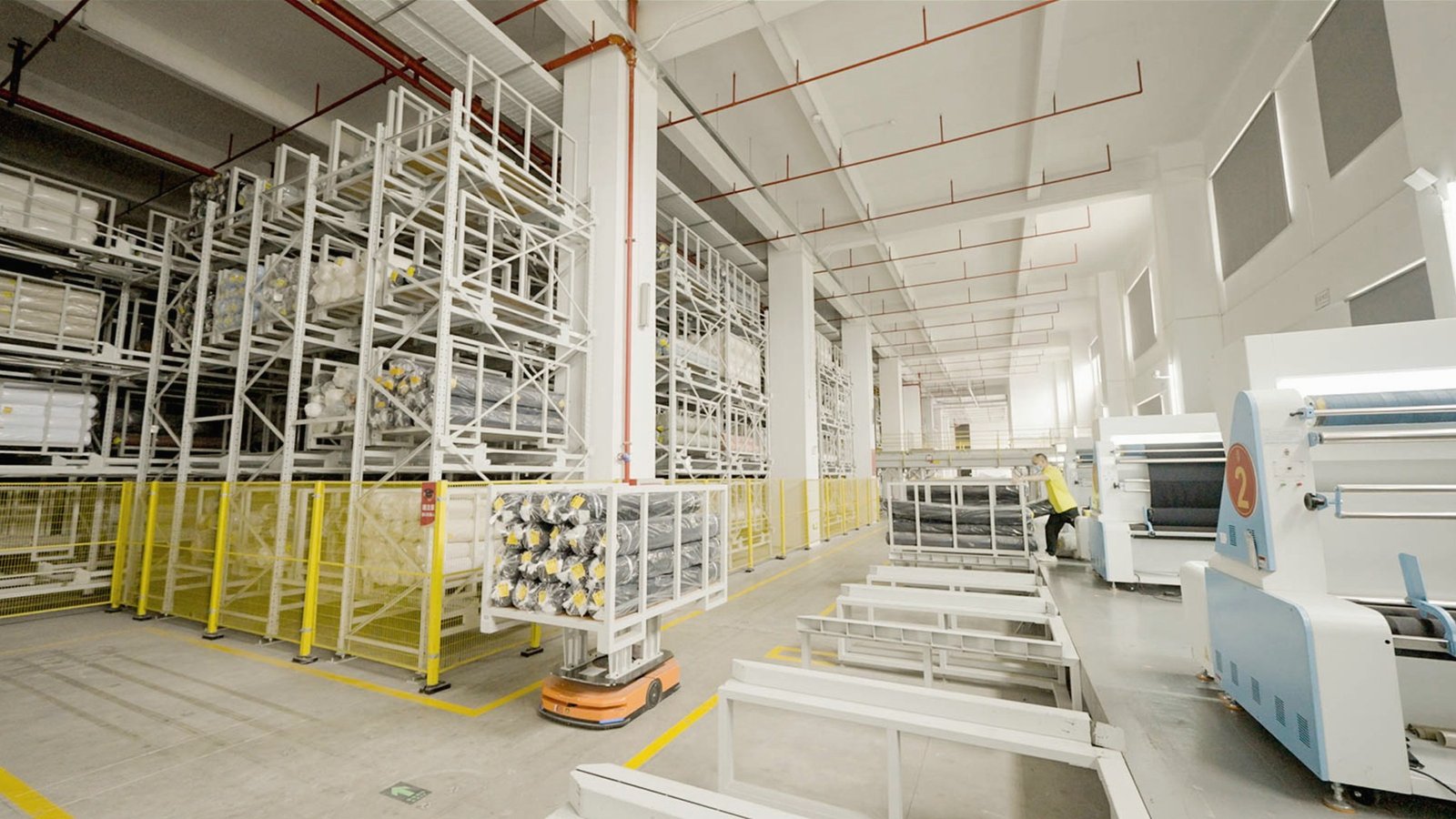
Because the stitch is a line rather than a fill, chain stitch is great for outlines, script signatures, slogans and single-colour marks, and poor for solid shapes and multi-colour artwork. Coverage is narrower than satin, so artwork needs redrawing with consistent stroke weight. The look is deliberately a little organic, which is the point — but it also means small text and very tidy geometric logos read badly. Confirm whether the factory runs genuine chain stitch or a satin imitation, because the two are quoted and sampled very differently.
When Is Appliqué the Better Choice Than Full Stitching?
When a logo or graphic gets large, stitch count is what drives price — and that is where appliqué changes the maths.
Appliqué embroidery stitches a pre-cut fabric shape onto the garment and finishes the raw edge with a satin or chain border, so a large shape costs a fraction of a fully filled logo because the fabric panel replaces thousands of fill stitches — making it the standard choice for big back graphics, oversized lettering and two-tone varsity looks.6
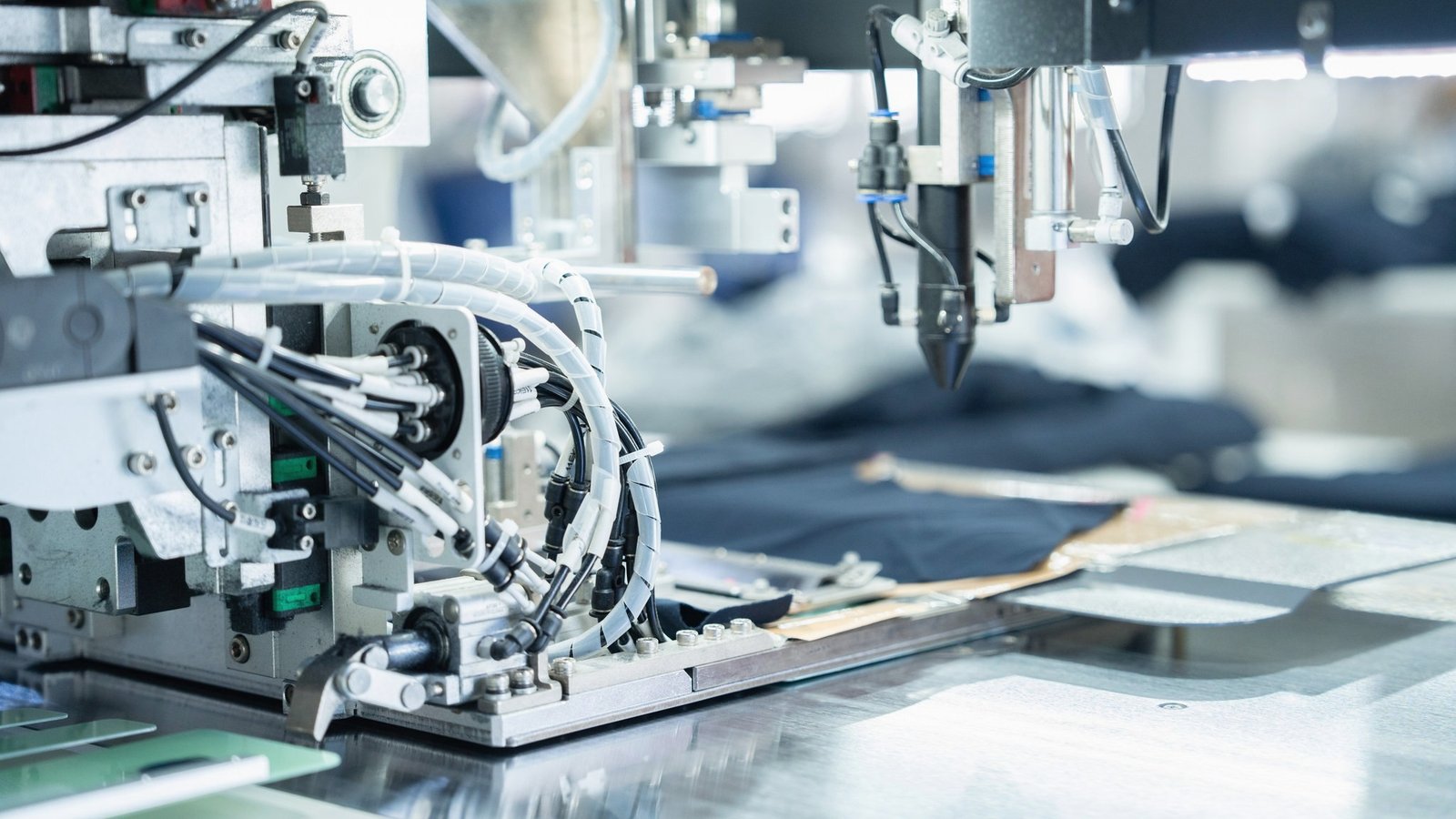
The same logic explains chenille patches, where tufted yarn replaces flat stitching for a soft, thick surface. Appliqué needs a clean cut edge and a fabric that behaves under the needle — twill, felt and stable knits work well, loose or slippery fabrics pucker. It also opens a colour-matching advantage: the fabric patch matches your garment dye lot rather than approximating it in thread. For a 300 mm back graphic, appliqué with a stitched border is usually the only way to keep the piece wearable and the unit cost sane.
Conclusion
Match the embroidery type to the artwork before you approve anything: flat satin for anything with small text or fine detail, 3D puff only for bold block shapes at 10 mm and above, chain stitch when the vintage hand-stitched line is the whole point, and appliqué or chenille once a shape grows large enough that stitch count starts setting the price. Send the vector file with true letter heights and ask for the stitch count and the backing spec on the quote — those three numbers explain most embroidery price gaps. If you want the file reviewed before sampling, Adiwe’s embroidery and decoration team can check artwork against machine limits for hoodies and tees, or send your logo for a stitch-count quote.
"Embroidery", https://en.wikipedia.org/wiki/Embroidery. Overview of embroidery as the craft of decorating fabric with needle and thread, covering materials, stitch structures and common garment and accessory applications. Evidence role: general_support; source type: encyclopedia. Supports: the answer-first claim that streetwear embroidery splits into distinct types whose suitability depends on artwork size, letter height and garment weight. Scope note: craft and history overview; does not cover commercial pricing, MOQs, digitising fees or machine capability. ↩
"Embroidery stitch", https://en.wikipedia.org/wiki/Embroidery_stitch. Catalogue of embroidery stitch families, including satin, chain, cross and fill stitches, with descriptions of how each builds coverage or line on the fabric. Evidence role: general_support; source type: encyclopedia. Supports: the list of five construction types and the distinction between flat coverage stitching, looped-line stitching and applied fabric. Scope note: stitch taxonomy only; it does not address industrial multi-head production, backing selection or per-piece costing. ↩
"Satin stitch", https://en.wikipedia.org/wiki/Satin_stitch. Describes satin stitch as a series of parallel threads worked closely together to give solid, smooth coverage with a slight sheen, used for lettering and borders. Evidence role: general_support; source type: encyclopedia. Supports: the claim that flat satin embroidery is the default for chest logos and small lettering because it gives clean coverage while lying flat on the garment. Scope note: hand and machine stitch description; minimum letter heights, densities and pull compensation are supplier and fabric dependent. ↩
"Machine embroidery", https://en.wikipedia.org/wiki/Machine_embroidery. Covers commercial machine embroidery and the digitised stitch files that control stitch placement, density, underlay and colour changes. Evidence role: general_support; source type: encyclopedia. Supports: the explanation that puff and other specialty finishes require a purpose-digitised file rather than a setting applied to a standard logo file. Scope note: technical overview of machine embroidery; foam puff specifics, trim labour and machine-specific limits are not detailed. ↩
"Chain stitch", https://en.wikipedia.org/wiki/Chain_stitch. Explains chain stitch as a series of looped stitches forming a chain-like line, historically used in hand embroidery and still produced on dedicated machines. Evidence role: general_support; source type: encyclopedia. Supports: the description of chain stitch as a raised cord-like line suited to vintage-style outlines and signatures rather than solid fills. Scope note: stitch construction and history; availability of chain-stitch machines, minimums and lead times are market specific. ↩
"Appliqué", https://en.wikipedia.org/wiki/Appliqu%C3%A9. Defines appliqué as attaching cut pieces of fabric to a base material and finishing the edges, often with embroidery stitching around the outline. Evidence role: general_support; source type: encyclopedia. Supports: the claim that appliqué lowers cost on large graphics because a fabric panel replaces thousands of fill stitches, with a stitched border finishing the edge. Scope note: general technique description; chenille is a separate tufted-yarn technique and stitch-count savings vary by design and supplier. ↩
Ready to make this for your brand?
Adiwe manufactures custom T-shirts, hoodies, jackets, pants, shorts and shirts for brands worldwide — from 100 pcs per style and colour, with private labelling, three-stage QC and a physical sample you approve before bulk.
Custom Hoodie ManufacturingCustom T-Shirt Manufacturing