
Acid wash is the fastest way to make a brand-new hoodie or tee look like it has already lived a decade. It is also the finish most brands get wrong: they approve one sample, then receive bulk where every piece has a different pattern, or where the fabric has quietly lost a third of its strength.
Acid wash is a wet-finishing process in which garments are tumbled with pumice stones and an oxidising bleach, so the chemical carried by the stones attacks the raised, dye-rich surface of the fabric and leaves a high-contrast, mottled finish1
Mechanically it is a close cousin of stone washing; chemically it adds an oxidising agent to the drum. That combination is why acid wash never looks like a flat, evenly faded garment — the pattern comes from contact, not from a dye bath. Here is how the process runs on a real production floor, where the control points sit, and what to write into a tech pack so bulk matches the sample you signed off.
What Is Acid Wash and Why Does the Pattern Look Random?
Buyers often expect a repeatable, print-like pattern and are surprised by how organic the result is.
In acid wash the pattern is not printed on — it is created by bleach-carrying stones touching the fabric unevenly inside a rotating drum, which is why genuine acid wash shows irregular light and dark zones instead of a repeat2
The physics matter here. Indigo denim is ring-dyed: the dye sits mainly on the surface of the warp yarns and leaves a pale core, so any abrasion exposes lighter fibre underneath. In the drum, stones hit some areas dozens of times and others barely at all — seams, folds and hems take more contact, flat panels take less. Stone size and ratio, drum speed, load weight, liquor ratio and cycle time all shift the scale of that mottling, which is why two washes that look identical on paper can read completely differently on the garment.
Which Fabrics Actually Take an Acid Wash?
Not every fabric in your line should go into the wash drum, even if the sample looked fine.
Acid wash works best on heavy, compact cotton — 300–400 GSM loopback fleece, brushed fleece and 10–14 oz twill — because the effect depends on abrasion resistance and on dye held near the fibre surface3
Lightweight single jersey (150–180 GSM) tends to go blotchy and limp, and fine ribs can distort at the neck and cuffs. Polyester and high-synthetic blends resist chlorine oxidation almost entirely, so you get abrasion marks with no colour contrast — a dusty, worn look rather than a washed one. The safest route for a streetwear capsule is to keep acid wash on garment-dyed or sulphur-dyed cotton pieces and to run a wash test on the exact fabric lot before cutting bulk; our team at Adiwe's custom hoodie line builds that test into sampling rather than after it.
How Do the Bleach and Permanganate Steps Create the Contrast?
The colour shift is chemistry, and the choice of chemical decides the final cast of the garment.
The contrast step uses an oxidising agent — sodium hypochlorite for a cool, high-contrast grey cast, or potassium permanganate for a warmer, brownish vintage tone — which destroys surface dye only where the stones deposit it4
Chlorine gives the sharpest whites and the most aggressive contrast, but it keeps working after the drum stops, so an un-neutralised load will keep fading in the warehouse and can fail a pH or residue test at retail. Permanganate is gentler and more controllable, and it is reduced and cleared in a separate bath. Either way the recipe needs a defined dwell time (commonly 10–25 minutes), a temperature window, and a full neutralisation with sodium metabisulphite or hydrogen peroxide followed by rinse cycles. Skip the neutralisation and you are shipping a garment that is still chemically active.
Can Enzyme Washing Replace Pumice and Chlorine?
Many factories now offer a softer, lower-impact alternative, and it is worth knowing exactly what it can and cannot do.
Yes for the abrasion half: cellulase enzymes digest protruding cotton fibres to give a soft, faded hand without pumice, cutting stone dust, fabric damage and machine wear — but enzymes alone cannot produce the sharp bleach contrast of true acid wash5
In practice the two are often combined: a bio-polished base for softness and hand-feel, then a controlled oxidising step — or laser and ozone — for the pattern. This reduces effluent load, which matters increasingly as buyers audit wash houses, and it widens the safe operating window so lightweight fabrics survive. The trade-off is character: enzyme and laser finishes read cleaner and more uniform, which is great for a minimal collection and less convincing if you want the gritty, uneven look that defines vintage streetwear.
How Do You Keep Acid Wash Consistent — and Safe to Sell?
Consistency is where most acid-wash programmes fail, usually on the second production run rather than the first.
Lock the recipe — fabric lot, stone size and ratio, chemical dose, drum RPM, liquor ratio, time, temperature and neutralisation — and test the finished article, because consumer-safety limits for harmful substances are set by standards such as OEKO-TEX Standard 100, not by the wash recipe itself6
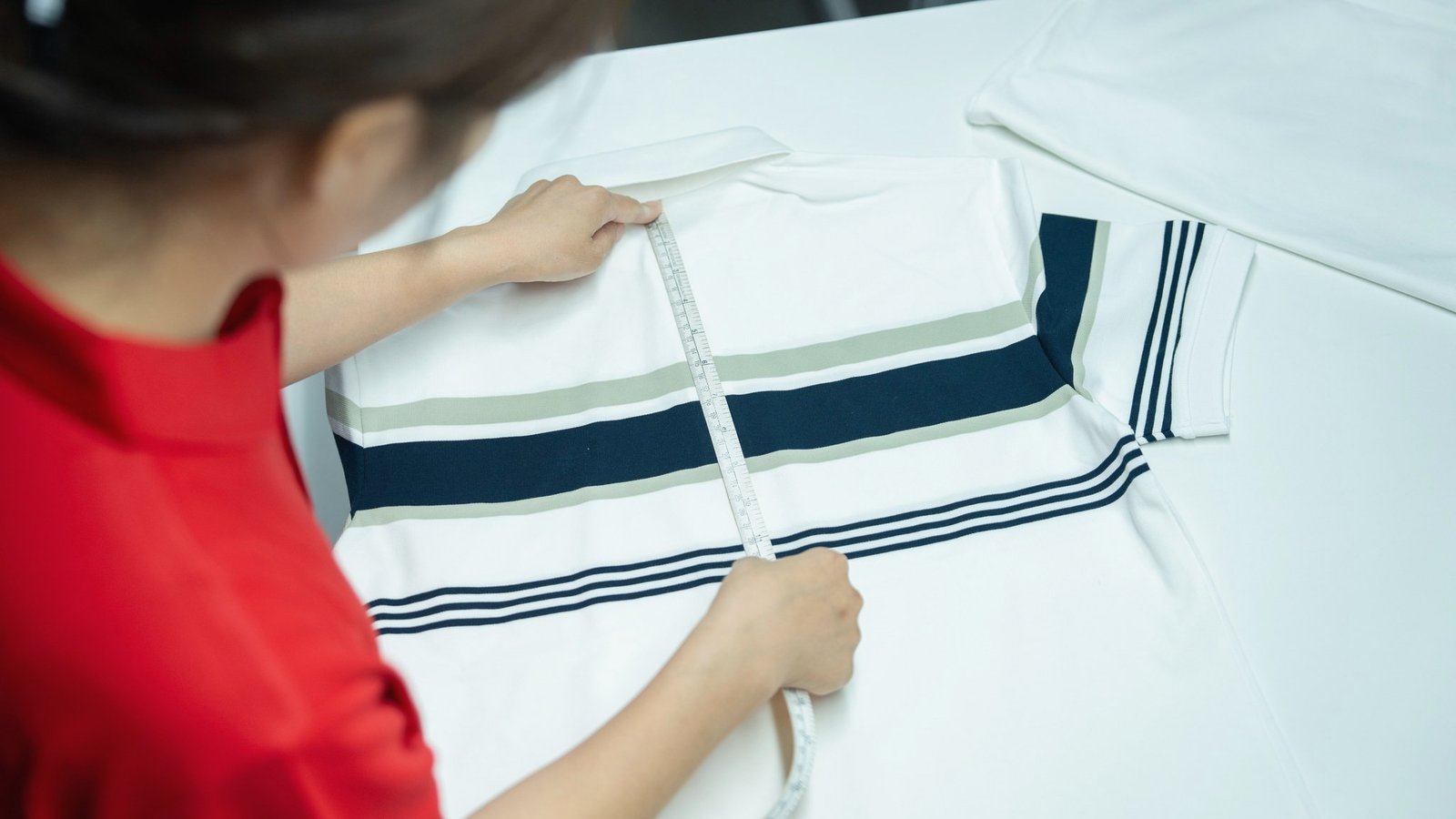
Operationally that means keeping a sealed approved sample plus a photo record under the same lighting, washing bulk in the same drum with the same load weight, and pulling pieces at the start, middle and end of the cycle. On the QC side, check pH (typically 4.5–7.5), colourfastness to rubbing and washing, shrinkage after the wash rather than before, and residual chlorine or permanganate. A brand that ships acid wash without those checks is one complaint away from a return problem — the full checklist we use is part of the custom clothing manufacturing service at Adiwe.
Conclusion
Acid wash is abrasion plus oxidation: pumice carries bleach to the surface fibres, the dye goes where the stones touch, and everything else is process control. Choose heavy cotton, lock the recipe, neutralise properly, and test the finished piece — then the uneven pattern becomes a feature you can repeat instead of a defect you have to explain. If you are planning a washed capsule, send your tech pack and target hand-feel to Adiwe and we will quote the wash step alongside the garment.
"Stone washing", https://en.wikipedia.org/wiki/Stone_washing. Encyclopedia entry describing industrial stone-wash and acid-wash denim finishing, including the use of pumice stones with bleaching agents. Evidence role: general_support; source type: encyclopedia. Supports: the definition of acid wash as pumice plus oxidising bleach in a rotating drum. Scope note: describes industry practice in general terms and gives no factory-specific recipes or tolerances. ↩
"Denim", https://en.wikipedia.org/wiki/Denim. Reference article on denim construction, ring-dyed indigo warp yarns and the surface fading behaviour that makes abrasion-based finishes visible. Evidence role: mechanism_support; source type: encyclopedia. Supports: why the pattern is contact-driven and why abraded areas read lighter. Scope note: covers denim specifically, not fleece or non-denim twill. ↩
"Finishing (textiles)", https://en.wikipedia.org/wiki/Finishing_(textiles). Overview of textile finishing operations, including washing, abrasion and mechanical treatments applied to greige and dyed fabric. Evidence role: context_support; source type: encyclopedia. Supports: where garment washing sits in the production chain and why fabric weight and construction affect the result. Scope note: general textile finishing overview; does not benchmark specific GSM ranges. ↩
"Bleach", https://en.wikipedia.org/wiki/Bleach. Reference article on oxidising bleaching agents, including sodium hypochlorite and potassium permanganate and their reactivity with dyes and fibres. Evidence role: mechanism_support; source type: encyclopedia. Supports: the chemical difference between chlorine-based and permanganate-based contrast steps. Scope note: chemistry reference, not a garment-washing process specification. ↩
"Cellulase", https://en.wikipedia.org/wiki/Cellulase. Reference article on cellulase enzymes, including their industrial use in textile processing and cotton bio-polishing. Evidence role: alternative_process_support; source type: encyclopedia. Supports: how enzymatic treatment can replace pumice abrasion for softness and fading. Scope note: describes the enzyme class and applications broadly; does not quantify cost or effluent savings. ↩
"OEKO-TEX", https://www.oeko-tex.com/en/. Official site of the OEKO-TEX association, which operates STANDARD 100 testing and certification for harmful substances in textile articles. Evidence role: standards_body; source type: certification body. Supports: consumer-safety limits being tested on the finished article rather than assumed from the wash recipe. Scope note: certification framework, not a wash-process standard; brands must still specify their own recipe and QC limits. ↩
Ready to make this for your brand?
Adiwe manufactures custom T-shirts, hoodies, jackets, pants, shorts and shirts for brands worldwide — from 100 pcs per style and colour, with private labelling, three-stage QC and a physical sample you approve before bulk.
Custom Hoodie ManufacturingCustom T-Shirt Manufacturing