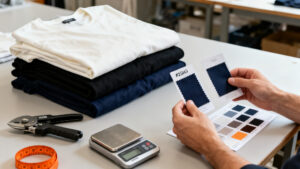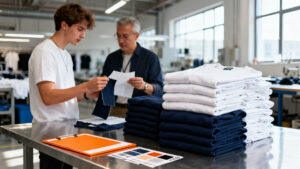
Every streetwear brand eventually faces the same fork in the road: buy blank apparel and decorate it, or commission a factory to build garments from scratch. The two paths look similar on the surface, but they differ sharply in cost, control and what your brand can actually become.
A custom streetwear manufacturer produces garments to your own design, fit and branding, while a blank clothing supplier sells ready-made unbranded stock that you simply decorate — so brands that want a distinctive product should choose custom manufacturing.1
This guide breaks down how each model works, where their costs and minimums diverge, and how to decide which one fits your brand at its current stage.
What is a blank clothing supplier?
A blank supplier is the fastest way to put a graphic on a shirt, but it comes with built-in limits.
A blank clothing supplier is a wholesaler that sells mass-produced, undecorated garments — tees, hoodies and sweats — in standard sizes and colours, with no input from you on fit, fabric or construction.2
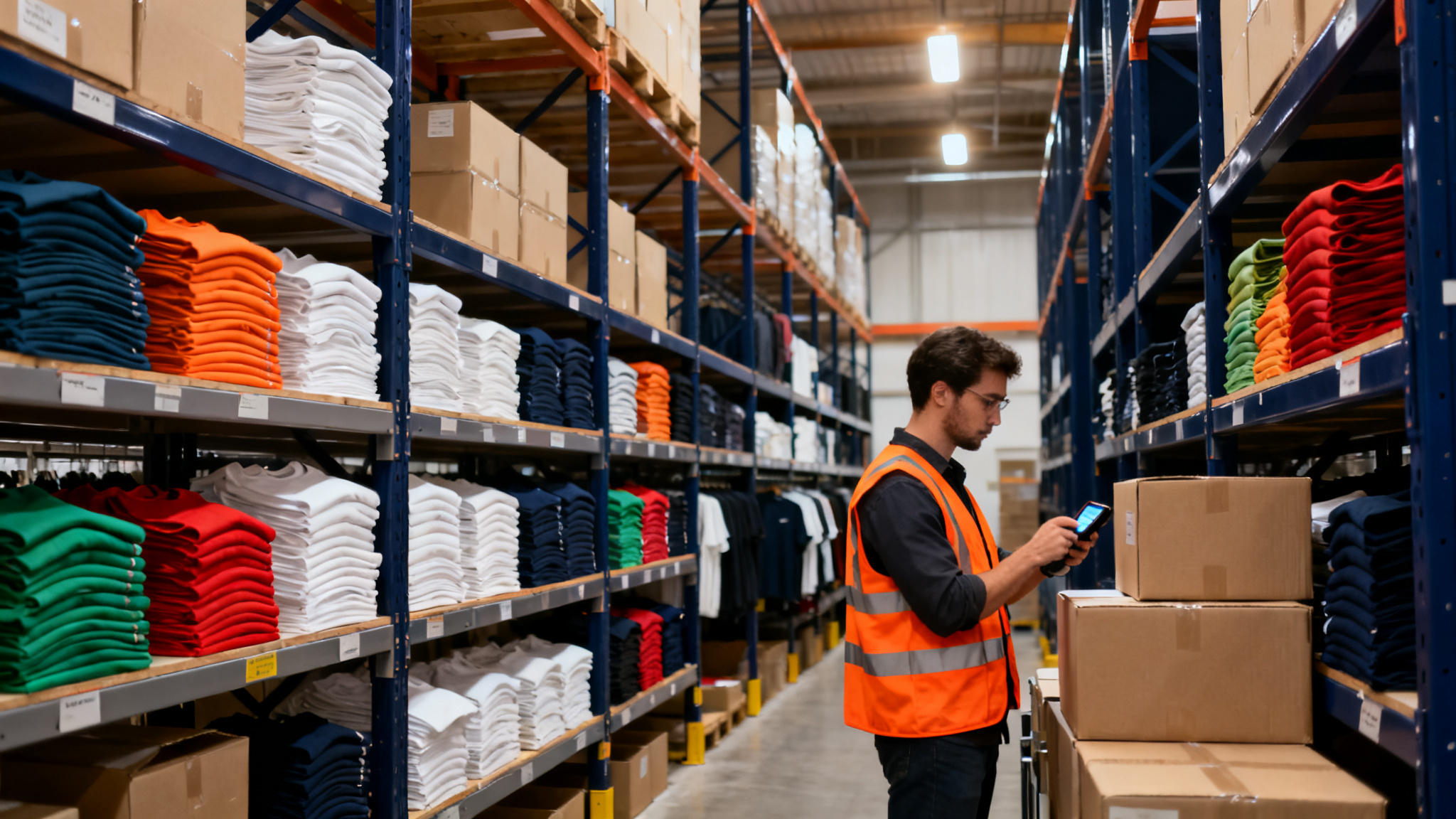
Blank suppliers such as large wholesale distributors keep deep inventory and ship quickly, which makes them ideal for testing a niche or printing on demand. You can add screen prints, DTG or embroidery, but the base garment — its fabric weight, cut and feel — is fixed and shared with countless other labels. That sameness is the trade-off for speed and low risk.
What is a custom streetwear manufacturer?
A custom manufacturer starts from your idea and builds the garment around it.
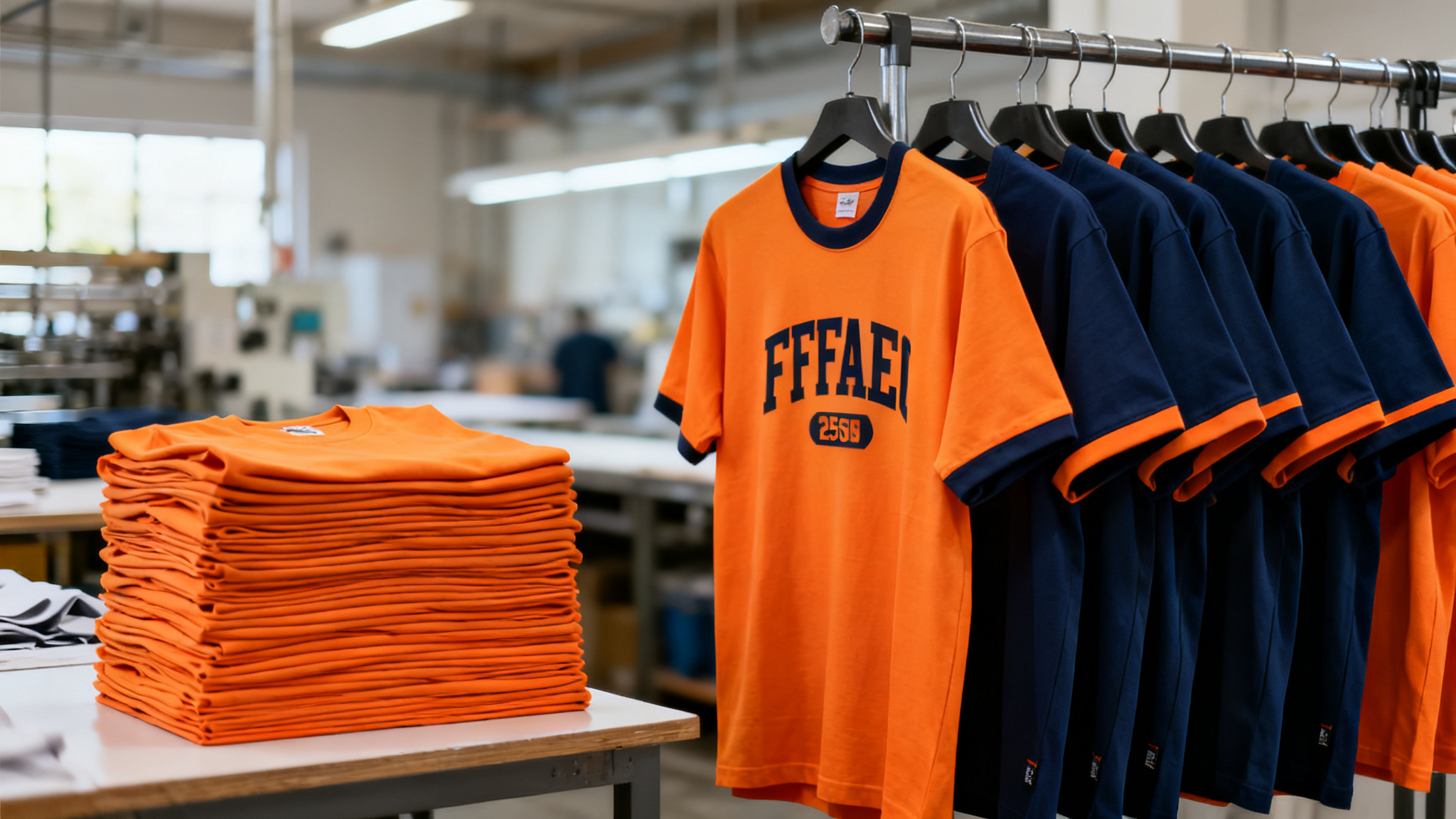
A custom streetwear manufacturer works to your specs as an OEM partner — cutting, sewing and finishing garments to your own measurements, fabric choices, labels and trims.3
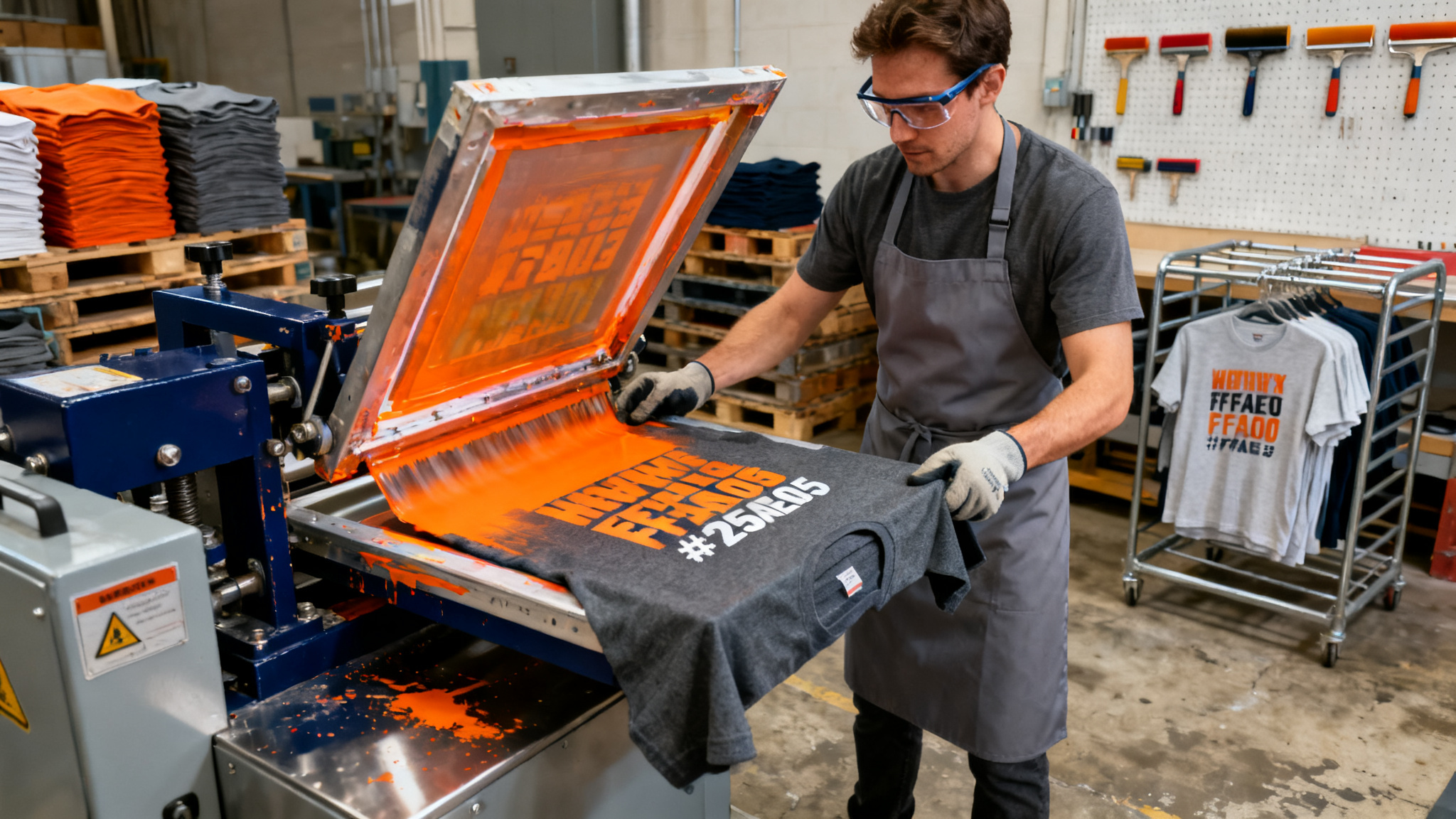
This is where fit, fabric weight, stitch detail and branding all become yours to define. A good partner offers pattern-making, sampling, custom labels and packaging, so the finished piece exists only for your label. It usually means higher minimums and a longer timeline, but the product is genuinely unique and can carry a higher price point.
Which is cheaper — blank apparel or custom manufacturing?
Up front, blanks nearly always look cheaper; over time, the picture can flip.
Blank garments win on unit cost at very low volumes, but custom manufacturing becomes cost-effective as order sizes grow, because fixed setup costs spread across more units.4
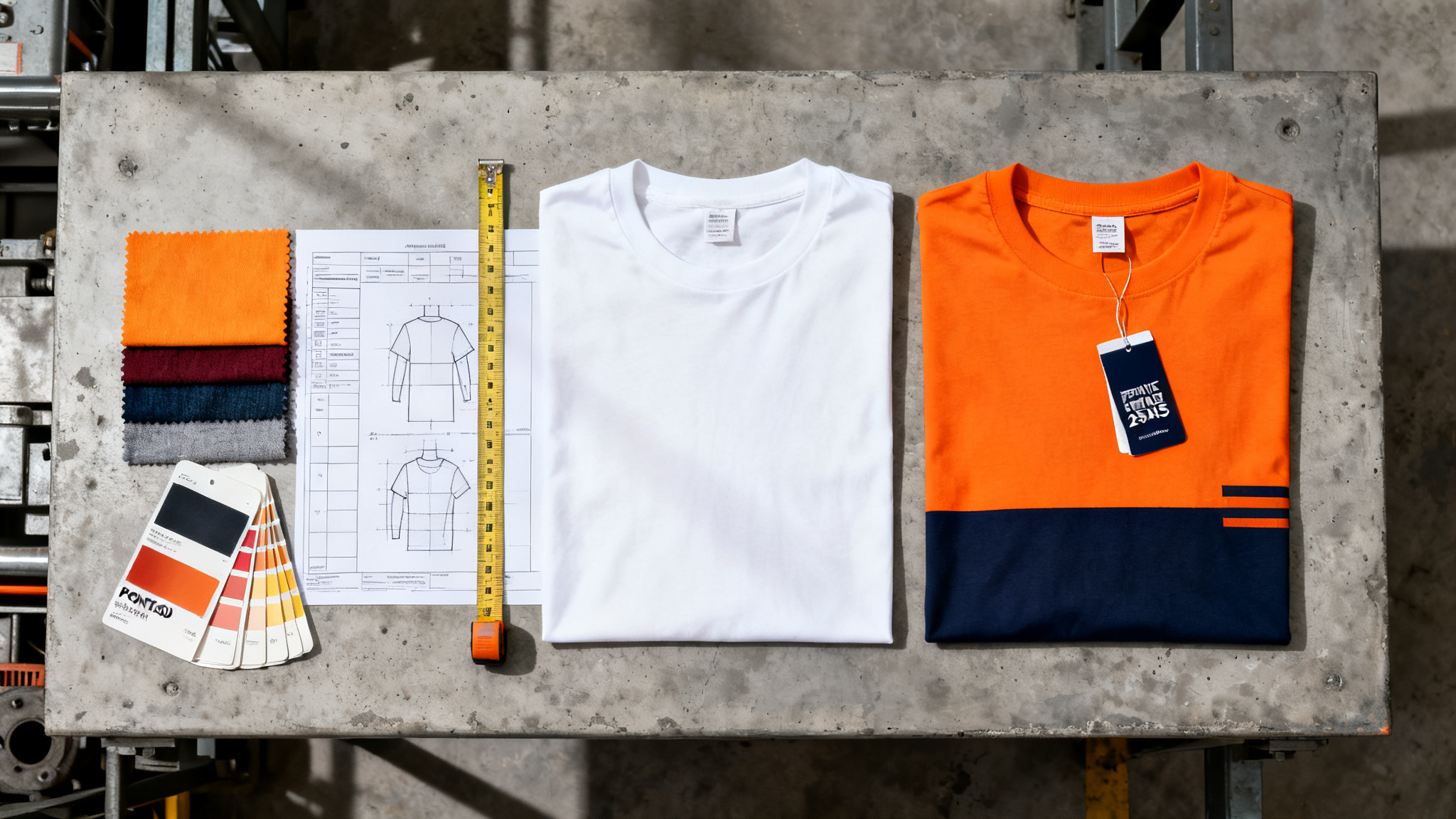
Buying 50 blank tees to print is inexpensive and low-risk. But once you order in the hundreds or thousands, custom-cut fabric and in-house production can reach a similar or lower per-unit cost while giving you a better product. The catch is that custom work front-loads pattern and sample costs, so it only pays off when your volume justifies it. For a fuller cost breakdown, see custom clothing manufacturing.
How do MOQ, lead time and flexibility compare?
Speed and minimums are where the two models feel most different day to day.
Blank suppliers offer low or no minimums and fast turnaround, while custom manufacturers require a minimum order quantity and longer lead times in exchange for full control.5
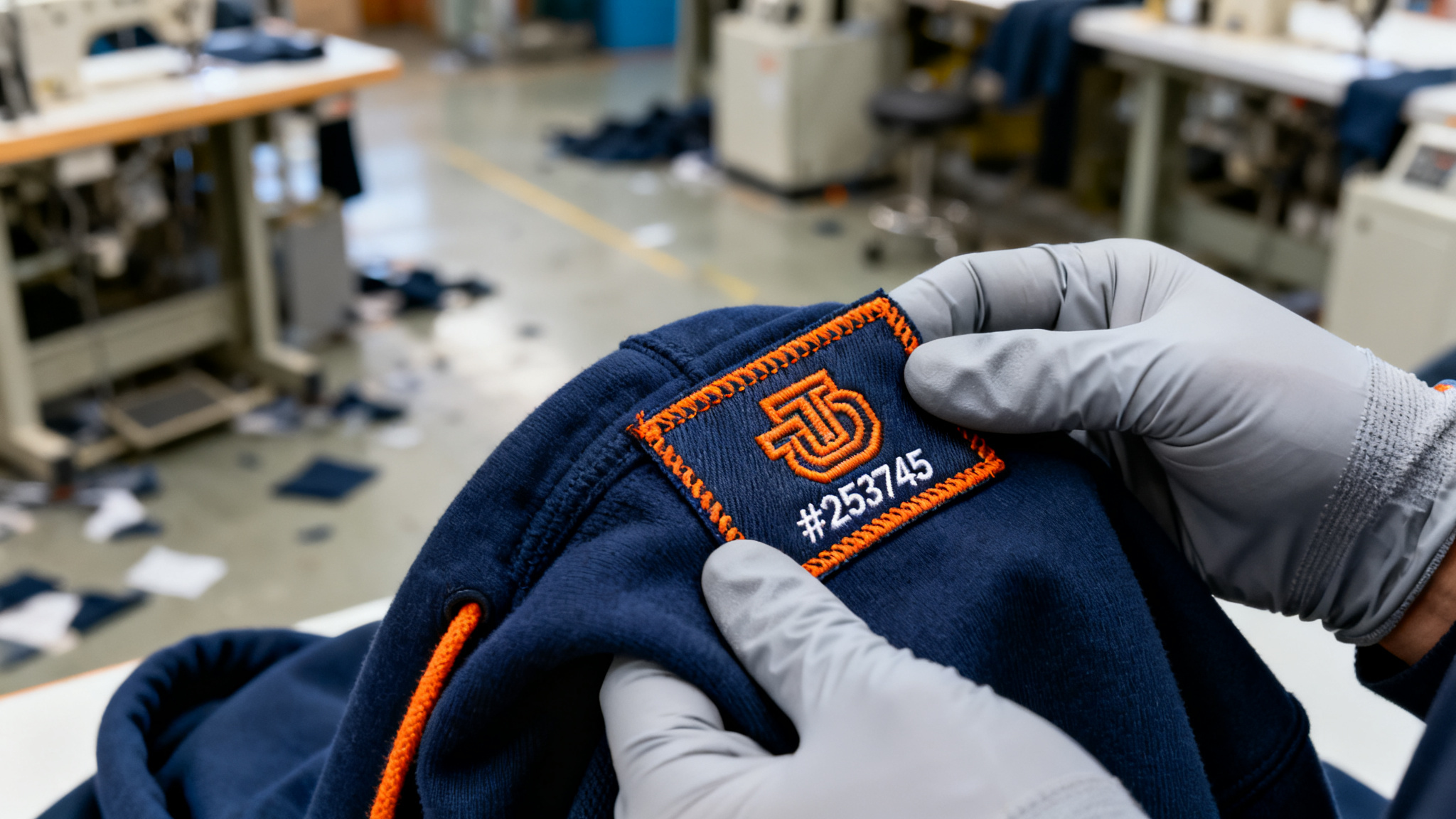
Blanks let you reorder in small batches and pivot your designs with little waste. Custom production asks you to commit — typically after approving a sample — but rewards that commitment with consistent sizing, exclusive fabric and labels that match your brand. Many growing labels start with blanks, then move to custom manufacturing once they know which styles sell.
Which option is right for your streetwear brand?
The right choice depends less on the product and more on where your brand is today.
Choose blanks to test designs cheaply, and custom manufacturing when a unique fit, fabric and brand identity become the reason customers buy.6
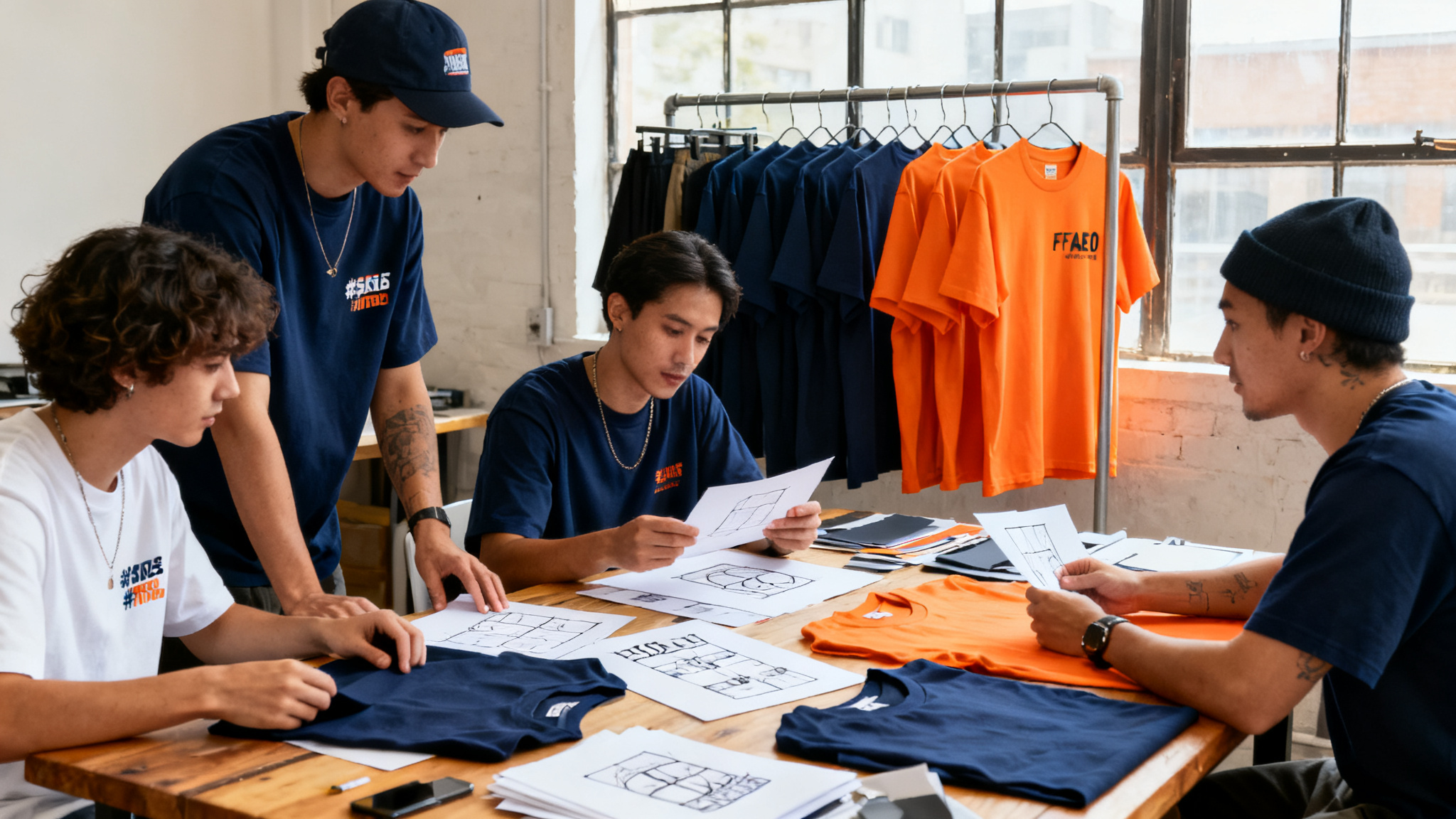
Streetwear rewards differentiation: the labels that last are known for a distinct cut, weight and feel that a generic blank cannot deliver. If your ambition is a brand rather than a print-on-demand side project, custom manufacturing is the path — ideally with a partner used to small, growing labels.
Conclusion
Blank suppliers and custom manufacturers are not rivals so much as stages. Use blanks to validate ideas and learn what your audience wants, then graduate to custom manufacturing when you are ready to own your fit, fabric and labels. If you want to make that move, talk to our team about sampling your first custom drop.
"Clothing industry - Wikipedia", https://en.wikipedia.org/wiki/Clothing_industry. Overviews of the apparel sector describe how manufacturers and suppliers operate at different points in the clothing value chain. Evidence role: general_support; source type: encyclopedia. Supports: The source should establish the distinction between producing garments and merely supplying them. Scope note: Industry structures vary by country and product category. ↩
"Wholesaling - Wikipedia", https://en.wikipedia.org/wiki/Wholesaling. References on wholesaling explain the model of buying goods in bulk and reselling them undecorated to retailers and brands. Evidence role: context; source type: encyclopedia. Supports: The source should define the blank-supplier wholesale model. Scope note: Wholesale terms differ between distributors and suppliers. ↩
"Original equipment manufacturer - Wikipedia", https://en.wikipedia.org/wiki/Original_equipment_manufacturer. The OEM reference explains how one firm manufactures products to another company’s specification and branding. Evidence role: definition; source type: encyclopedia. Supports: The source should define custom manufacturing as production to a buyer’s own spec. Scope note: OEM arrangements vary in how much design the buyer supplies. ↩
"Economies of scale - Wikipedia", https://en.wikipedia.org/wiki/Economies_of_scale. Economic references explain how fixed setup costs spread across larger production runs and lower average unit cost. Evidence role: mechanism; source type: encyclopedia. Supports: The source should explain why custom unit cost falls as order size rises. Scope note: Cost curves differ by product complexity and material. ↩
"Private label - Wikipedia", https://en.wikipedia.org/wiki/Private_label. The private label reference describes goods manufactured for a specific brand’s own label rather than a generic one. Evidence role: context; source type: encyclopedia. Supports: The source should frame custom branding versus unbranded stock goods. Scope note: Private label practices vary by market and category. ↩
"Streetwear - Wikipedia", https://en.wikipedia.org/wiki/Streetwear. Background on streetwear describes the category’s emphasis on identity, scarcity and distinctive product. Evidence role: general_support; source type: encyclopedia. Supports: The source should support why differentiation matters for streetwear brands. Scope note: Streetwear trends and buyer expectations vary by region. ↩
Ready to make this for your brand?
Adiwe manufactures custom T-shirts, hoodies, jackets, pants, shorts and shirts for brands worldwide — from 50 pcs per style and colour, with private labelling, three-stage QC and a physical sample you approve before bulk.
Custom Hoodie ManufacturingCustom T-Shirt Manufacturing