Ask five factories for a delivery date on the same 500-piece order and you will get five different answers, all of them honest. Production is a chain of dependent steps — fabric, cutting, sewing, finishing, inspection — and the calendar only holds if every link lands on time.
Custom clothing production typically takes 30–45 days from approved sample and deposit to goods ready for shipment for orders of 100–1,000 pieces, and 45–75 days for larger runs, custom-dyed fabric or multi-style collections.1
That range covers ordinary cut-and-sew work: tees, hoodies, sweats, pants and woven tops. A repeat style in stock fabric sits at the fast end. A new silhouette in a custom-developed, custom-dyed fabric with new trims sits at the slow end. Below is how the calendar breaks down stage by stage, what actually pushes the date, and the few levers that genuinely shorten it. If you are still comparing suppliers, our custom clothing manufacturing overview explains how production fits after sampling and before shipping.
How long does custom clothing production take from deposit to shipment?
The useful number is not how long sewing takes. It is how long the whole order takes once money and materials start moving.
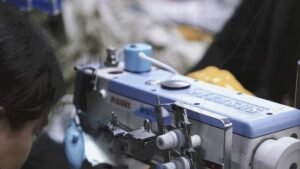
Bulk sewing usually runs 15–25 working days for 100–1,000 pieces of a cut-and-sew style, while the full deposit-to-shipment window is 30–45 days once fabric procurement, cutting, finishing and inspection are included.2 Quoted lead times are cumulative: every stage waits on the one before it, and the slowest link sets the date.
A realistic plan for a first order looks like this: one week to release fabric and trims, half a week to cut, three to four weeks on the sewing floor, one week for finishing and inspection, and a few days for packing. Add shipping transit separately — sea freight from China to the US or EU is typically counted in weeks, not days. Factories quote the ex-works or FOB date because that is the part they control; the rest belongs to the freight forwarder and to customs. Ask for both dates in writing, and treat the production date as the one you can hold the factory to.
What are the stages of production and how long does each one take?
Production only looks like one long block from the outside. Internally it is five separate queues.
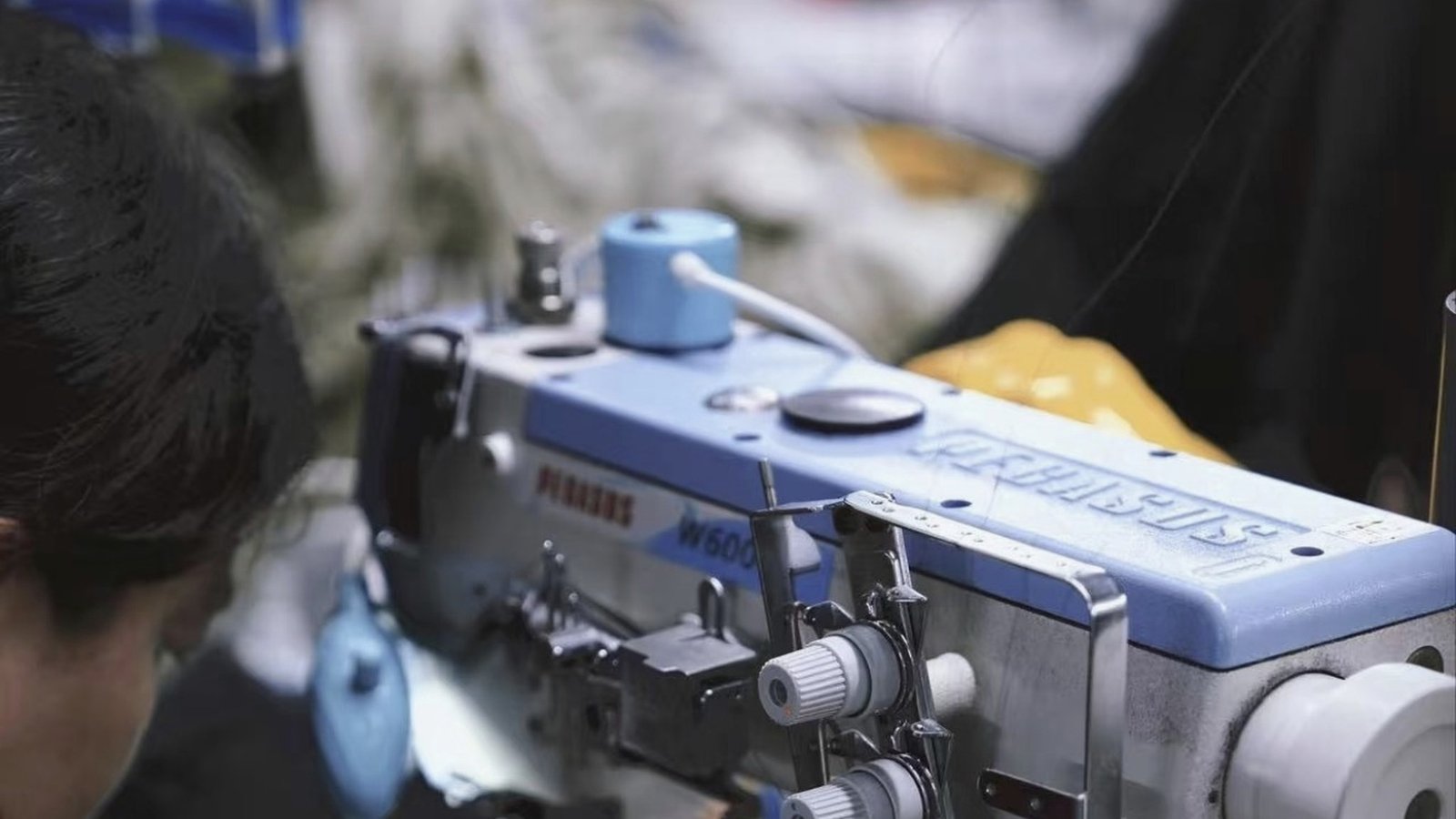
A standard order moves through five stages: fabric and trim procurement (7–15 days), cutting (2–5 days), sewing (10–20 days), finishing and quality inspection (3–7 days), and packing (2–3 days).3 Fabric is the stage with the widest spread, because greige cloth, dyeing and finishing happen in different mills with their own queues.
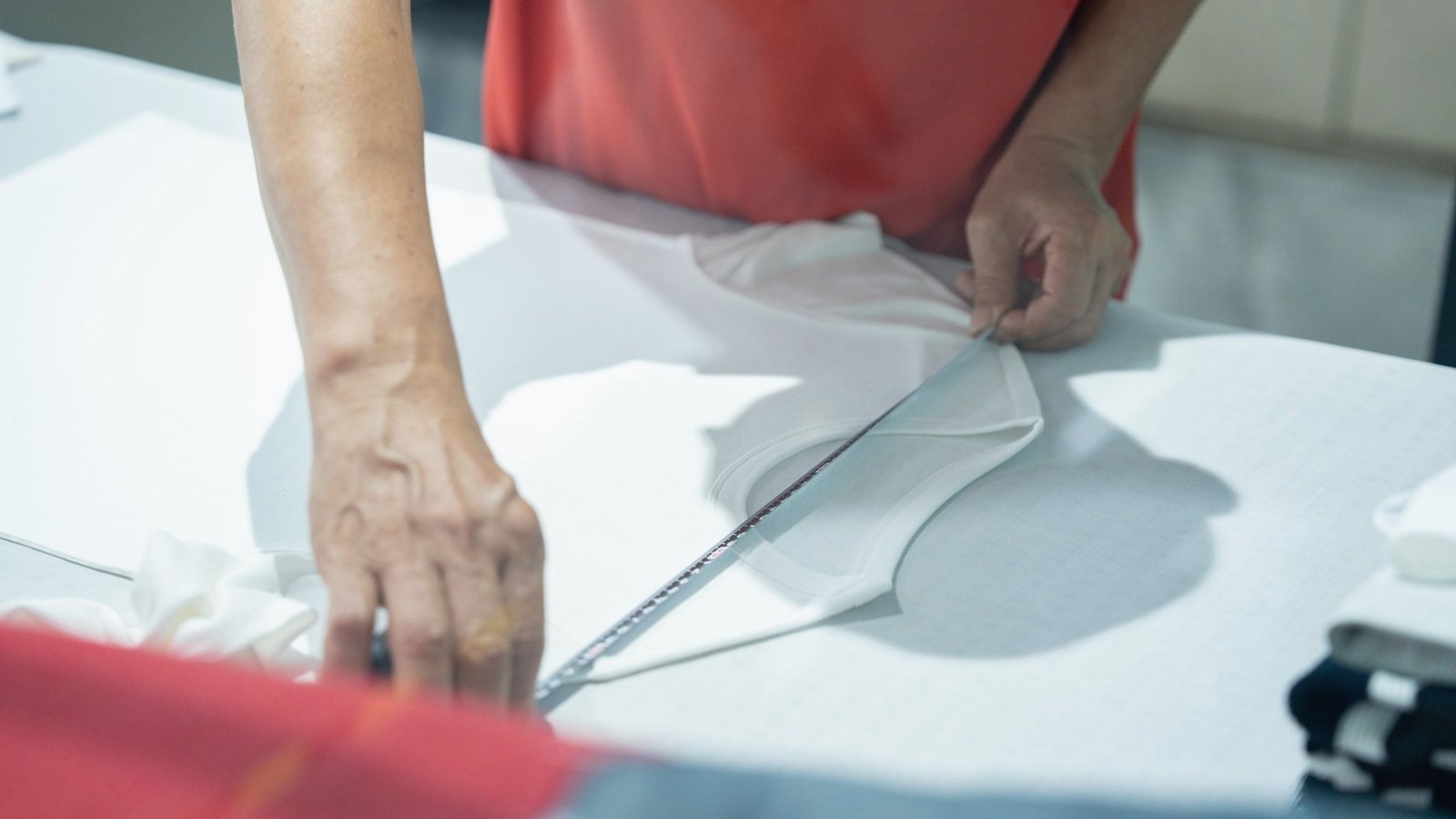
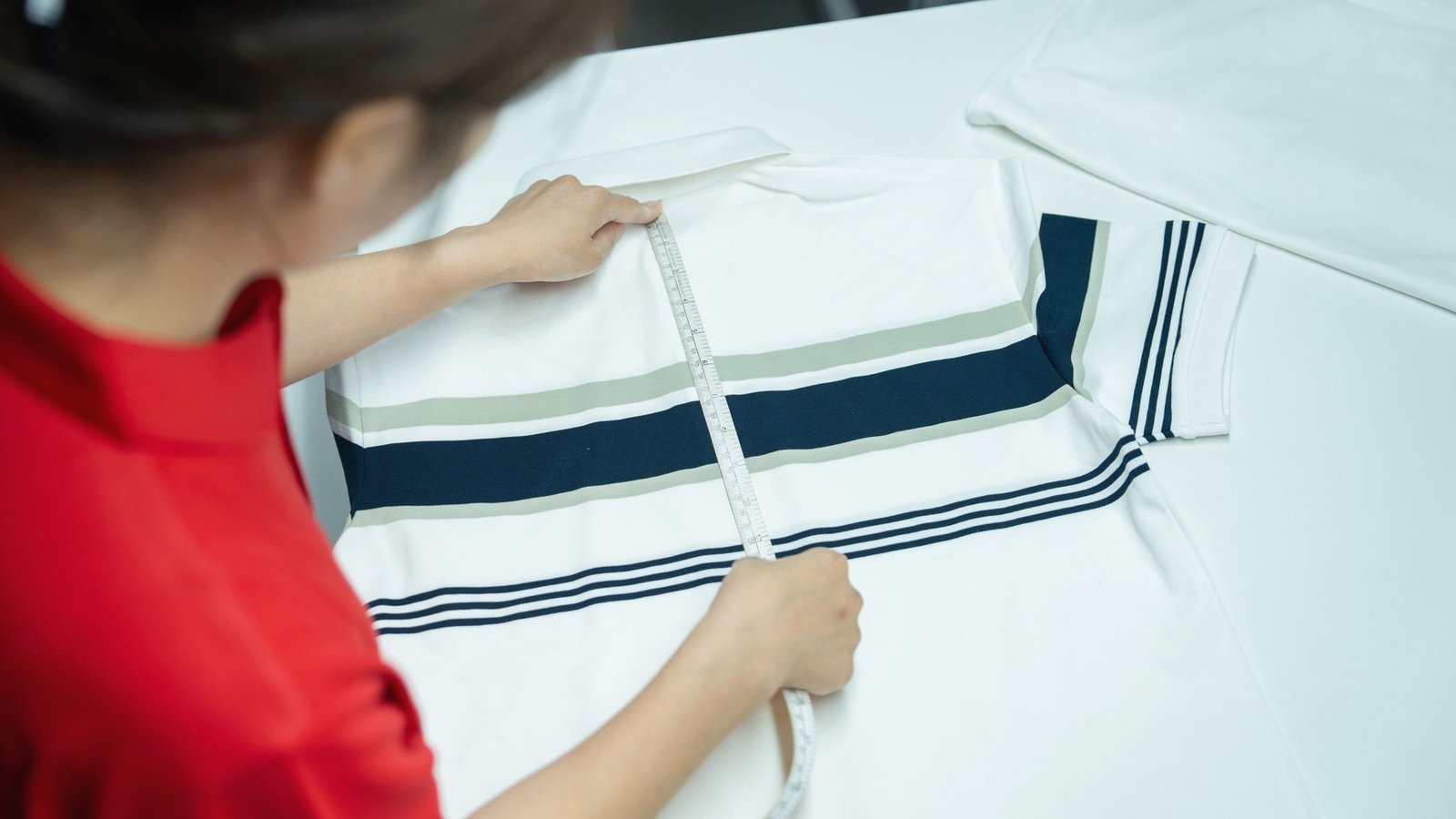
In a stock quality and stock color, fabric can be released in a few days. A custom Pantone shade adds lab dips, approval and a dye lot run, which is where the two-week difference usually appears. Cutting follows fabric inspection and shrinkage testing, and it is fast but unforgiving: a cutting error on 500 pieces cannot be fixed by working overtime. Sewing is the longest single block and scales with the number of operations in the garment — a basic tee has far fewer than a lined jacket. Finishing covers trimming, pressing, measurement checks and the AQL inspection, and packing is short but must wait for labels, hangtags and polybags to arrive.
Why does custom clothing production take longer than quoted?
Overruns are rarely caused by the sewing floor. They are caused by things that have to arrive before sewing can start.
Fabric dyeing and lab dips, custom trim lead times, factory queue position and holiday shutdowns add more days than garment construction itself, and none of them sit inside the sewing quote.4 A factory can only promise a date for what it controls; the upstream waits belong to the buyer's calendar.
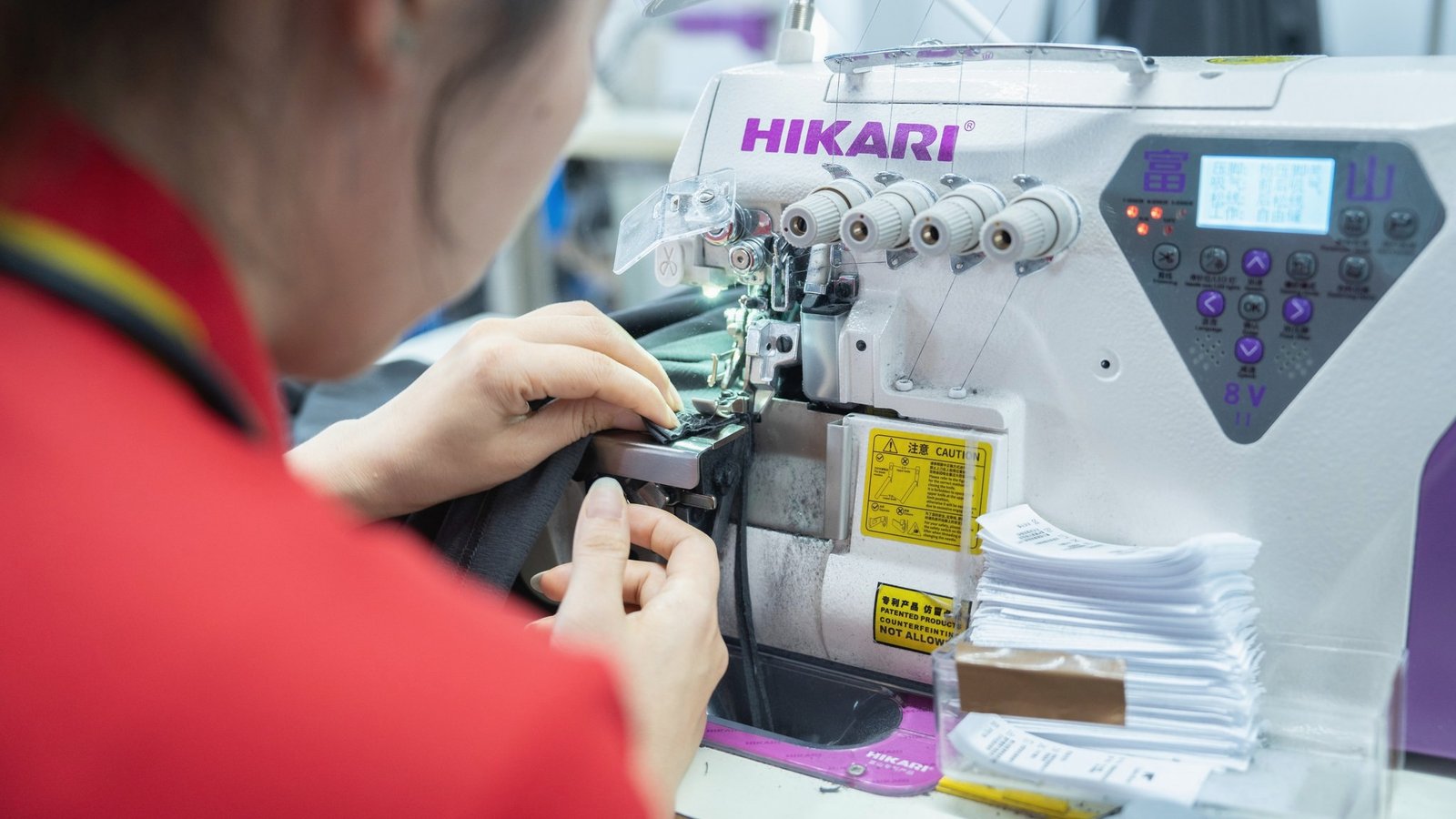
Two seasonal effects deserve a place in every plan. The first is peak season: capacity tightens from late summer into autumn as brands prepare holiday and spring drops, so the same order books later than it would in February. The second is Chinese New Year, when factories in China close for one to three weeks and migrant workers travel home, with a slow ramp-up on either side of the holiday. Orders that would normally take 30 days can lose two weeks around that window. Custom drawcords, metal hardware, woven labels and printed tags each have their own lead time too, and one missing trim item holds the entire line — which is why factories ask for trim approvals before cutting rather than after.
Does order quantity change how long production takes?
Buyers often assume time scales linearly with volume. On the sewing floor, it mostly does not.
Quantity changes production time less than expected: 100 pieces and 1,000 pieces frequently sit inside the same 15–25 day sewing window, because line setup, balancing and finishing are largely fixed, while orders above roughly 5,000 pieces need additional lines and extra weeks.5 Below MOQ the fixed work dominates; far above it, the constraint becomes how many lines and operators the factory can allocate.
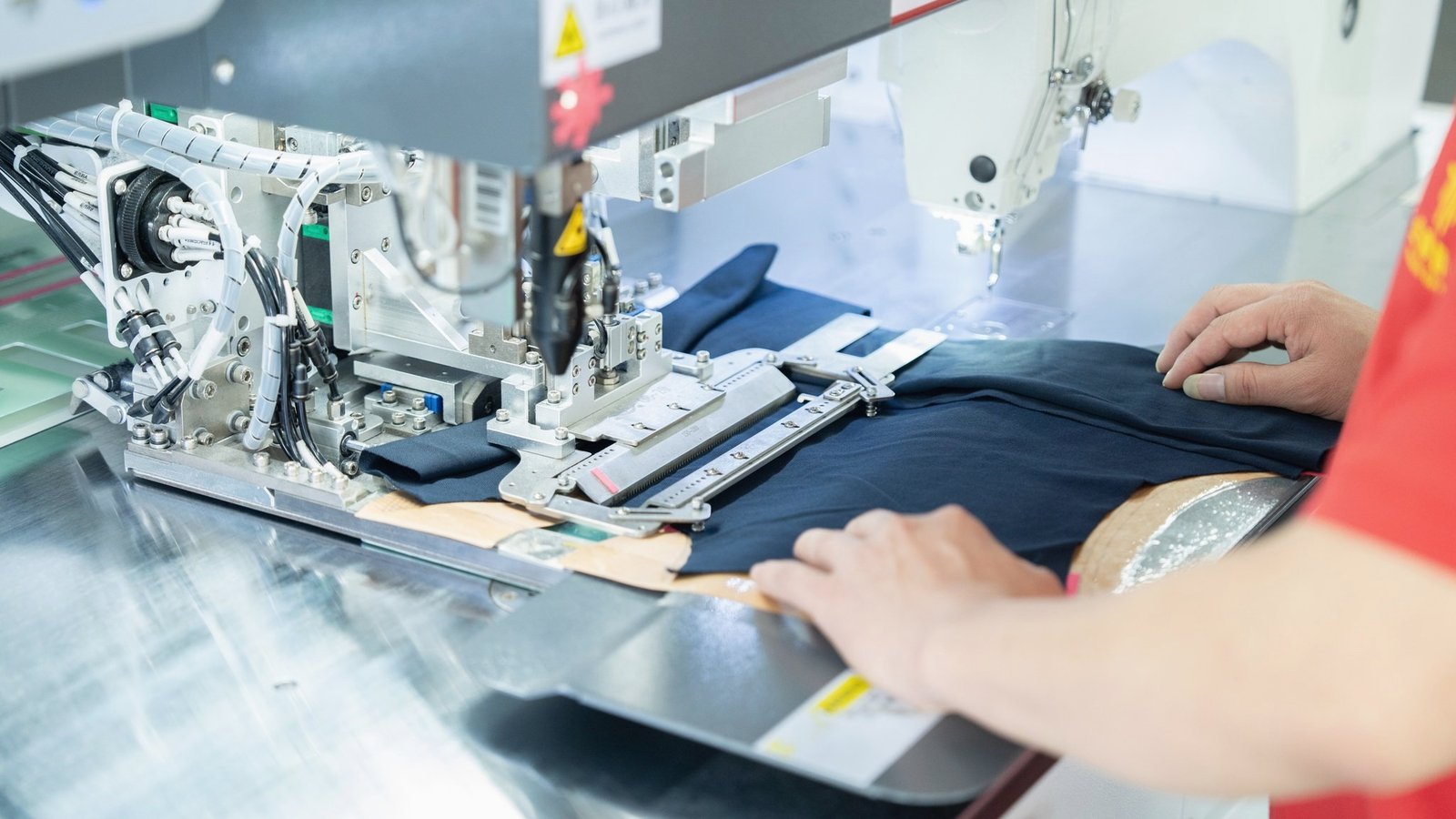
A single style on one line is balanced so that each operator's cycle time matches the takt time; adding quantity extends the run, it does not change the rhythm. What does change with volume is splitting: 1,000 pieces across four colors and six sizes means more cutting lays, more bundles, more color changes on the line and more packing SKUs, which can add a week compared with the same 1,000 pieces in one colorway. Five styles of 100 pieces each is therefore slower than one style of 500, even though the total is identical. If your drop has many SKUs, expect the calendar to reflect the number of changeovers rather than the number of units.
How can you shorten production time without risking quality?
The days you can actually save are waiting days, not working days.
The reliable ways to compress the calendar are booking fabric early, approving the pre-production sample in a single round, paying the deposit on time and reserving line capacity; skipping inspection is not one of them.6 Each of those removes a queue, while cutting corners only moves the defect to the customer.
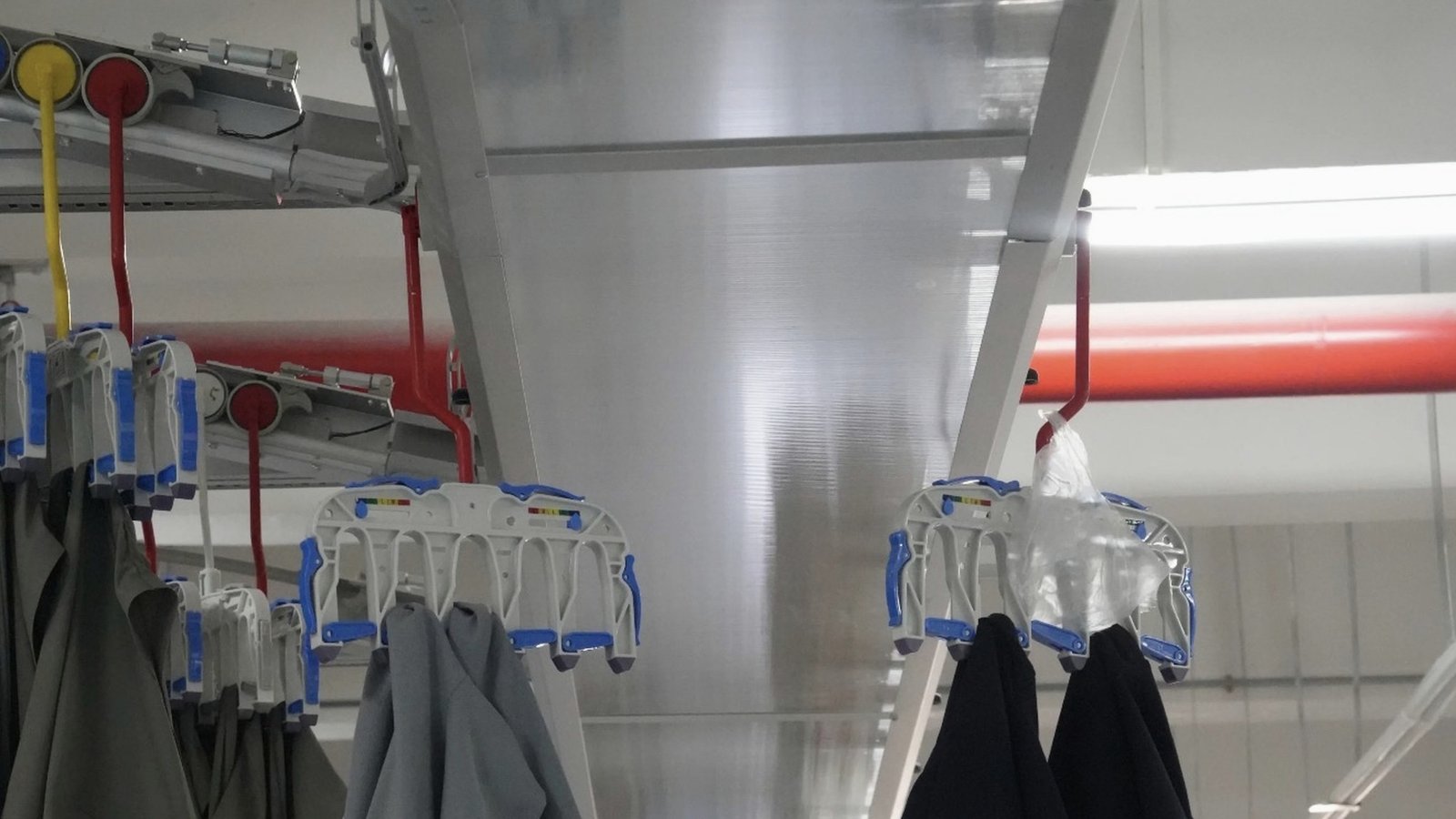
In practice: confirm fabric before the sample is approved so bulk yardage can be booked in the same week, keep the first drop to one or two fabrics and a limited color range, and send every fit, print and trim comment as one consolidated round instead of a trickle. Book capacity with a deposit rather than a promise — a factory can hold a line for a confirmed order, but it cannot create one later. Keep the AQL inspection and the pre-production sample in the plan; they are the cheapest insurance in the whole schedule. If you are launching a first collection, plan the production window backwards from your drop date with a two-week buffer, and read our guide for DTC brands on how sampling, MOQ and production interlock.
Conclusion
Custom clothing production takes about 30–45 days from approved sample and deposit to shipment for 100–1,000 pieces, and 45–75 days for larger programs, custom-dyed fabric or many SKUs. Sewing is only three to five weeks of that; the rest is fabric, cutting, finishing, inspection and queue. Plan from the stage that is slowest, not the one that is quoted, and hold a buffer around peak season and Chinese New Year. If you want a dated production schedule for a specific style and quantity, send us your tech pack and we will quote sampling and bulk production as separate stages.
"Clothing industry", https://en.wikipedia.org/wiki/Clothing_industry. Overview of the apparel value chain, from design and pattern making through sample making to bulk manufacturing and distribution. Evidence role: general_support; source type: encyclopedia. Supports: bulk production is a distinct stage that follows design and sampling, and its length depends on how much development precedes it. Scope note: industry-level description; it does not publish per-stage day counts, which vary by product, factory and season. ↩
"Lead time", https://en.wikipedia.org/wiki/Lead_time. Defines lead time and cumulative lead time in supply chains, including order processing, queue and processing time. Evidence role: general_support; source type: encyclopedia. Supports: the deposit-to-shipment window is the sum of sequential stage waits rather than sewing time alone, so the slowest stage sets the date. Scope note: general operations concept; apparel-specific durations for cutting, sewing and finishing come from factory practice, not from this source. ↩
"Textile manufacturing", https://en.wikipedia.org/wiki/Textile_manufacturing. Describes the conversion of fibre to yarn to greige fabric, followed by dyeing, printing and finishing as separate processes. Evidence role: general_support; source type: encyclopedia. Supports: fabric is produced and finished across separate mill stages, which is why procurement has the widest lead-time spread in an order. Scope note: technical process description; it does not give commercial lead times for dye lots or mill queues. ↩
"Chinese New Year", https://en.wikipedia.org/wiki/Chinese_New_Year. Describes the festival period, including the extended public holiday and the large-scale travel of workers to their home regions. Evidence role: general_support; source type: encyclopedia. Supports: the holiday creates a predictable multi-week interruption to manufacturing capacity in China, with a slow ramp-up on either side. Scope note: cultural and calendar reference; the exact factory closure length varies by region, factory and order book. ↩
"Production line", https://en.wikipedia.org/wiki/Production_line. Explains line balancing, cycle time and the fixed setup work required before a line runs at rate. Evidence role: general_support; source type: encyclopedia. Supports: setup and balancing are largely fixed costs per style, so small and mid-size orders share a similar sewing window while very large orders require additional lines. Scope note: general manufacturing theory; the 15–25 day and 5,000-piece thresholds are apparel-industry rules of thumb, not figures stated in the source. ↩
"Quality control", https://en.wikipedia.org/wiki/Quality_control. Covers inspection, acceptance sampling and corrective action as part of a controlled production process. Evidence role: general_support; source type: encyclopedia. Supports: final inspection is a defined gate before goods are released, so removing it trades schedule against defect risk rather than saving real time. Scope note: generic quality-management framework; garment AQL levels and pre-production sample conventions come from industry practice. ↩
Ready to make this for your brand?
Adiwe manufactures custom T-shirts, hoodies, jackets, pants, shorts and shirts for brands worldwide — from 100 pcs per style and colour, with private labelling, three-stage QC and a physical sample you approve before bulk.
Custom Hoodie ManufacturingCustom T-Shirt Manufacturing